🍞 Sourdough in Kitchenaid Kneading Time Calculator
Estimate KitchenAid sourdough kneading windows from flour weight, hydration, starter percentage, whole grain, mixer model, bowl size, speed, autolyse, salt timing, dough temperature, and target gluten.
Enter total flour in the formula, including flour carried by the starter. The calculator treats KitchenAid speed 2 as the normal dough-hook kneading speed, then adjusts for formula strength, bowl load, fermentation activity, and mixing method.
| Sourdough Style | Hydration Range | KitchenAid Window | Stop Cue |
|---|---|---|---|
| Country hearth loaf | 68% to 76% | 5 to 8 minutes | Smooth, extensible, slightly tacky dough |
| High hydration batard | 78% to 88% | 3 to 6 minutes | Glossy dough gathers in stretchy strands |
| Whole wheat sourdough | 75% to 85% | 4 to 7 minutes | Cohesive but not tight; bran may limit windowpane |
| Rye or spelt blend | 70% to 88% | 2 to 5 minutes | Stop at organized paste or short gluten |
| Sourdough sandwich loaf | 62% to 70% | 7 to 10 minutes | Elastic dough clears much of the bowl |
| Focaccia-style sourdough | 80% to 95% | 3 to 6 minutes | Strong strands, then finish with folds |
| KitchenAid Setup | Typical Bowl | Comfort Flour | Time Effect |
|---|---|---|---|
| Artisan Mini tilt-head | 3.5 qt | 14 to 22 oz | Small batches mix a little slower |
| Classic tilt-head | 4.5 qt | 18 to 28 oz | Best with one medium loaf |
| Artisan tilt-head | 5 qt | 22 to 34 oz | Baseline home sourdough batch |
| Bowl-lift mixer | 5.5 to 6 qt | 28 to 46 oz | Better support for stiffer dough |
| Large bowl-lift | 7 qt | 36 to 58 oz | Handles double loaves more easily |
| Commercial bowl-lift | 8 qt | 44 to 72 oz | Shortest window for large batches |
| Factor | Shortens Mix | Lengthens Mix | Watch For |
|---|---|---|---|
| Hydration | 70% to 78% extensible dough | Very stiff or very slack dough | Slack dough may need folds more than extra mixing |
| Starter percent | Active 18% to 25% levain | Low starter or very acidic starter | Acidic dough can feel tight before it smooths |
| Whole grain | Low bran white flour | High bran, rye, or coarse milling | Bran weakens the classic windowpane test |
| Autolyse | 20 to 60 minute flour rest | No rest before mixing | Rested dough often needs fewer hook minutes |
| Salt timing | Salt delayed until dough gathers | Salt from start in stiff dough | Delayed salt can make early gluten form faster |
| Dough temperature | 74 to 78°F dough | Cold dough below 68°F | Warm dough can overheat during long kneads |
| Target or Speed | Best Use | Typical Window | Practical Cue |
|---|---|---|---|
| Short mix | Rustic loaves with folds | 3 to 5 minutes | Dough gathers and stretches unevenly |
| Moderate gluten | Most sourdough boules | 5 to 8 minutes | Smooth surface and steady stretch |
| Strong gluten | Pan loaf or sandwich sourdough | 7 to 10 minutes | Thin windowpane with some resistance |
| Stir only | Initial combining | Longer than speed 2 | Use mainly before rests or folds |
| Speed 2 dough hook | Normal KitchenAid kneading | Baseline | Dough should work around the hook |
| Pulse with rests | Warm or heavy dough | Clock longer, heat lower | Mix 1 to 2 minutes, rest, then repeat |
KitchenAid kneading estimates are planning ranges for dough-hook mixing. Mixer sound, bowl climb, dough temperature, flour behavior, and final dough feel should decide the actual stop point.
Your Kitchen Timer Is A Liar Baking sourdough with a recipe that says “mix for five minutes” or “until the dough is smooth,” is a waste of time. Timing isn’t as important than texture. And smooth is a texture, not time. Go by the clock and you’ll either over-mix (shearing through the gluten structure, turning it into glue) or underdevelop it (leaving you with a gummy, dense loaf).
Sometimes it’s only two minutes of agitation that separate a brick from a rustic open crumb. That is exactly where the calculator comes in. It does the math for you based off the special variables of your formula. Knowing why those variables are important, that’s what will save your bread.
Why You Should Stop Using a Timer When Mixing Dough
First, start with flour. How much? Enter the flour weight into the calculator (all of it, including the starter). Because a heavy batch alter the mechanical leverage of the dough hook. An eighty-ounce batch of stiff whole-wheat dough in a five-quart bowl behaves different from that same amount of light focaccia dough in the same bowl. There is more resistance, so the machine must push harder. This creates heat. Heat is bad news for sourdough. Mixing at too-high temperatures speed up fermentation long before structure sets. To predict how much heat will be produced, the tool estimates this heat rise. Then you’ll know whether to mix less time and/or to chill your water.
The way hydration changes the physics: Eighty percent hydration, or wet dough, depends more on alignment than toughness. It needs to be mixed briefly and gently. Run your high-hydration batard at speed three for ten minutes and you’ll have torn it apart. A wet dough’s gluten network is fragile until fermented. That’s why the output window for wet dough is short; youre looking for cohesion but not necessarily elasticity. The dough should appear cohesive, yet shaggy. The bulk fermentation and the folds must do their work. The mixer are simply the introducer.
Next, there is the addition of whole grains. Whole wheat or fifty percent rye (for instance) add yet another layer. Those little bran particles resembles miniature knives cutting through the gluten structure. You can eventualy mix them into a good windowpane with enough mixing, but you won’t get that result with half wheat or rye. That’s why the calculator adjust the expected mix time downward. You’re not looking to build gluten structure as much as you are to moisten the bran and break up the flour distribution throughout the dough. Overmixing whole grain dough just creates a sticky mess that won’t hold its shape. Believe the shortened period and quit when it gathers.
It also works well depending on when you add salt. You can add salt at the start, which will tighten up the gluten right away. Your dough become stiffer and harder to work. However, if you wait until the dough rests or a minute or two into the mix, you allow the gluten to develop more easy. That’s a small distinction. But it changes how the dough feel as it sits in the bowl. The calculator accounts for this. It provides a closer window depending on what works best for you.
And then there’s temperature. Hotter temperatures mean shorter times and colder means longer times. But hotter temperatures run more risk of overheating the dough. The tool balance your input. You might need to cut the mixing time in half if you are working in a warm kitchen and have warm flour. You don’t want to kill your culture. In the winter months, it may take slightly longer to knead out. That will develop the same structure.
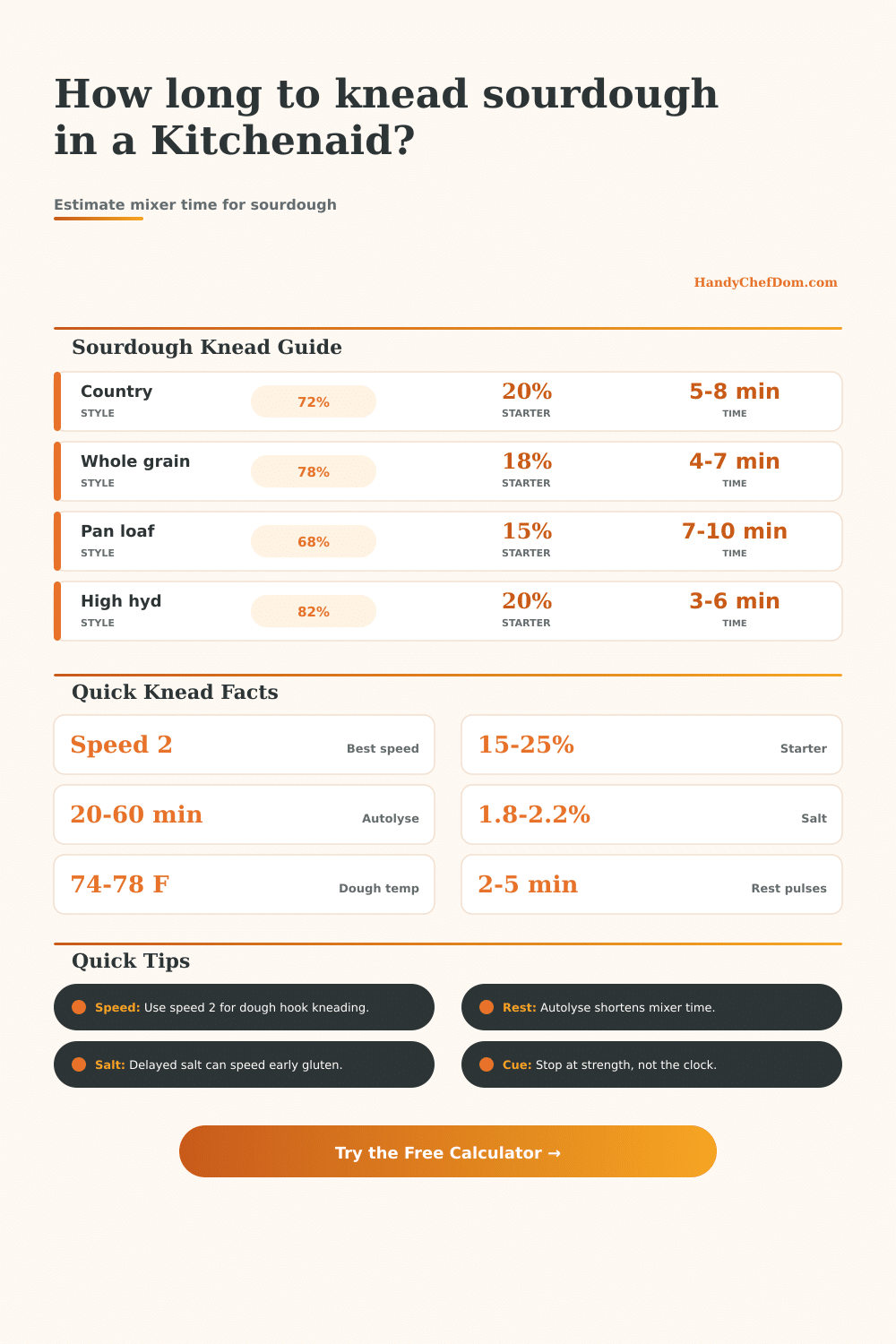
Here’s how that’s represented on the page (the reference table).
But here’s what you really learn by looking: Observe! Don’t look at the clock; look at your dough. Listen to the motor. Feel the warmth of the bowl exterior. Those numbers are just a start. They’re like a guard rail… A way to prevent you from going off into some disastrous place. But ultimately, the bread will tell you when it’s ready.
It should be alive. It should be extensible. It should be smooth. It should cling slightly to itself. It should pull back from the bowl walls. When it gets to that point, stop. Let the strength develop through fermentation. The mixer is only the start.