🍠 Sweet Potato Calorie Calculator
Estimate calories, carbs, fiber, and vitamin A for orange, purple, white, and Japanese sweet potatoes by size, serving form, and skin option.
Use size count for whole baked sweet potatoes, weight for meal prep trays, or cups for mashed and cubed servings. Nutrition is estimated from cooked edible weight.
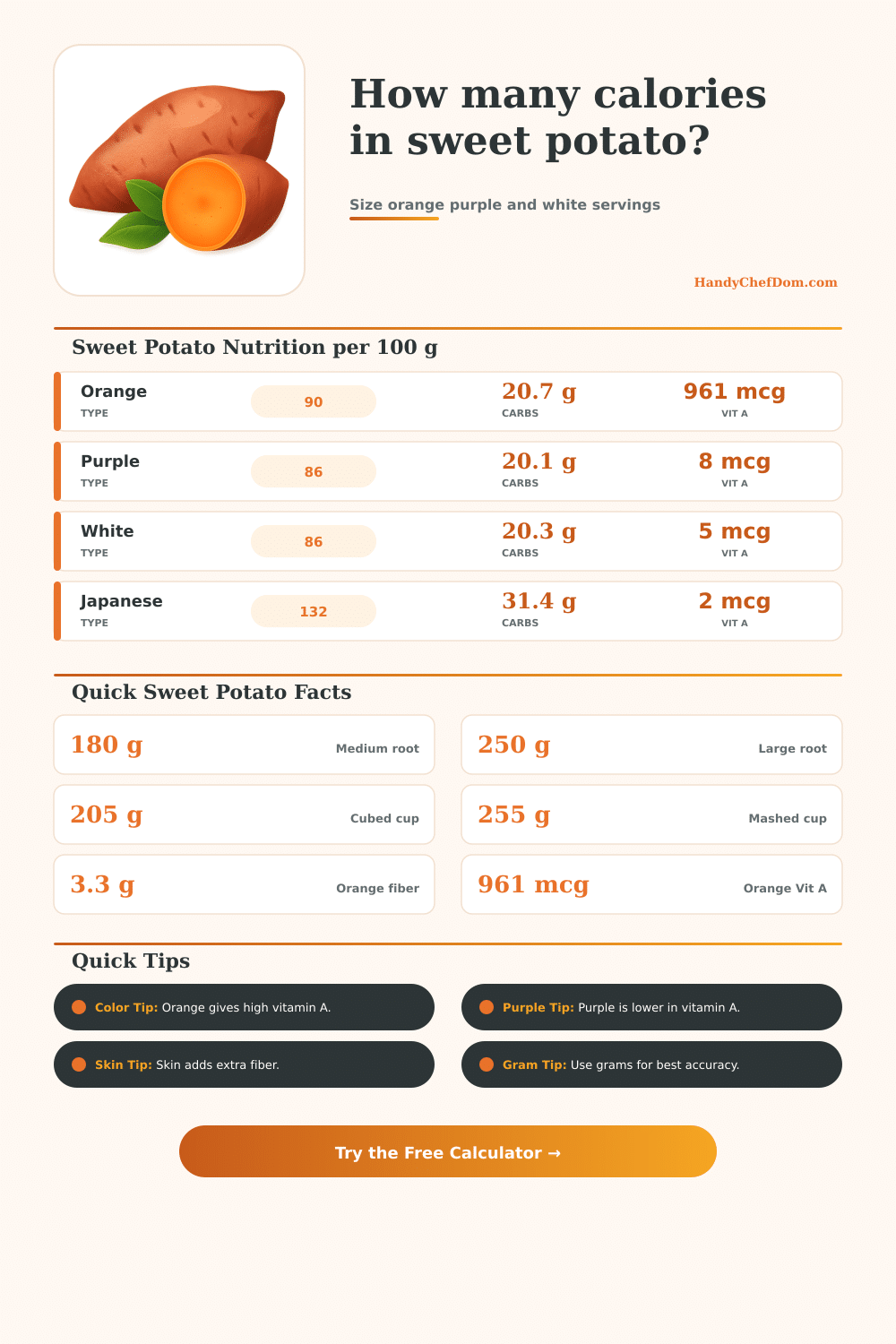
| Type | Calories per 100 g | Carbs per 100 g | Fiber per 100 g | Vitamin A per 100 g |
|---|---|---|---|---|
| Orange flesh sweet potato | 90 kcal | 20.7 g | 3.3 g | 961 mcg RAE |
| Purple sweet potato | 86 kcal | 20.1 g | 3.0 g | 8 mcg RAE |
| White sweet potato | 86 kcal | 20.3 g | 2.5 g | 5 mcg RAE |
| Japanese satsuma-imo | 132 kcal | 31.4 g | 4.0 g | 2 mcg RAE |
| Garnet sweet potato | 90 kcal | 20.6 g | 3.4 g | 910 mcg RAE |
| Jewel sweet potato | 89 kcal | 20.5 g | 3.3 g | 880 mcg RAE |
| Mixed sweet potato tray | 94 kcal | 21.6 g | 3.2 g | 430 mcg RAE |
| Whole size | Cooked edible weight | Orange calories | Orange carbs | Best calculator use |
|---|---|---|---|---|
| Small sweet potato | 130 g | 117 kcal | 26.9 g | Snack or small side |
| Medium sweet potato | 180 g | 162 kcal | 37.3 g | Typical baked serving |
| Large sweet potato | 250 g | 225 kcal | 51.8 g | Meal bowl base |
| Extra large sweet potato | 340 g | 306 kcal | 70.4 g | Split side or active meal |
| Serving form | Cup weight | Moisture factor | Fiber factor | Vitamin A factor |
|---|---|---|---|---|
| Baked whole flesh | 200 g per cup | 1.00 | 1.00 | 1.00 |
| Mashed sweet potato | 255 g per cup | 1.03 | 0.96 | 0.95 |
| Cubed cooked sweet potato | 205 g per cup | 1.00 | 1.00 | 0.98 |
| Roasted wedges or cubes | 180 g per cup | 1.08 | 1.02 | 0.97 |
| Portion style | Target weight | Orange calories | Orange carbs | Serving note |
|---|---|---|---|---|
| Snack portion | 100 g | 90 kcal | 20.7 g | Small sweet potato snack |
| Side dish portion | 150 g | 135 kcal | 31.1 g | Common dinner side |
| Meal bowl portion | 250 g | 225 kcal | 51.8 g | Base for a bowl |
| Large active portion | 320 g | 288 kcal | 66.2 g | Higher carb plate |
When you buy a medium sweet potato from the market, you think you have yourself a nice little one hundred sixty calorie snack. Wrong, probably. It all depends on variety, size, cooking method, and whether you’re eating skin or not. These things changes the nutritional profile in small ways that add up over time when you’re preparing meals for weeks. If you’re tracking something like blood sugar or looking to meet certain vitamin targets without guessing, then those details matters.
The second overlooked variable is flesh color: While both orange and purple/purple and yellow sweet potatoes is good sources of vitamins, minerals and fiber, they’re not identical, and their nutritional composition vary widely. Orange sweet potatoes contains beta carotene, which your body turns into vitamin A to support your immune system and vision. In contrast, the white- and purple-colored varieties don’t include beta-carotene; instead, they feature higher levels of anthocyanins, which give those types of sweet potato a special appearance. (Purple ones contain lower levels of vitamin A than orange ones.) Depending on how much of this vegetable you eat each day for micronutrient needs, substituting purple for orange will greatly alter what nutrients you get from this source. To reflect that in its calculations, the calculator takes color into account and adjusts the vitamin output accordingly.
Why These Details Matter for Sweet Potatoes
Then there’s cooking. Roasting, mashing, or baking will change moisture levels. Mashed sweet potatoes is sometimes prepared with milk or butter; those made without additives differ in thickness than baked flesh. Cubed cooked potatoes have different textures that create air pockets, so a cup of cooked, cubed potato won’t weigh as much as a cup of cooked, mashed potato. The physical difference also affect calories-per-volume-unit. If you eliminate this variable by measuring by weight (instead of cups), you’re home free. And since weighing what you eat eliminates any guesswork based off visual estimation, it’s the most accurate way to measure your intake.
Small choices make a big difference: Eating skin (left) adds structural fiber, which slows down digestion and leaves you feeling fuller longer. Removing the skin (right), while slightly lowering the overall amount of carbohydrates, do eliminate the structural fiber. Peeling the potato before eating it will lower weight of what’s on your plate. Nutrition information generally assumes you’re consuming the full potato. So if you don’t adjust for lost weight, you’ll of overestimate how many carbs are in that meal.
Estimating sizes is hard. An extra large sweet potato can be as heavy as three hundred forty grams; a small one may only weigh a hundred thirty grams. That’s almost tripling the calorie content of your serving! Count based presets help you standardize portion size, but if you want to get more precise with your entries, weight input is better. You’re able to toggle between counting roots or inputting exact amounts (in grams) of cooked sweet potatoes. Whether you need to plan meals down to the last detail or simply estimate snack consumption, this works for you.
Second, there’s the matter of portion context. One hundred fifty-gram portions is typically side dishes that accompany a higher-protein main meal. For someone who engages in physical activity regularly, they may require three hundred grams of carbs to maintain their energy level over time. This helps establish what amount of food you should aim to consume given your lifestyle. The tools’ reference tables sets out these markers in an easy-to-understand way, letting you check your typical serving size against standard guidelines. And when you know those variables, a hazy food suddeny becomes measurable.
No more “I think this roasted wedge counts as one of my meals.” Instead, “This exact thing contributes X grams towards my total.” No need to get obsessive, it’s all about helping yourself to make educated decisions based on your personal nutrition needs. Sweet potatoes are forgiving, delicious, and nutritious. When you understand its actual nutritional contribution, you’re free to eat sweet potato without wondering if it will knock you out of range. You can mash ‘em, roast ‘em, cube ‘em for a bowl, and feel confident that you’re fueling properly.
When you spell out the variables, math isn’t so complicated.