🍅 Tomato Calorie Calculator
Total tomato calories, carbs, fiber, and vitamin C from grams, cups, chopped tomatoes, whole tomatoes, salad portions, sauce portions, or salsa bowls.
Pick a tomato variety, entry method, prep style, seeded option, and meal use. The calculator converts your tomato amount into edible grams before estimating calories, carbs, fiber, and vitamin C.
| Tomato Type | Calories Per 100 g | Carbs Per 100 g | Fiber Per 100 g | Vitamin C Per 100 g |
|---|---|---|---|---|
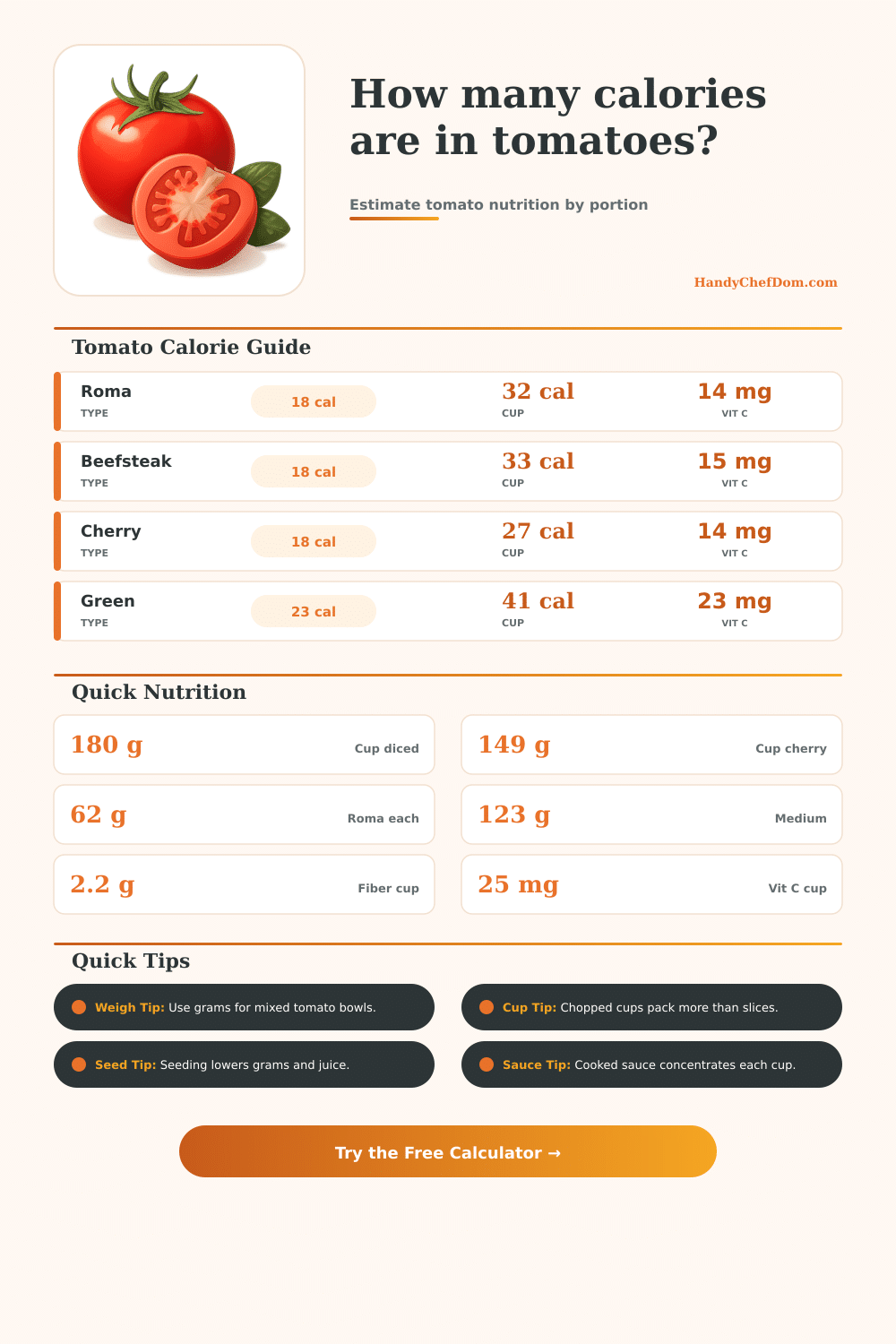
| Roma / plum | 18 kcal | 3.9 g | 1.2 g | 13.7 mg |
| Beefsteak | 18 kcal | 3.9 g | 1.2 g | 14.0 mg |
| Cherry | 18 kcal | 3.9 g | 1.2 g | 13.7 mg |
| Grape | 27 kcal | 5.5 g | 1.8 g | 18.0 mg |
| Campari | 18 kcal | 3.9 g | 1.2 g | 14.0 mg |
| Large heirloom | 19 kcal | 4.0 g | 1.3 g | 16.0 mg |
| Medium round | 18 kcal | 3.9 g | 1.2 g | 13.7 mg |
| Green tomato | 23 kcal | 5.1 g | 1.1 g | 23.4 mg |
| Amount Style | Typical Weight | Best For | Calculator Note |
|---|---|---|---|
| 1 cup chopped | 180 g | Salad, salsa | Dense dice or spooned chopped tomato. |
| 1 cup sliced | 160 g | Sandwiches | Loose slices weigh less than chopped cups. |
| 1 cup halved | 150 g | Cherry, grape | Small tomatoes leave more air space. |
| 1 cup crushed | 240 g | Sauce base | Crushed tomato packs like a liquid cup. |
| 1 medium tomato | 123 g | General use | Good fallback when a tomato is palm size. |
| 1 roma tomato | 62 g | Salsa, sauce | Plum tomatoes are smaller and dense. |
| Meal Use | Portion Cup | Prep Adjustment | Nutrition Reading |
|---|---|---|---|
| Salad portions | 0.75 cup | Keep juice | Best for wedges, chunks, or mixed bowls. |
| Sauce portions | 1.00 cup | Crushed cup | Higher gram density because sauce packs tightly. |
| Salsa portions | 0.50 cup | Seed optional | Seeded tomatoes make a thicker portion. |
| Fresh snack bowl | 1.00 cup | No drain | Works well for small whole or halved tomatoes. |
| Topping or garnish | 0.25 cup | Small dice | Use for tacos, toast, burgers, or bowls. |
| Meal prep cups | 0.60 cup | Light drain | Helpful for packed lunches and planned sides. |
| Seeded Option | Weight Kept | Best Tomato | When To Use |
|---|---|---|---|
| No seeding | 100% | Cherry, grape | Snack bowls, salads, and quick sides. |
| Lightly seeded | 94% | Roma, medium | Pico, chopped salads, and topping cups. |
| Seeded and drained | 88% | Beefsteak | Watery tomatoes for salsa or sandwiches. |
| Extra drain field | Custom | Any type | Use when pulp or juice is left behind. |
While many assume tomatoes has minimal nutritional value, their nutrient density actualy varies depending on type and how they’re prepared. If you’re eating raw red ones, the thinking goes, then why bother; it’s just water and color you’re adding to your salad.
That is true, but it is also largely true of other chopped, seeded, processed tomato products like sauce. Whole tomatoes (and any vegetable), by contrast, have relatively few calories: roughly eighteen per hundred grams. But since what we consume weighs us down, and not all weights of food deliver equal nutrients, this can make understanding nutrition appear counterintuitivly. Accuracy matters, not just the number of items but also the gram.
How to Count Tomato Nutrition
While a cup of chopped-up Roma tomatoes (diced) will weigh roughly one hundred eighty grams, a cup of round slices will weight one hundred sixty grams since you’ve got more air inbetween those slice. When you’re aiming for certain amount of vitamin C or carbs, that little variance begins to add up.
But with the page’s calculator, which asks you what form you are preparing your produce, it does the math for you, and you won’t have to estimate based off whether you left a bit of juice clinging to seeds on a seeded beefsteak tomato. Nutrition figures at the end will also be determined by variety of tomato.
Certain tomatoes is sweeter because they have higher sugar-to-water ratios. Cherry and grape tomatoes are specifically sweeter. These varieties also has slightly more calories and carbs per gram different than a Roma tomato. A bowl of halved cherry tomato may pack in a bit more energy then that same amount of a medium-sized whole tomato, but it’s not huge. You can see this clearly in the reference table on the page; you’ll notice that green or heirloom varieties varies from standard red ones as well.
There is one more wrinkle: green tomatoes. Compared with their ripened counterparts, they have a greater amount of complex carbohydrates (meaning that they are higher in calories), but also more vitamin C, and less water. The fruit hasn’t broken down all of its starches into sugars yet; thus, that green salsa you’ve been making is actualy denser nutritionally than the red stuff.
Yet most cooks assume that all tomatoes have the same calories, and switch them out without much thought. They’re not. Home cooks has a big blind spot in how they prepare things. For example, when you seed and drain something to remove its water weight, it makes the rest of the nutrients more concentrated per gram of what you actualy eat. But it means there’s less overall food. Drain excess from a tomato for a thick pico de gallo, and you’ve lost a bit of vitamin C and fiber that got drained away with juice.
The tool lets you deal with this by tweaking your settings to compensate for extra drain losses and seed removal. Nutrition labels on store-bought products typically don’t care about such small details. They report data based on the raw whole item, not a prepped version.
What happens as you go from consuming raw tomatoes (one medium whole tomato = ~123 grams) to cooked tomatoes? The volume becomes concentrated. Crushed tomatoes in sauce are packed and tight (a cup = almost two hundred forty grams). That means that just one serving of your spaghetti sauce might be nutritionally equivalent to two to three large tomatoes, depending upon its thickness.
That’s part of what makes someone feel full faster after eating a bowl of tomato sauce (though the caloric content per cup isn’t wildly different from the fresh chopped counterparts). That way you’ll be able to make smarter decisions about what you put in your mouth, which is also called eating mindfully, or with more intention.
It’s not rocket science (you don’t have to turn into a food scientist), but it is noticing when there are differences between a chunked cup vs. A sliced one; when seeded produce alters the ratio of fluid to fiber. When you start seeing tomatoes as variable ingredients instead of static ones, those numbers wouldn’t of surprised you anymore.
Awareness. Not restriction, is the name of the game.
When tracking the nutrients in tomatoes, you must consider how much water they contain. It has few calories, and it all depends on what you do with it once picked: If you toss the fruit as wedges or blend it into sauce, thinking of eventual meal’s weight (not its original number) provides a better sense of what’s on your table. Think of each bite of cherry tomato as being more filling then it looks.