🍕 Salt per Pizza Dough Calculator
Scale pizza dough salt from flour weight, baker percentage, hydration, dough style, yeast or starter, dough ball size, salt type, fermentation time, and desired flavor.
Enter flour directly or calculate flour from dough ball count and ball weight. Starter flour is counted in total flour before the baker salt percentage is applied.
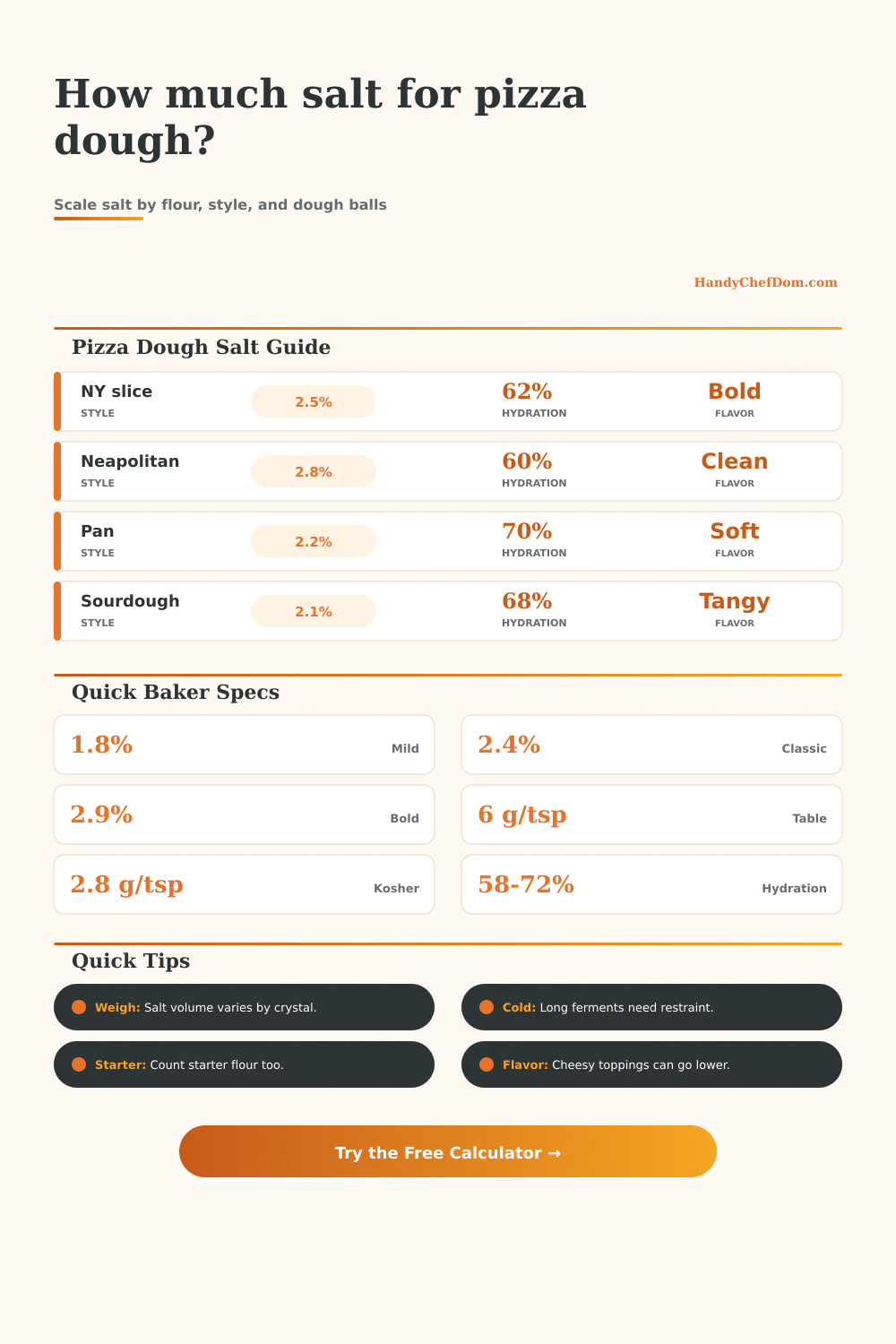
| Dough Style | Typical Salt | Hydration Range | Best Flavor Target |
|---|---|---|---|
| New York slice dough | 2.4% to 2.8% | 58% to 65% | Balanced to bold; good with tomato and mozzarella. |
| Neapolitan dough | 2.6% to 3.0% | 58% to 64% | Clean and bright because the formula is usually lean. |
| Detroit or pan pizza | 2.0% to 2.4% | 68% to 75% | Moderate salt works with oil, cheese edges, and toppings. |
| Grandma or sheet pan | 2.0% to 2.5% | 65% to 72% | Balanced; avoid over-salting if sauce and cheese are assertive. |
| Thin cracker crust | 1.8% to 2.3% | 48% to 56% | Lower salt keeps crisp slices from tasting sharp. |
| Roman high hydration | 2.0% to 2.4% | 75% to 85% | Moderate salt supports open crumb and long rests. |
| Sicilian thick crust | 2.0% to 2.5% | 65% to 72% | Balanced and slightly savory for a thicker bite. |
| Sourdough pizza dough | 1.9% to 2.3% | 62% to 72% | Lower to balanced because acid increases perceived flavor. |
| Baker Salt % | Salt Per 500 g Flour | Salt Per 1 kg Flour | Use Case |
|---|---|---|---|
| 1.6% | 8 g | 16 g | Very gentle dough or intentionally low-salt toppings. |
| 1.8% | 9 g | 18 g | Thin crust, salty cheese, or a restrained family dough. |
| 2.0% | 10 g | 20 g | Common lower edge for pan, sourdough, and sheet pizza. |
| 2.2% | 11 g | 22 g | Balanced pan pizza or long cold fermentation. |
| 2.5% | 12.5 g | 25 g | Classic New York style and all-purpose home dough. |
| 2.8% | 14 g | 28 g | Bold lean dough, Neapolitan formulas, and bright crust. |
| 3.0% | 15 g | 30 g | Upper savory range; use carefully with salty toppings. |
| Salt Type | Approx g/tsp | Approx g/Tbsp | Volume Note |
|---|---|---|---|
| Fine table salt | 6.0 g | 18.0 g | Dense crystals; small spoon changes matter quickly. |
| Fine sea salt | 5.8 g | 17.4 g | Close to table salt, with small grind differences by brand. |
| Coarse sea salt | 4.5 g | 13.5 g | Use more spoon volume for the same salt weight. |
| Morton kosher salt | 4.8 g | 14.4 g | Flaky but denser than very light kosher salt. |
| Diamond kosher salt | 2.8 g | 8.4 g | Large flakes are light; teaspoons can under-salt dough. |
| Flaky sea salt | 1.6 g | 4.8 g | Best weighed if used in dough rather than finishing. |
| Fine pink salt | 5.9 g | 17.7 g | Fine grains behave much like table salt by volume. |
| Canning salt | 6.2 g | 18.6 g | Very fine and fast dissolving in mixing water. |
| Dough Ball Plan | Typical Ball Weight | Flour Estimate | Common Pizza Size |
|---|---|---|---|
| Personal thin pizza | 180 g to 220 g | 110 g to 135 g flour | 10 to 12 inch thin crust. |
| Neapolitan pizza | 240 g to 270 g | 145 g to 165 g flour | 11 to 12 inch round pizza. |
| New York home slice | 280 g to 340 g | 170 g to 210 g flour | 13 to 15 inch pizza. |
| Detroit pan section | 500 g to 700 g | 280 g to 390 g flour | 8 by 10 or 9 by 13 pan. |
| Grandma sheet pan | 700 g to 1000 g | 400 g to 580 g flour | Quarter to half sheet pan. |
| Party dough batch | 250 g to 300 g each | 150 g to 185 g flour each | Multiple medium pizzas. |
The secret ingredient to pizza making is salt, and no, I don’t mean how hot you get your oven. You stretch out the dough, spread on the sauce, top with cheese and then what? It tastes like warm, salty nothing. You let it ferment, and you used good flour. What did you do different than before? It was probably the right amount of salt.
Why are home bakers missing this? Because salt isn’t just a seasoning. It’s the glue that keeps gluten from separating; it amps up flavor and tomato taste like tomato; it helps preserve dough so it doesn’t go stale.
Why Salt Is Important for Pizza
You are usually told how much salt to add by saying something like “add one tablespoon for every four cups of flour,” but baking this way isn’t precise at all. Salt comes in different forms, and so volume measurements aren’t reliable. For example, a teaspoon of fine sea salt weigh significantly more than a teaspoon of flaky kosher salt. Unless you know exactly what you’ve got, you might end up with a too-harsh or bland pizza.
Instead of cups, you should think in baker’s percent. This means weighing every ingredient based off the weight of flour. No matter if you make one pizza or 10 pizzas, it won’t change the ratio. Once you input how much flour you have, the calculator does the rest. It’ll save you from having to guess whether your dough is too soft (or too salty).
So there’s the rub: What is it you’re measuring? When you choose a type of dough, you must accept that different traditional styles requires different amounts of basic salt. With Neapolitan dough, for example, you need clean, accurate salt because base is on the lean side. With a New York-style pie, which tends to cook longer over high heat and in plenty of oil, you must go heavier on the salt to make sure flavors pop. And when you are baking sourdough pizza, the starter lend its acid to deliver flavor. Less is not necessarily worse: You can dial back the salt but maintain bite.”
Style (and Hydration) matter. The chart shows effect of style on ideal percent. Wetter/high-hydration doughs tend toward stickiness as well as tenderness, so they may benefit from reduced amounts of salt too. A thin crust requires sufficient salt to ensure it remains both savory and crisp.
The other variable is fermentation time. Same day, fast dough require more salt for quick development of flavor. Cold fermented dough left in the fridge for forty-eight hours has time to break down starches and bring out their natural sweetness. A normal amount of salt can becomes overpowering. For long cold ferments, the tool reduces the baker’s percent down a bit. Just a little, but it makes a difference.
Tough and dry over-salted dough won’t get saved by any amount of cheese. And don’t forget about the toppings. Are you piling the pizza high with olives, feta, or salami? Keep the crust milder. You don’t want the crust competing with your toppings. Are you making a simple Margherita with some fresh basil? Then let the crust stand on its own. Increase the salt here for a stronger taste.
People think flavor is an accident, but it’s actualy a calculation. The real secret is consistency. Every single time, use a kitchen scale. Weigh out your flour. Weigh out your water. Weigh out your salt. Don’t guess with any of these things.
The brand of yeast you use rarely makes the difference between a good pizza and a great one. There isn’t really that big of a difference in whether you make a good pizza or a great pizza. Usually it has more to do with how disciplined the baker is.
If you stop guessing and start weighing, I promise, you’ll taste the difference. It’ll stretch easier. It’ll behave better. Many people think flavor is accidental. Flavor isn’t accidental. Flavor is a calculation. If you get the salt right, then the rest of the pizza is going to take care of itself.”