🦐 Shrimp Calorie Calculator
Estimate shrimp calories, protein, fat, sodium, cooked yield, edible weight, and pieces per serving from raw or cooked weight.
Enter shrimp by package weight, cooked tray weight, or target serving size. The calculator adjusts for raw-to-cooked shrink and peeled, tail-on, shell-on, or head-on edible yield.
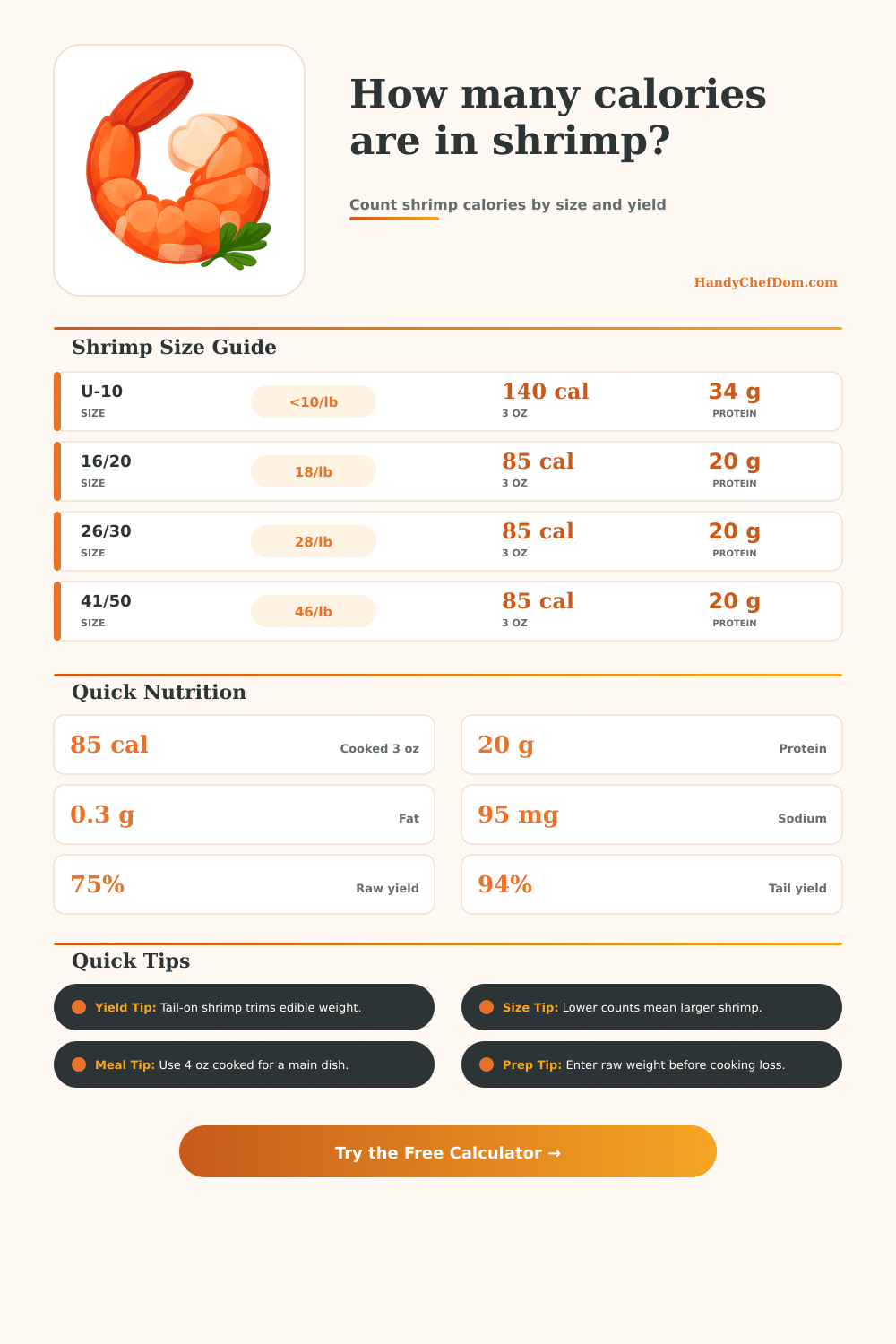
| Count Label | Market Name | Avg Count/Lb | Approx Raw Each |
|---|---|---|---|
| U-10 | Colossal | 9 | 1.78 oz |
| 10/15 | Super colossal | 12.5 | 1.28 oz |
| 16/20 | Jumbo | 18 | 0.89 oz |
| 21/25 | Extra large | 23 | 0.70 oz |
| 26/30 | Large | 28 | 0.57 oz |
| 31/40 | Medium | 35.5 | 0.45 oz |
| 41/50 | Small | 45.5 | 0.35 oz |
| 51/60 | Salad | 55.5 | 0.29 oz |
| Prep Style | Edible Yield | Raw Cook Yield | Best Input |
|---|---|---|---|
| Peeled, no tail | 100% | 75% | Cooked edible weight |
| Peeled, tail-on | 94% | 75% | Cooked tray weight |
| Shell-on | 72% | 75% | Raw package weight |
| Head-on shell-on | 50% | 72% | Raw whole weight |
| Raw peeled | 100% | 76% | Raw peeled weight |
| Cooked cocktail | 94% | 100% | Cooked tail-on weight |
| Cooked Edible Portion | Calories | Protein | Fat | Sodium |
|---|---|---|---|---|
| 2 oz / 57 g | 56 kcal | 13.7 g | 0.2 g | 63 mg |
| 3 oz / 85 g | 84 kcal | 20.4 g | 0.3 g | 94 mg |
| 4 oz / 113 g | 112 kcal | 27.2 g | 0.3 g | 125 mg |
| 6 oz / 170 g | 168 kcal | 40.8 g | 0.5 g | 189 mg |
| 8 oz / 227 g | 225 kcal | 54.5 g | 0.7 g | 252 mg |
| Serving Plan | Cooked Per Person | Raw Peeled Needed | Large Shrimp |
|---|---|---|---|
| Party bite | 1.5 oz | 2.0 oz | 3 shrimp |
| Appetizer | 2 oz | 2.7 oz | 4 shrimp |
| Salad topper | 3 oz | 4.0 oz | 5 shrimp |
| Main dish | 4 oz | 5.3 oz | 7 shrimp |
| Protein plate | 6 oz | 8.0 oz | 11 shrimp |
Nutrition estimates use plain cooked shrimp values per 100 g and adjust sodium only for the selected sodium style.
How many ounces of shrimp on your plate? Remember, what is on the package are nothing like what ends up in your mouth. As shrimp is prepared, it sheds its shells and tails, and then it lose water when it is cooked. For example, one pound of uncooked shrimp will shrink by about 25 percent when cooked.
So if you’re portioning out meals or counting calories, you want to adjust for this weight change based off the scale. That’s where the calculator we’ve created comes in: it adjust for the weight loss as soon as you key in the raw weight. The more you know about how input variables work, the better you’ll understand what the output mean for planning your meals.
How Much Shrimp Do You Need?
Then there’s the confusion about the count label on the package. When it says 16/20, that doesn’t mean that there is indeed twenty shrimp in the bag. Rather, it means that there are between sixteen and twenty shrimp per pound. That should of been a guideline of their approximate size. The fewer per pound (e.g., u-10 colossal shrimp), the bigger each individual piece will be.
That become a consideration when portioning out the shrimp for your guests. A jumbo shrimp on a toothpick makes a different kind of cocktail bite than a teeny-tiny salad shrimp. How much do you get to eat? That depends on how you’re going to prepare them. With shell-on shrimp, you’re actualy paying for something that’s inedible. The calculator accounts for this by assuming that all of your shrimp needs to be peeled and then cooked.
Note that shrimp doesn’t need to be peeled if you plan to boil them in the shells. This results in an estimate of the amount of meat you’ll end up with. Because raw shrimp loses approximately twenty-five percent of its weight during cooking, there is a certain amount of shrinkage assumed here. People tend to get confused about this. They think they’ve lost their meat; instead, they’ve lost their water. Knowing why this happen prevents you from panicking and overcook.
You should also keep sodium in mind. Some types of pre-cooked or brined shrimp can has a significant salt load already baked in. The tool can take your needs into consideration if you’re following a low-sodium diet. It also helps if you know the shrimp was previously salted and need to account for it when making something with many other seasonings, such as gumbo or paella. No need to add twice as much salt if the shrimp itself have been heavily salted.
But it’s all dependent upon portion size, which depends on what else you’re eating. If you’re topping your salad with shrimp, you don’t need as much as if you were serving it as a main course. As a general guideline, plan on 4 ounces of cooked, edible shrimp per person as a main dish. That’s enough that they feel like they’ve had a substantial meal, but not too much to be overwhelming. Two to three ounce tends to be plenty as an appetizer/side dish.
This calculator gives you the exact number of grams of protein and calories per guest, making it easy to see how much of every pound of food each person get. It makes the pound (an abstract idea) into a real meal plan. At about twenty grams per three-ounce portion, shrimp is a lean powerhouse in the seafood world. If you’re following a high-protein diet or trying to get fit, it’s a good selection: you’ll be able to fill up without going overboard on calories.
There isn’t much fat present (that’s why the caloric value of a single portion is so low compared to the size of the dish). So from a seafood perspective, it’s a lean choice. When it comes to cooking shrimp, there’s no getting around shrinkage. By considering both the preparation method and the yield, you can take the guesswork out of grocery shopping. This way, you can feel confident that whatever is served at the table are exactly what you bought.
Four servings? Forty? Regardless, you’ll know exactly how much to expect, whether you’re tracking calories or just focusing on proper preparation.