🍌 Banana Sugar Calculator
Estimate natural banana sugar by count, length, ripeness, prep state, serving count, and smoothie or baking use.
Use count plus length for quick estimates, grams for precision, or mashed volume for baking. The sugar values use banana-specific nutrition estimates by ripeness and prep concentration.
| Banana size | Typical length | Edible grams | Natural sugar | Best estimate use |
|---|---|---|---|---|
| Extra small | Under 6 in | 81 g | 9.9 g | Lunchbox snacks |
| Small | 6 to 7 in | 101 g | 12.3 g | Kids portions |
| Medium | 7 to 8 in | 118 g | 14.4 g | Most recipes |
| Large | 8 to 9 in | 136 g | 16.6 g | Smoothies |
| Extra large | 9 in plus | 152 g | 18.6 g | Batch baking |
| Ripeness stage | Sugar per 100 g | Fiber per 100 g | Sugar-fiber ratio | Kitchen use |
|---|---|---|---|---|
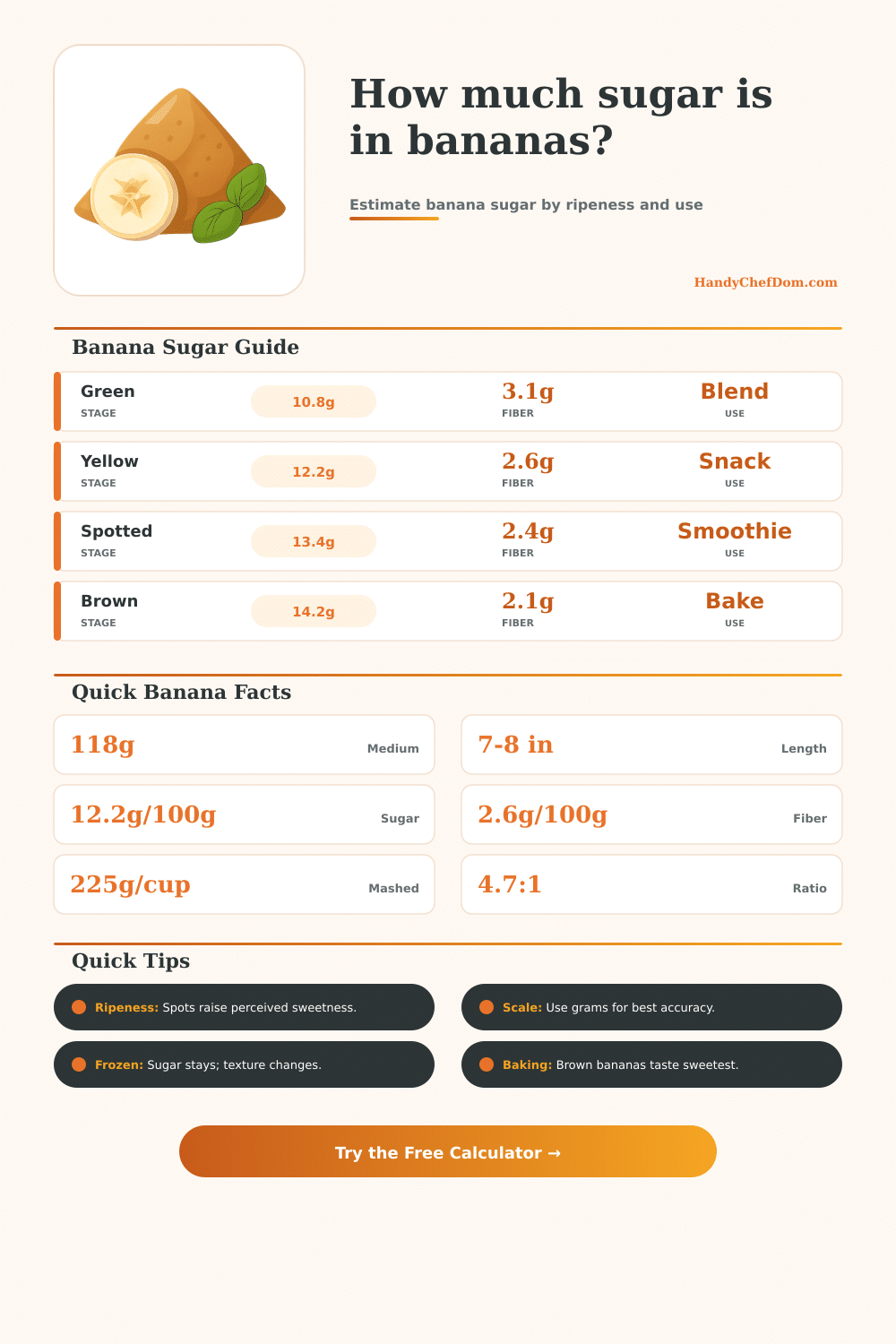
| Green tipped | 10.8 g | 3.1 g | 3.5:1 | Less sweet blends |
| Yellow ripe | 12.2 g | 2.6 g | 4.7:1 | Everyday snacks |
| Spotted ripe | 13.4 g | 2.4 g | 5.6:1 | Smoothies |
| Brown baking ripe | 14.2 g | 2.1 g | 6.8:1 | Banana bread |
| Prep state | Sugar factor | Fiber factor | Yield note | Best use |
|---|---|---|---|---|
| Fresh slices | 1.00x | 1.00x | No change | Snack bowls |
| Frozen chunks | 1.00x | 1.00x | Same sugar | Smoothies |
| Thawed drained | 1.03x | 1.00x | Small water loss | Batters |
| Mashed banana | 1.00x | 1.00x | 225 g per cup | Baking cups |
| Reduced puree | 1.12x | 1.02x | Water cooked off | Dense bakes |
| Target use | Banana target | Typical sugar | Scaling note | Portion idea |
|---|---|---|---|---|
| Smoothie serving | 100 g | 12.2 g | Divide grams by 100 | 1 glass |
| Banana bread loaf | 300 g | 40.2 g | Divide grams by 300 | 10 slices |
| Muffin batch | 240 g | 32.2 g | Divide grams by 240 | 12 muffins |
| Pancake batter | 180 g | 22.0 g | Divide grams by 180 | 8 pancakes |
| Baby food cup | 60 g | 7.3 g | Divide grams by 60 | Small cup |
| Energy bite batch | 180 g | 22.0 g | Divide grams by 180 | 16 bites |
Nutrition values are practical estimates based on edible banana weight. Exact sugar varies by cultivar, ripeness, storage, and moisture loss.
When it comes to deciding what to do with bunch of bananas on your kitchen counter, we all know the dilemma: some is starting to get yellow-brown, perfect for a smoothie but not the most appetizing option for a crisp bite. Others are still green, firm, and good to go… but they’ll last all week. How to choose? You can take guesswork out of the equation.
Enter: The Sugar Calculator. This turns the visual clues of banana-ripeness into actualy facts about nutrition. That way, you can make decisions confidentely. And plan ahead for your meals.
How to Choose the Right Bananas for Your Meals
Unless you’ve eaten enough bananas to know better, most people thinks that every banana is equally nutritious until it gets brown. But that’s not how fruit biology work. A banana, regardless if you leave it on the counter or store it in the fridge, will start breaking down the starch as it ripens into simpler sugars such as fructose and glucose. And when those little specks of brown appear. Before you notice them, the surge in sugar is already underway.
Choosing the ripeness stage let you measure just how much has changed with the tool. Based off that selection, it’ll adjust the calculated fiber and sugar content accordingly. For an approximate guess, enter number of bananas along with their average length. If you want more accuracy, swap out pounds with grams, since one bunch can vary quite a bit in size. What goes in depends on your planned purpose for the fruit.
For example: if you’re planning on banana bread, you’ll want some good old brown-spotted bananas that are as sweet as they can get. That’s what the “brown baking ripe” input in the calculator refers to. These bananas has less fiber and more sugar than the yellow or even greener ones. This is why banana bread varies in flavor based on ripeness. A firmer banana will create a denser loaf, lacking the same natural sweetness. Often, you must make up for this difference by adding extra sugar.
With both added and natural sugar tracked independently, you get a clear view of where your dessert gets its sweetness, from the pantry shelf or the fruit itself. Even though we think texture doesn’t have anything to do with sugar, it’s part of the equation here as well. The sugar in bananas isn’t altered when they’re frozen. But what freezing will do is alter how that sugar behave within a batter or smoothie.
The calculator will also consider prep state: reduced puree, mashed banana, frozen chunks, etc. One common way to measure fruit is by cups, and one cup of mashed banana have a density of approximately 225 grams. (Yes, this is a baking measurement.) So if you follow a recipe that asks for mashed fruit by cups, inputting based on weights will help avoid mistakes caused by variable packing. Packing loosely yields different results then packing densely, resulting in uneven amounts of sugar throughout whatever you’re making.
Most home cooks struggle when it comes to scaling recipes. Have three bananas? Need that to make one loaf of bread or two smoothies? There are scaling factors and preset scenarios to help turn your banana count into something that fits in the recipe. It’ll tell you roughly what number of servings you can reasonably expect depending on the type of sugar content you desire. Want higher sugar availability (for a post-workout shake) or more focus on fiber content (to feel fuller for longer, say via a snack bowl)? We would of explained the tradeoff so you can pick the right fruit instead of just throwing everything in and hoping for the best.
How you store them also depends on how ripe they are. If you purchased a big bunch, divide them right away and slow the ripening pace of each batch by keeping them apart. As the stems age, they emit a gas called ethylene, which hastens the browning of any adjacent bananas. You can further slow that process by wrapping each stem with plastic. That buys you extra days to enjoy the firmer bananas as snacks, rather then when they’re ready for baking. This little trick prolongs your window of usability.
No more: Every single banana browns simultaneously… Grrr! At the end of the day, understanding how much sugar is in your fruit helps you plan meals without needing to restrict so strictly. For example, bananas are a handy portable form of energy. But along with the energy comes carbohydrates (which can spike blood sugar levels). Using this estimate while tracking food intake will give you more control over what goes into your body each day instead of just reacting to it.
Next time you grab that banana, know just what’s going on within.