Chicken Wings Per Pound Calculator
Estimate wings per pound, total pieces, cooked yield, guest servings, and sauce ounces from real wing cut and size assumptions
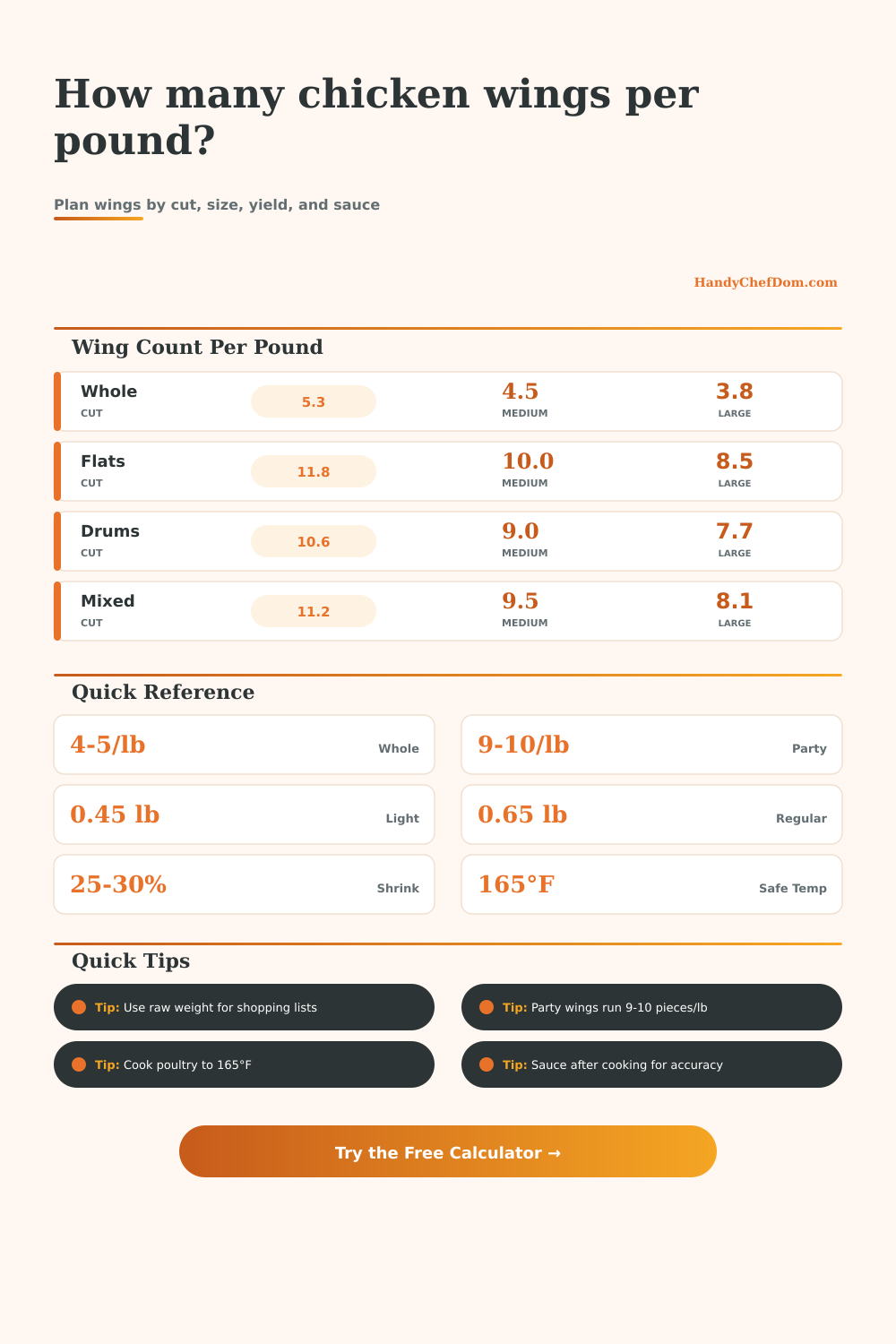
| Wing Cut | Small | Medium | Large | Jumbo |
|---|---|---|---|---|
| Whole wings | 5.3/lb | 4.5/lb | 3.8/lb | 3.2/lb |
| Flats only | 11.8/lb | 10.0/lb | 8.5/lb | 7.2/lb |
| Drumettes only | 10.6/lb | 9.0/lb | 7.7/lb | 6.5/lb |
| Party mix | 11.2/lb | 9.5/lb | 8.1/lb | 6.8/lb |
| Boneless bites | 18.9/lb | 16.0/lb | 13.6/lb | 11.5/lb |
| Appetite | Cooked lb/Guest | Party Pieces | Best Use |
|---|---|---|---|
| Light appetizer | 0.45 lb | 4–5 | Snack table |
| Regular meal | 0.65 lb | 6–7 | Dinner plate |
| Hearty meal | 0.85 lb | 8–9 | Main dish |
| Game day main | 1.05 lb | 10–12 | Long event |
| Reference | Typical Value | Calculator Use | Note |
|---|---|---|---|
| Raw to cooked yield | 70–75% | Shrink input | Moisture and fat loss |
| Default shrink | 28% | Cooked yield | About 72% yield |
| Sauce rate | 2–4 oz/lb | Sauce total | Light to saucy toss |
| USDA safe poultry temp | 165°F | Reference only | Check thickest part |
| Guests | Light App | Regular Meal | Game Day |
|---|---|---|---|
| 4 | 2.5 raw lb | 3.6 raw lb | 5.8 raw lb |
| 8 | 5.0 raw lb | 7.2 raw lb | 11.7 raw lb |
| 12 | 7.5 raw lb | 10.8 raw lb | 17.5 raw lb |
| 25 | 15.6 raw lb | 22.6 raw lb | 36.5 raw lb |
| 50 | 31.3 raw lb | 45.1 raw lb | 72.9 raw lb |
Don’t panic about hosting; hosts should calculates their food needs. Whether it’s for a party or just feeding yourself, knowing exactly how much to buy can help prevent embarassing moments like running out of chicken at a gathering. There is an online calculator that will tell you exactly how many chicken pieces to purchase depending on your appetite and number of guest. Because wings come in bags based off their weight but we consume them by the piece, this can save you from over/under estimating how many bag to purchase.
Wings come in various counts/weights. For example, a whole wing consist of a drumette and a flat connected at the joint. When those wings is split they become two separate pieces, which means there’s one less piece of joint per pound. Additionally, drumettes weighs more than flats. This means you gets fewer drumettes per pound compared to flats, so each bag of drumettes will have fewer pieces then a bag of flats. You can choose what kind of cut you’re working with in the calculator.
How to Plan Your Chicken Wings
Why? Because it helps with budgeting! If you’re trying to count out pieces instead of pounds, then choosing the wrong variable will realy blow up your grocery bill.
Because chicken has both fat and moisture, wings will shrinks when cooked. A pound of raw wing will not equal a pound of cooked wings. Depending on the crispiness of your skin, most chefs estimate about 25-30% weight loss. This yield factor is already included in the estimates from the calculator. If you don’t account for this shrinkage, then you’ll serve fewer wings than anticipated. You can also customize the shrink percentage. You can choose more shrinkage for very crispy wings, or less shrinkage to keep them more tender and moist.
Home cooks overestimate or underestimate sauce consumption. Most people thinks each pound of meat will need one cup of sauce. They don’t account for tossing and the fact that some sauces are thicker than others. Do they want a thick glaze or just a light coat? If it’s the former, then they’ll need more and if it’s the latter, then they won’t. The estimator help you project the total ounces needed so there is no need to run out to store at the last minute. There is even an option to add a “buffer” percent in case someone wants seconds. That way, there will be plenty for all those at the dinner table.
No matter how you cook your wings, whether by frying, baking, or air frying, you need to ensure that they reaches an internal temperature of one hundred sixty five degrees Fahrenheit to be safe. Use this chart as a guide along with your serving size depending on what kind of meal you are making. Are you preparing a full dinner? Or just a game day snack? The chart will also help you understand how many wings to expect per person at each level of hunger. This ensures everyone get a satisfying amount and knows their dish is safe to eat.
Know the variables instead of memorizing numbers. The piece count depends on your choice of cut. The weight you serve are different than the weight you buy. How much weight do you lose in preparation? That depends on your cooking method. When you accept these facts, it’s just simple arithmetic. Planning turns into a matter of math, not guesswork. You’ll know exactly how much raw meat to buy and never worry about empty platters again.