Pounds Of Potatoes Per Person Calculator
Estimate raw potatoes to buy from guests, dish style, potato type, appetite, peel loss, cooked yield, and extra buffer
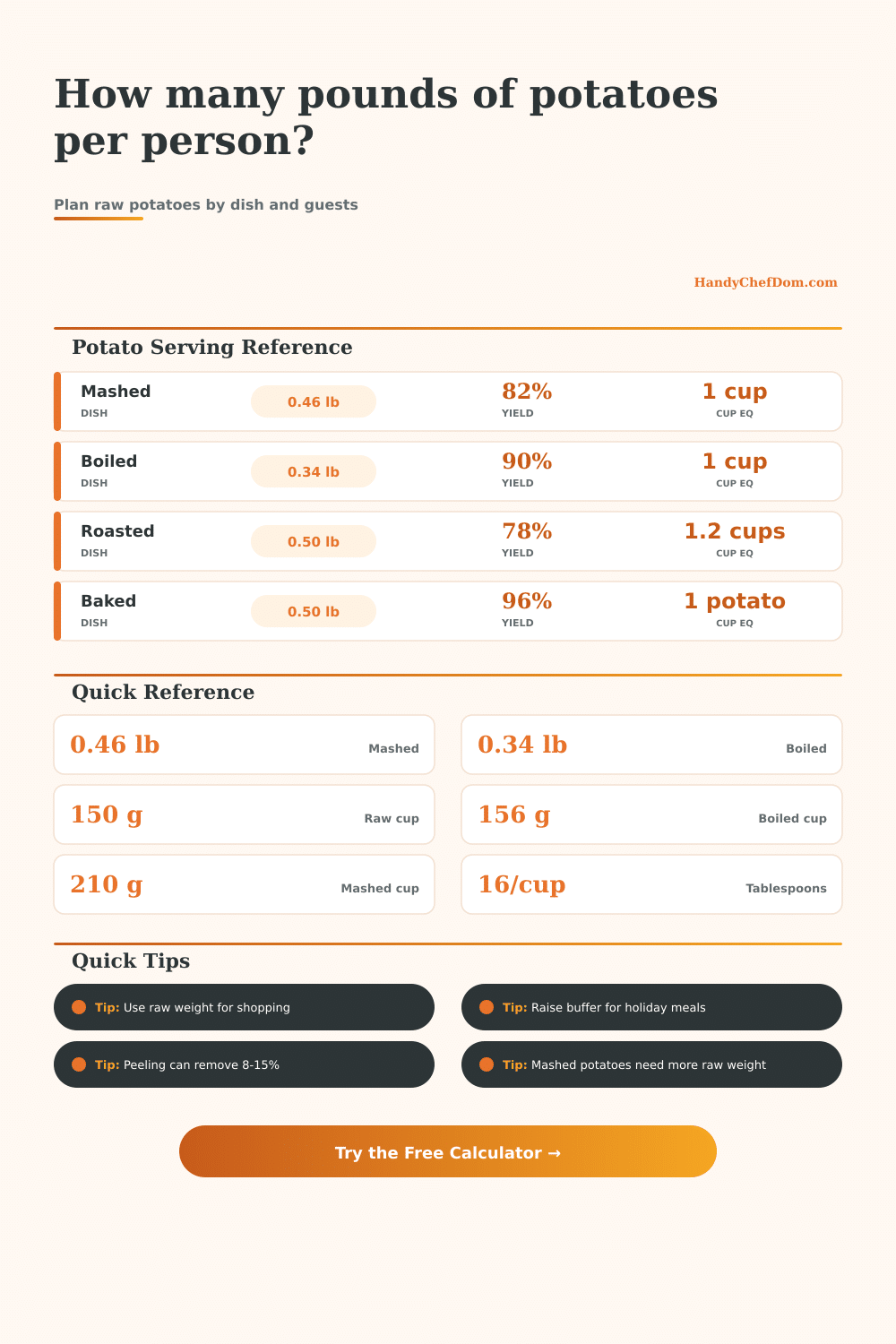
| Dish | Finished Serving | Default Yield | Best Potato |
|---|---|---|---|
| Mashed potatoes | 1 cup / 0.46 lb | 82% | Russet or Yukon |
| Boiled side | 1 cup / 0.34 lb | 90% | Red or baby |
| Roasted potatoes | 1.2 cups / 0.50 lb | 78% | Yukon or red |
| Baked potato | 1 medium / 0.50 lb | 96% | Russet |
| Potato Form | 1 Cup Weight | Cups Per lb | Tablespoons |
|---|---|---|---|
| Raw diced russet | 150 g | 3.02 | 16 tbsp |
| Boiled potato | 156 g | 2.91 | 16 tbsp |
| Mashed potato | 210 g | 2.16 | 16 tbsp |
| Roasted chunks | 180 g | 2.52 | 16 tbsp |
| Type | Typical Size | Texture | Yield Note |
|---|---|---|---|
| Russet | 0.50 lb | Fluffy | Best mashed |
| Yukon Gold | 0.38 lb | Creamy | Steady yield |
| Red potato | 0.30 lb | Waxy | Low breakage |
| Baby potato | 0.10 lb | Firm | Little peeling |
| Guests | Mashed Raw | Roasted Raw | Potato Salad Raw |
|---|---|---|---|
| 4 | 2.5 lb | 2.8 lb | 2.0 lb |
| 8 | 5.0 lb | 5.6 lb | 4.0 lb |
| 12 | 7.5 lb | 8.5 lb | 6.0 lb |
| 25 | 15.7 lb | 17.7 lb | 12.5 lb |
“What size bag do I need?” you ask yourself, standing in front of a pile of russets in the produce section. Will this be enough to feed my dozen hungry diners? Or will it end up leaving their plates looking empty? Potatoes can be tricky: When peeling, they weigh less; after cooking, they shrink. Buying blind is a formula for failure.
By plugging in your serving method and guest number, the potato calculator above do all that math for you. From there, it tell you precisely how many raw potatoes to purchase; working backwards from what you’ll serve. And that’s where most people fail. They base their purchases on cooked volume without taking into account the loss caused prior to ever touching the food with a fork.
How to Know How Many Potatoes to Buy
Preparation makes all the difference, which leads us to the first variable: the kind of dish being prepared. For example, mashed potatoes begins with a high starch content which will break down when cooked, absorbing milk and butter in the process. Roasting depletes moisture from the potatoes as they cook off into the air, so you must use more raw potato to achieve equal portions on your plate. To address this, the tool adjusts for different methods based off their yield percentage. A simple boil on the stovetop results in little shrinkage, but change to a heavy mash or even a gratin, and suddenly the numbers swings heavily. No need to memorize these coefficients, let the system do the work and concentrate on what goes onto your menu.
This brings us to the second thing your host doesn’t know about: appetite. I can serve half as many potatoes as a light side with a plate of fish. In contrast, I serve a large helping during the holidays when there isn’t much meat on the menu. That’s why we’ve got the buffer setting, your safety net. Ten to fifteen percent above what you think will be plenty will take care of the last-minute guests that always seem to materialize. It also accounts for those who are truly excited for this meal. Better to have leftovers then to send folks home unsatisfied by underestimating how much food they’ll consume.
The one subtle-but-important variable here is potato variety: Fluffy russet potatoes are perfect for mashing, but because you have to peel off their skins, you’re losing some raw bulk. Baby potatoes, or red ones, will be peeled less often, if at all, leaving you with a greater fraction of what you paid for on the dinner plate. If you cook according to a particular method and want the calculator to take this into account, you can override the default estimate by entering the percentage of peel lost. The default estimates generaly work out for typical home-cooking methods.
Yield is the amount of weight you’ll get when everything’s finished, including the cooking part. Boiling or roasting water away decreases the final weight; you’ll need to buy slightly more potatoes to make up for that shrinkage. It’s one thing to understand what comes out; it’s another to picture it happening. For example, the calculator does more than show the total number of pounds to purchase. It also shows an estimate of how many potatoes there will be and how much the final product will weigh in cups. Two views, shopping and serving, span the distance. I see a bag of five-pound potatoes and know that’s enough for however many people I need to feed. That abstract idea of weight becomes real portions.
If you’re mixing old spuds with fresh ones. Which, let’s be honest, we all do at some point; make sure to include the amount of leftovers that are already stored in your cupboard. That way, the calculator will take into account how much you have on hand. It will deduct the extra from its recommended amount so you don’t buy more than you need and let food go bad. It’s also handy for those who prep meals ahead; if you already have some potatoes in your pantry, the calculator can subtract them from what you need to buy, which helps prevent waste and saves money.
Planning potato quantities feels like a minor detail until the dinner party arrives and you run out of sides. That happens when a dinner party rolls around and there’s no side to serve because you didn’t count on them. A few pounds of raw spuds purchased ahead make all the difference between a relaxed host and a panicked one.
Here’s how: Consider yield, consider appetite, and consider the weight you’ll lose when peeling. Think about it now before you guess. Then, follow your heart and your numbers where they want you to go. It’s always better to have too much than not enough. Especially when it comes down to confidence. And that is the most important thing.