🍚 Soy Sauce Per Cup of Rice Calculator
Estimate soy sauce for cooked rice by cup, rice type, dish style, soy type, sodium goal, add-ins, servings, and dilution.
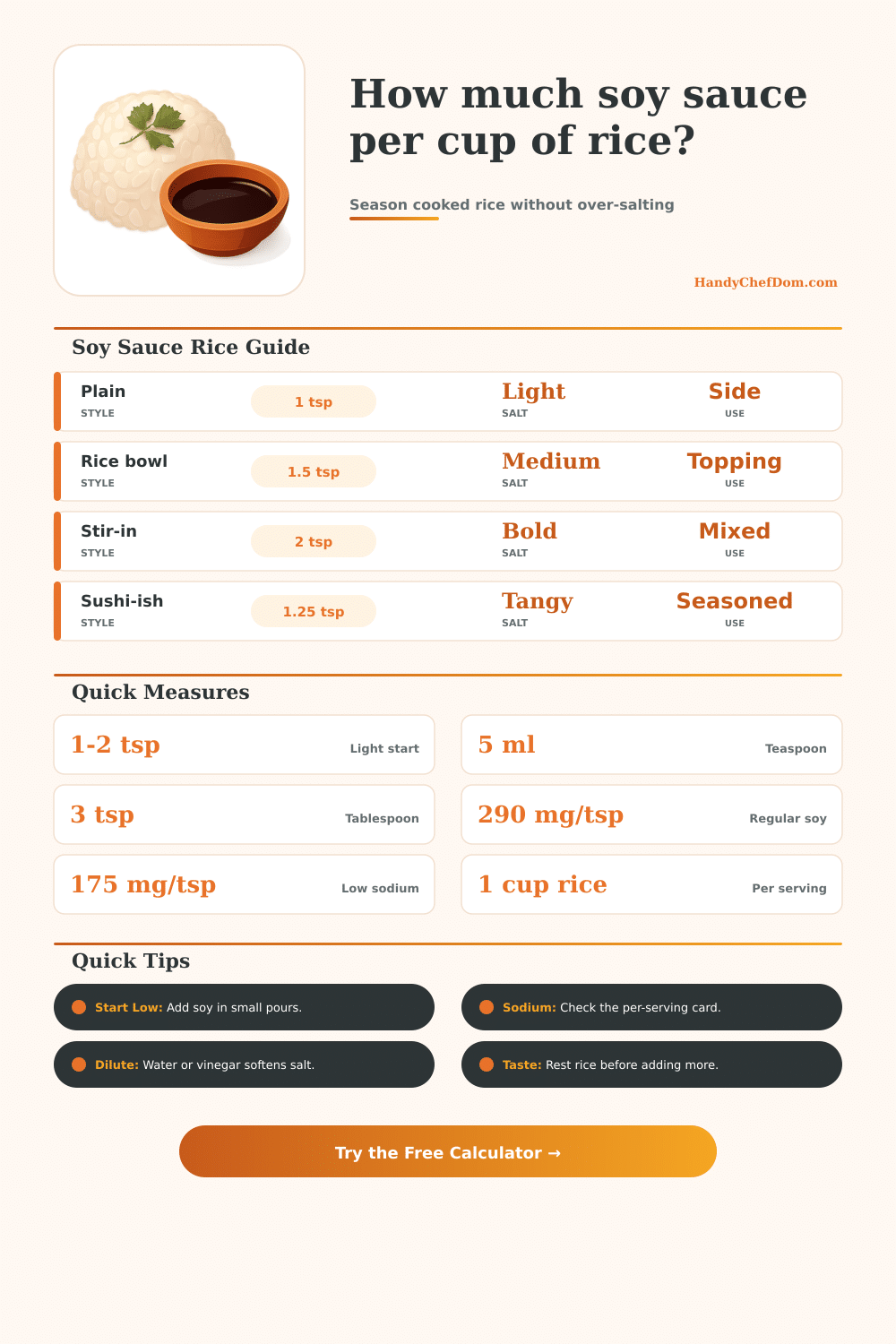
Light seasoning often starts around 1 to 2 teaspoons soy sauce per cup of cooked rice. This calculator adjusts that starting point for style, soy type, add-ins, sodium limits, and dilution.
| Soy sauce type | Estimated sodium per tsp | Flavor strength | Calculator use |
|---|---|---|---|
| Regular soy sauce | 290 mg | Salty, direct, familiar | Everyday baseline for rice cups |
| Low sodium soy sauce | 175 mg | Milder salt, still savory | Useful when the sodium target is tight |
| Tamari | 300 mg | Round, deeper, full-bodied | Similar salt impact with richer finish |
| Dark soy sauce | 210 mg | Darker color, less sharp salt | Good when color and gloss matter |
| Cooked rice amount | Small portions | Standard servings | Light soy range |
|---|---|---|---|
| 1 cup cooked rice | 2 half-cup portions | 1 rice side serving | 1 to 2 tsp soy sauce |
| 2 cups cooked rice | 4 half-cup portions | 2 rice side servings | 2 to 4 tsp soy sauce |
| 4 cups cooked rice | 8 half-cup portions | 4 rice side servings | 4 to 8 tsp soy sauce |
| 6 cups cooked rice | 12 half-cup portions | 6 rice side servings | 6 to 12 tsp soy sauce |
| 10 cups cooked rice | 20 half-cup portions | 10 rice side servings | 10 to 20 tsp soy sauce |
| Dish style | Base tsp per cup | When it fits | Adjustment note |
|---|---|---|---|
| Plain seasoned rice | 1.00 tsp | Simple side rice or gentle seasoning | Start here when toppings are salty |
| Rice bowl base | 1.50 tsp | Rice served under vegetables, egg, or protein | Balanced with unsalted toppings |
| Stir-in seasoned rice | 2.00 tsp | Sauce mixed through warm rice | Higher because sauce coats all grains |
| Sushi-ish seasoning | 1.25 tsp | Rice vinegar style seasoning with soy note | Dilution keeps saltiness softer |
| Sauce choice | Best rice pairing | Saltiness impact | Practical note |
|---|---|---|---|
| Regular soy sauce | White rice, jasmine rice, bowl bases | Strong salt per teaspoon | Use smaller pours and taste after resting |
| Low sodium soy sauce | Meal prep rice, kid portions, sodium targets | Lower sodium per teaspoon | Can keep savory flavor while lowering mg |
| Tamari | Short-grain rice, brown rice, rich bowls | Full and salty | Often feels rounder at the same amount |
| Dark soy sauce | Glossy rice, sticky rice, color-focused bowls | Moderate salt, high color | Small amounts darken rice quickly |
A bowl of rice with soy sauce seems like an easy thing to make. You get some rice, pour on a bit of soy sauce, done! But then you try it and realize there’s a sweet spot: If you use too little, the grains is flat; if you use too much, everything else overwhelms the sharp saltiness.
It all depends on what kind of soy sauce you have at home, how much rice you cook and what you’re going to top it off with. A serious calculator can take these factors and turn them into something useful: a number to start with rather than just guessing.
How to Use the Soy Sauce Rice Calculator
But then there’s also the matter of what kind of rice. Shorter grains of rice will catch sauce between their grain. Longer rice, like white long-grain, stays separated and soaks up less sauce on the surface. Brown is chewy, it’ll hold more bold seasonings but can’t handles them all (as can be expected). Cauliflower rice already contains some moisture, so it requires much less.
The rice-type dropdown adjust the base amount for each grain, and this is where the calculator comes in: It won’t have you treat one cup of cooked brown rice the same as white, for example.
The dish style also matters. If you’re serving plain rice on the side, all you need is enough to wake up the grains of rice and not compete with main dish. Rice that will be sitting underneath some protein or veggies can stand up to a little more sauce since those toppings will offset any saltiness. If you intend for the rice to be stirred together with the sauce so each grain is coated, then there’s an increase in amount. You get to indicate what you’ll use the seasoning for and the output will reflect how it will actualy be distributed instead of one rule to apply to every scenario.
And then there’s the whole soy sauce thing. You’ve got regular soy that’s straight salt at a certain strength. There is lower-sodium, which must be used in greater quantities to get the desired taste. Tamari has a deeper, rounder depth. Dark soy is also a little less sharp but comes with some coloring as well.
The calculator also lets you limit overall sodium. This is useful if you’re planning meals for several days, making lunch for yourself during the workweek, or cooking for a friend with moderatley restricted salt consumption.
Nobody remembers dilution. Adding a little rice vinegar (or water) spreads the seasoning across more rice without increasing the sodium load. You’ll be able to see the total, diluted version along with the pure-soy amount in the calculator, and judge based off your preference for spreading vs concentrating the seasoning. And you’ll know how that option impacts the eventual saltiness score, which tells you if you’re going for something bold, balanced, or gently seasoned after it gets all stirred together.
The common mistake is treating all soy sauces as a fixed amount. Start with roughly two-thirds of the calculated amount; wait a minute before trying it again. The better approach is to start with about two-thirds of the amount and wait a minute for it to absorb before deciding if you need more. A better method is to calculate the amount, but start with about two-thirds of that quantity, stir or fold it into the rice, let it stand for a minute, and then re-taste. In that interval you’ll discover not only how far the rice has soaked up, but also if any additional quantity are required.
But when we’re talking about toppings: Same deal. Soy alone isn’t as necessary if there’s a salty topping like pickles. You might use pickles or nori, while unsalted protein and sweet glaze tip things the opposite way. With an add-ins field on the calculator, you can tweak your starting point even before you grab that bottle.
Just start with about two-thirds of the amount, then taste and adjust as needed. Of course, it’s never about getting the teaspoon exactly right, each and every time. It’s about getting close enough. It’s a solid starting place that honors the dish, the grains of rice, and your tastes. When you’ve got that figure in hand, everything else after that’s more a question of incremental tweaking than guessing.
You should of used more seasoning if it was too bland.