☕ Pumpkin Spice Latte Caffeine Calculator
Estimate caffeine by PSL size, espresso shots, coffee style, half-caf share, syrup pumps, milk volume, whipped topping, and drink count.
Use the size presets as a starting point, then adjust espresso shots, coffee type, decaf share, syrup pumps, milk, whipped topping, and number of drinks.
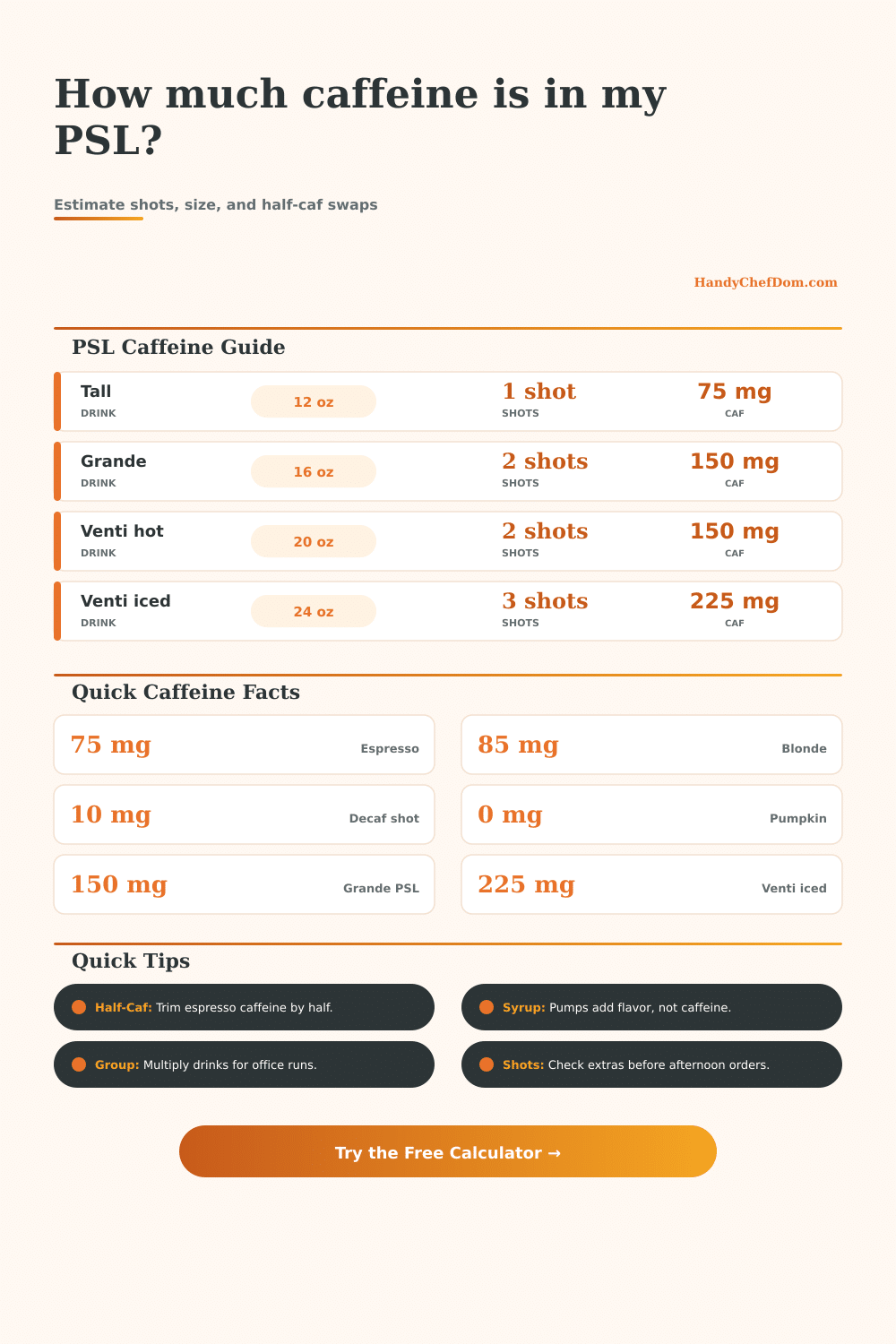
| PSL Size | Typical Cup | Default Shots | Typical Caffeine |
|---|---|---|---|
| Short hot | 8 fl oz | 1 shot | 75 mg |
| Tall hot | 12 fl oz | 1 shot | 75 mg |
| Grande hot | 16 fl oz | 2 shots | 150 mg |
| Grande iced | 16 fl oz | 2 shots | 150 mg |
| Venti hot | 20 fl oz | 2 shots | 150 mg |
| Venti iced | 24 fl oz | 3 shots | 225 mg |
| Coffee Type | Caffeine Basis | Decaf Basis | Best Use |
|---|---|---|---|
| Signature espresso | 75 mg/shot | 10 mg/shot | Classic cafe PSL |
| Blonde espresso | 85 mg/shot | 10 mg/shot | Brighter latte |
| Home espresso | 64 mg/shot | 10 mg/shot | Home machine |
| Strong cafe espresso | 90 mg/shot | 10 mg/shot | Extra bold order |
| Brewed coffee base | 95 mg/8 oz | 2 mg/8 oz | Homemade mug |
| Cold brew base | 155 mg/12 oz | 2 mg/8 oz | Iced homemade PSL |
| Latte Add-In | Common Amount | Caffeine Added | Calculator Role |
|---|---|---|---|
| Pumpkin spice syrup | 2 to 6 pumps | 0 mg | Flavor tracking |
| Steamed milk | 6 to 15 fl oz | 0 mg | Dilution tracking |
| Whipped topping | Light to extra | 0 mg | Topping note |
| Pumpkin spice topping | Dash | 0 mg | Flavor note |
| Extra espresso shot | 1 shot | 75 mg | Main boost |
| Half-caf swap | 50% decaf | Lower mg | Decaf share |
| Preset | Size | Coffee Setup | Estimated Caffeine |
|---|---|---|---|
| Tall Single PSL | 12 fl oz | 1 signature shot | 75 mg |
| Grande Double PSL | 16 fl oz | 2 signature shots | 150 mg |
| Venti Iced PSL | 24 fl oz | 3 signature shots | 225 mg |
| Half-Caf Fall Drink | 16 fl oz | 2 shots, half decaf | 85 mg |
| Decaf Dessert Latte | 12 fl oz | 1 decaf shot | 10 mg |
| Office Coffee Run | 8 drinks | Grande double | 1200 mg |
Around early November, there’s a certain type of panic that sets in. On the one hand, it’s time for the seasonal drink. On the other hand, you want to keep your heart rate low so you don’t really want a latte packed with caffeine. But pumpkin spice lattes aren’t measured in standard units. Depending on who make it and how many syrup pump they feel the situation demands, there can be quite a bit of variation in terms of flavor and perception. More than choosing cup size, knowing how much caffeine you’re getting matters.
That’s where the calculator comes in, it does the math for you. But what do those numbers mean? To get some context on how these drinks are built at coffee shops, here we go.
How Much Caffeine Is In Your Coffee?
Everyone thinks the bigger the cup, the more caffeine bang. Actualy, it’s usually not that simple. You see, the shot of espresso play the lead role here and there’s a strict formula that has nothing to do with how big or small your cup is. It can be two different sizes and have exactly the same amount of shots in it.
Hot lattes are an exception. For some reason, if I ask for a tall and a venti hot latte, even though the latter is way bigger then the former, they’ll give me exact same number of shots. That’s why they might delivers an identical caffeine kick despite the size difference.
For iced beverages, it is the opposite. A bigger drink means more caffeine because ice takes up so much room, so the barista will put in one more shot to keep the coffee-to-milk ratio the same. Customers thinks they’re getting a bigger bang for their buck, but really they’re just asking for a bigger carafe of the same gas.
But that depends on the kind of espresso you’re getting. A shot from a blonde espresso has more caffeine than classic signature roast espresso. That’s not much in theory and it’s easy to forget until you start adding multiple shots. If you get sensitive to jitters, try switching to a darker roast instead of downgrading your size. Then you’re still consuming the same amount of stimulants, just with more volume. Remember, those few milligrams per shot add up over time when you think about your daily habit (see page’s reference table).
Half caf isn’t a compromise in-between weak and strong. Half caf is its own tradeoff. You take out a regular shot and add a decaf shot. So yes, decaf espresso does have a bit of caffeine; typically about ten milligrams per shot. That means your half caff beverage won’t be a no-caffeine beverage. Just less. For those looking to enjoy a latte without the post-afternoon slump, this can make all the difference. The tool takes care of the math for you, but understanding that decaf still has caffeine helps manage expectations.
The milk and syrup don’t contribute any more caffeine, but they do affect how you taste what’s in your mouth. The more syrup used, the more it mask the bitterness of espresso. The caffeine hit feels less sudden. The more milk you use, the more diluted the concentration. Even though there may be the same number of milligrams, this could result in feeling milder. The whipped cream doesn’t stimulate anything (although it does add calories).
That’s the thing about coffee. You can have a bitter cup of coffee that turns out to be relatively low in caffeine. Or you can have a mild tasting drink that’s pretty sweet… but really hits hard. The taste experience doesn’t necesarily reflect the chemical effect.
The multipliers become tricky when ordering for groups. Ordering eight large lattes provides a grand in caffeine. That’s a lot of milligrams to bring into your breakroom if none of your colleague regularly consume it at that level. The key here is planning: Overdose isn’t so much about any one cup as it is the collective weight. It is about control.
Because you know what you like. And you know what your body can take. And everything else is math.
Take out the caffeine variables and the flavor variables and enjoy the seasonal comfort without a surprise spike. Make it work for you. Not the other way around. You should of planned ahead to avoid the jitters.