🥣 Bone Broth Protein Calculator
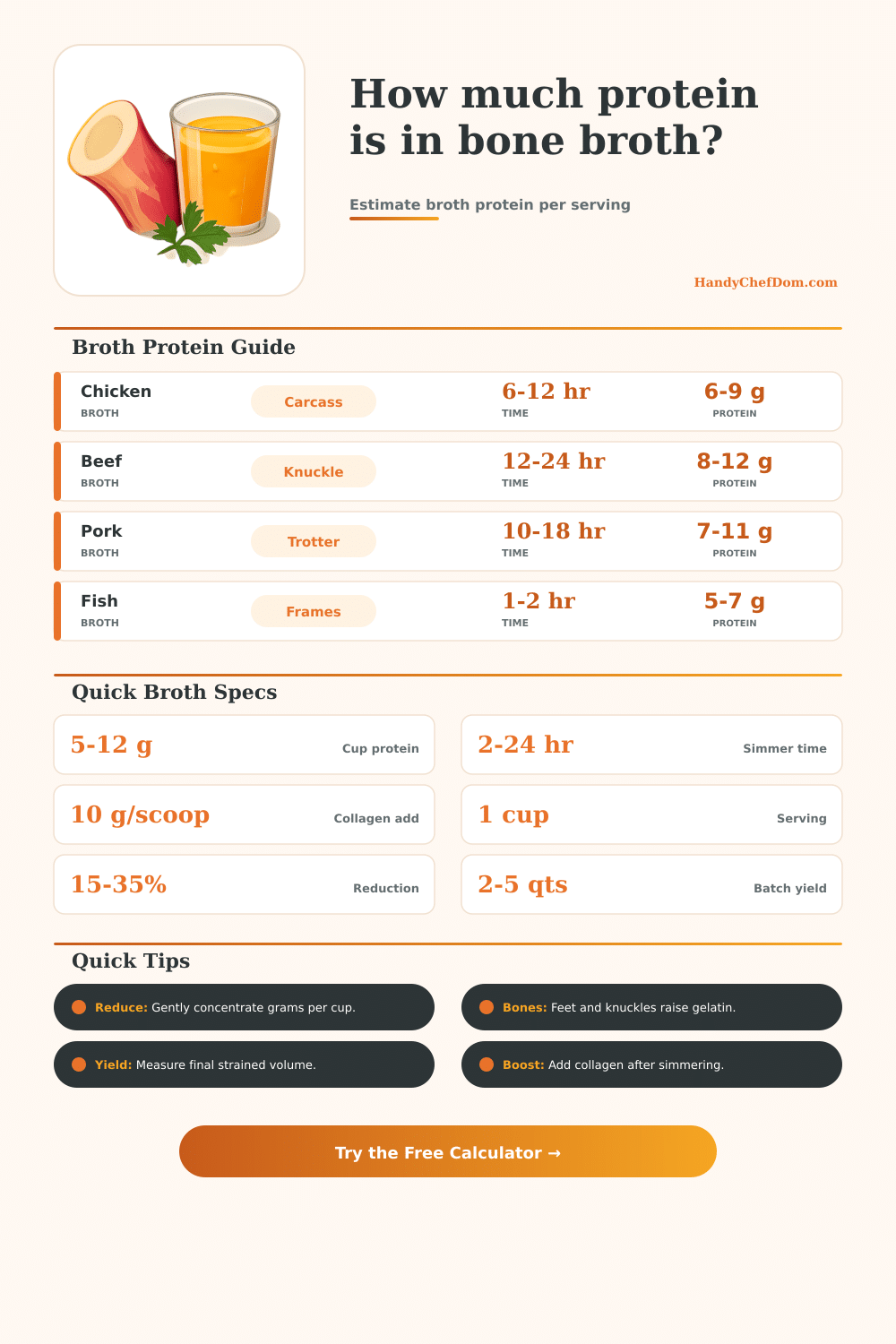
Estimate protein per cup, collagen contribution, strained yield, and serving totals from bone type, bone ratio, simmer time, reduction, and collagen additions.
Use weighed bones and measured final volume when possible. The calculator estimates extracted broth protein from typical gelatin-rich bones, then adds any collagen powder separately.
Formula note: extracted protein uses bone-type grams per pound, a time extraction curve, meaty-bone bonus, and concentration from final strained yield. Collagen scoops use 10 g protein each.
| Bone type | Typical extracted protein | Best simmer window | Gelatin strength |
|---|---|---|---|
| Chicken carcass and wings | 18 g per lb bones | 6-12 hours | Medium, poultry-clean body |
| Chicken feet and backs | 23 g per lb bones | 8-14 hours | High, sets firmly when chilled |
| Beef knuckle and joints | 28 g per lb bones | 12-24 hours | Very high, collagen-forward |
| Beef marrow and neck | 22 g per lb bones | 10-20 hours | Medium-high with richer mouthfeel |
| Pork trotters and hocks | 26 g per lb bones | 10-18 hours | Very high, silky texture |
| Turkey frame and wings | 20 g per lb bones | 8-16 hours | Medium-high, broad poultry flavor |
| Fish frames and heads | 15 g per lb bones | 1-2 hours | Light-medium, fast extraction |
| Mixed bones and joints | 24 g per lb bones | 10-18 hours | High, balanced batch estimate |
| Bone-to-water ratio | Broth style | Expected body | Protein impact |
|---|---|---|---|
| 0.50 lb bones per qt | Light stock | Thin, easy sipping | Lower grams per cup |
| 0.75 lb bones per qt | Everyday broth | Balanced body | Moderate grams per cup |
| 1.00 lb bones per qt | Gelatin broth | Noticeably rich | Higher grams per cup |
| 1.25 lb bones per qt | Joint-heavy batch | Dense and glossy | High collagen contribution |
| 1.50 lb bones per qt | Concentrated base | Very strong body | Best for small servings |
| Simmer window | Extraction estimate | Works best for | Calculator note |
|---|---|---|---|
| 1-2 hours | 35-55% of potential | Fish frames, quick poultry | Short broths stay lighter |
| 4-6 hours | 55-72% of potential | Chicken carcass stock | Good for everyday soup base |
| 8-12 hours | 72-90% of potential | Feet, turkey, mixed poultry | Reliable gelatin range |
| 14-18 hours | 86-100% of potential | Pork hocks, beef neck | Dense broth without extreme reduction |
| 20-24 hours | 95-110% of potential | Beef knuckle and joints | Long simmer may extract more solids |
| Yield factor | Typical range | Protein effect | How to use it |
|---|---|---|---|
| Evaporation | 10-35% | Raises grams per cup | Enter visible pot reduction |
| Strain and skim loss | 5-15% | Lowers final yield | Accounts for solids and fat removal |
| Collagen powder | 10 g per scoop | Adds direct protein | Best counted after simmering |
| Serving size | 0.5-1.5 cups | Scales protein per serving | Use your mug or jar volume |
| Reduction concentrate | 35-60% | Strongly increases concentration | Use smaller portions if intense |
Most folks believe bone broth is just a healthy version of flavored water, but it isn’t even close. What matter most is the gelatin extracted from the collagen-packed connective tissues and joints as they cook away during hours-long simmering sessions. This process transforms hard-to-digest structural proteins into digestible molecules that your body absorbs to improve your skin elasticity, joint comfort, and gut lining repair.
So, is it realy worth it? Or is what you get mostly warm saltwater inside a cup? According to this tool (the one above), which details exactly how many grams of protein will wind up in your bowl depending on what bones you use, it’s not as simple as time. Some times are denser then others, with some parts containing more collagen than others. A beef knuckle is going to be different than a chicken carcass. Both would produce different results if simmered for 12 hours. The calculator accounts for this by using extraction curves to show how fast different types of bones releases their goodness in the liquid.
How to Make Good Bone Broth
The reduction rate is one of the least addressed factors. If you boil down stock for eighteen hours on low heat, some amount of water will evaporate. This will concentrate the protein left in the broth. Even if it’s only a 22% reduction, that’s enough to increase the grams per cup dramaticly. By allowing you to input your best guess at how much water evaporated during cooking and how much was strained out, you get more realistic estimate (instead of an ideal) of what your final yield should of been. At home, most of us pour off stock into our colanders and then skim fat, which results in an eight to ten percent loss in volume. Factoring this into calculation will save you from being disappointed when you measure out the finished batch.
Beyond choosing the appropriate bones (and here’s why it’s important), you’ll want to pay attention to ratios. Bone-in cuts like beef knuckles will yield plenty of protein plus extra depth from their richer flavor. Fish frames pull fast but don’t produces quite as much in all-out collagen volume. The real collagen engines are those chock full of skin, cartilage, and joints, think chicken feet. Check out the breakdown of various bones’ behavior when heated, which they’ve helpfully laid out on their charts, and you may discover that adding just one chicken foot will jump-start your gelatin production while not dominating the delicate poultry taste in an otherwise typical carcass stock.
Not sure how much time? No worries! If your broth hasn’t gelled when cold, it’s not bad, it simply didn’t extracted enough collagen. That might be due to cooking too briefly (or using relatively lean bones). In that case, use the calculator to account for the reduced collagen. Incorporate some pure collagen peptides straight in at the end of simmering, treating them as an extra protein boost rather than anything you got out of the bones themselves. That comes in handy, for example, if you’re making soup from a bone broth base and want the taste but need more structural strength than lower-protein broth provide.
However, don’t go crazy trying to nail exact amounts. There’s variance in home cooking. Your stovetop may run hot or cold. Your bones might be fresh or old. Using acid, like vinegar, to help break down tissue will also affect results. No equation can account for all variables. Think of the estimates as a baseline for how to compare batches, not as some kind of nutritional gospel. Trust your taste buds, if something tastes heavier, more satisfying, then follow its lead. The math is the framework, the taste buds are the guide.
But in the end, bone-broth-making is less an exercise in precise engineering than it is one in patient extraction: Know what goes in, and you’ll know what comes out, whether that’s a thick, concentrated ramen stock or a lighter, sip-on-the-roof drink. Adjust the bone-to-water ratio to taste (and purpose), and play with the simmer time to dial in more collagen (or dial back for ease). Once you get comfortabley with the variables, you stop guessing and start practicing a craft; you’re not just working from leftovers anymore, but feeding yourself reliably from a pot on stove.