🍗 Chicken Wing Calorie Calculator
Estimate calories, protein, fat, and sodium from whole wings, flats, drumettes, cooked weight, skin choice, sauce amount, and servings.
Enter wing pieces, or switch to cooked weight when you weighed the finished wings. Sauce amount is total sauce for the batch, not per serving.
| Wing cut | Avg cooked weight | Calories | Protein | Fat | Sodium |
|---|---|---|---|---|---|
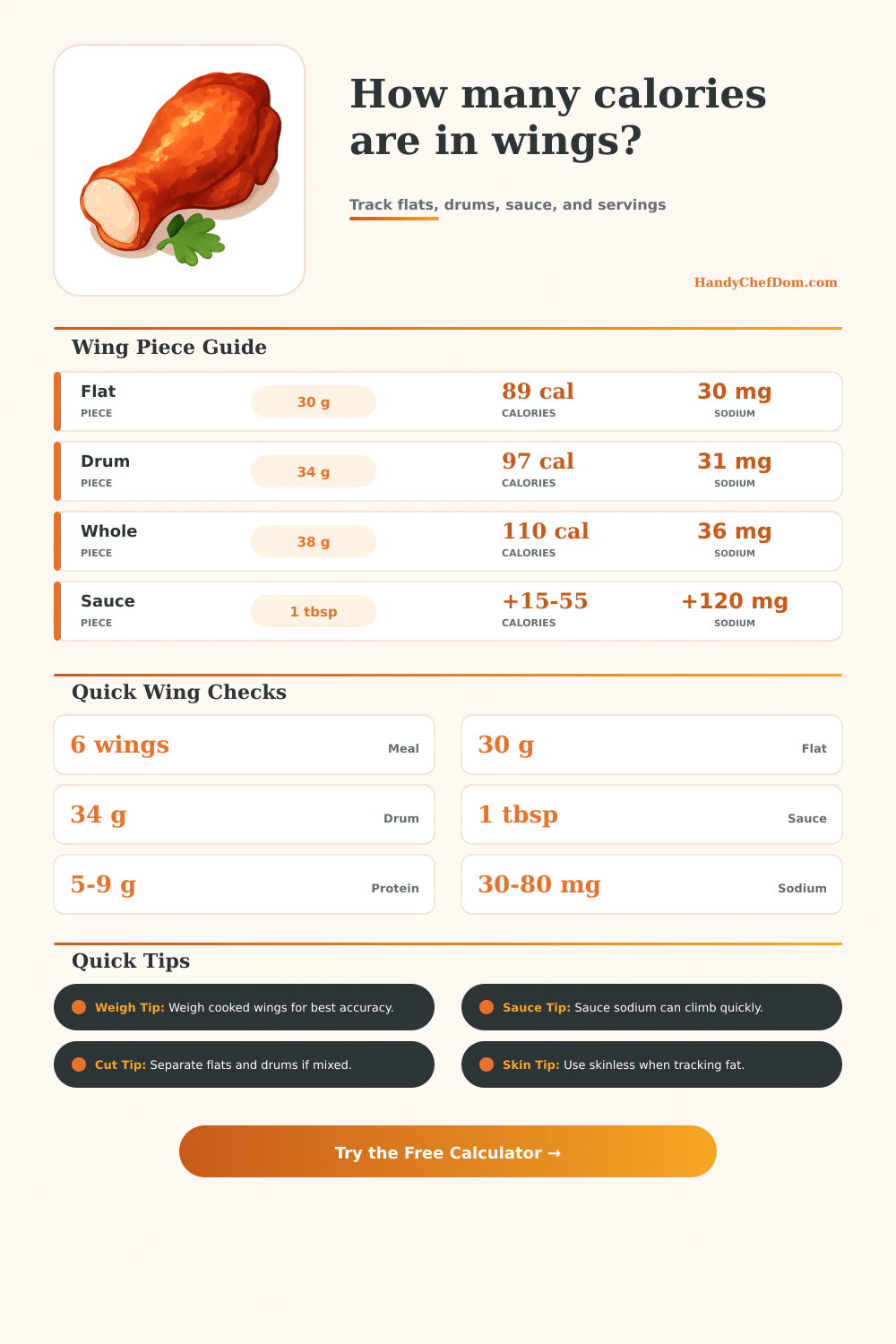
| Whole wing | 38 g each | 110 cal | 9.8 g | 7.8 g | 36 mg |
| Flat | 30 g each | 89 cal | 7.5 g | 6.4 g | 30 mg |
| Drumette | 34 g each | 97 cal | 9.1 g | 6.4 g | 31 mg |
| Mixed party wing | 32 g each | 94 cal | 8.2 g | 6.6 g | 31 mg |
| Large wing | 39 g each | 114 cal | 9.6 g | 8.0 g | 37 mg |
| Jumbo wing | 44 g each | 129 cal | 10.8 g | 9.1 g | 42 mg |
| Sauce | Calories per tbsp | Protein | Fat | Sodium | Best use |
|---|---|---|---|---|---|
| Plain | 0 | 0 g | 0 g | 0 mg | Dry wings |
| Buffalo | 15 | 0 g | 1 g | 460 mg | Hot wings |
| BBQ | 35 | 0 g | 0 g | 180 mg | Sweet glaze |
| Garlic parmesan | 55 | 1 g | 5 g | 220 mg | Rich sauce |
| Teriyaki | 30 | 0 g | 0 g | 520 mg | Sticky glaze |
| Hot honey | 45 | 0 g | 0 g | 120 mg | Sweet heat |
| Lemon pepper butter | 20 | 0 g | 1 g | 380 mg | Dry toss |
| Dry rub | 10 | 0 g | 0 g | 300 mg | Seasoned |
| Serving plan | Pieces per person | Cooked weight | Calories range | Sauce note |
|---|---|---|---|---|
| Snack plate | 3-4 pieces | 3-5 oz | 280-430 | 1 tbsp sauce |
| Meal plate | 5-7 pieces | 5-8 oz | 470-750 | 2 tbsp sauce |
| Party tray | 4-6 pieces | 4-7 oz | 380-650 | Toss lightly |
| Meal prep | 4-5 pieces | 4-6 oz | 320-560 | Sauce aside |
| Flat basket | 6-8 flats | 6-8 oz | 530-790 | Track sodium |
| Drumette basket | 5-7 drums | 6-8 oz | 490-750 | Use total sauce |
| Skin setting | Calorie factor | Protein factor | Fat factor | Sodium factor |
|---|---|---|---|---|
| Skin-on | 1.00x | 1.00x | 1.00x | 1.00x |
| Lightly trimmed | 0.88x | 1.02x | 0.75x | 0.98x |
| Skinless | 0.68x | 1.05x | 0.35x | 0.92x |
| Extra crisp skin-on | 1.08x | 0.99x | 1.12x | 1.02x |
How many wings are there? How many calories are there? If you eyeball a pile, it’s tempting to believe you’ve pegged it perfectly: Here, I ate this number of wings, each with this amount of sauce. But without weighing individual pieces, or considering the type of cut, you’re probly wrong.
A single pile could feature drumettes that is small and bone-heavy, while another could have meaty chunks with extra fat. Wing sizes vary as much as slices of bread do. And wing guessing games are just never accurate.
Why Guessing Wing Calories Is Wrong
Why? Because we tend to count by head We tend to lump all wing pieces into one single category of fun. That’s fair when considering hunger. But that approach lead to mayhem if you’re counting anything (especially calories). By volume, a drumette have slightly more meat than a flat. And it also has a bit more cartilage, making the structure very different between two. Those slight distinctions add up fast when you get up to a dozen wings.
When you enter your combination of drums and flats, calculator does the math for you. You’ll never again wonder if you went over your protein goal with that extra ounce of meat on the big ol’ drumette.
The cut is also almost equally important, how it’s cooked changes its density, and therefore the number of calories in finished product. Baking removes some moisture, which lowers weight and leaves more of the natural fat. Deep frying absorbs some oil into the crispy exterior. Air frying falls between the two, crisping skin without adding too much extra oil.
While this might sound like splitting hairs, it’s enough to make a difference, especially when you don’t have to be a chef yourself to know what a fried wing tastes like different than a baked one. And just because they both arrive on your plate looking similar doesn’t mean they’re nutritional twins. The ability to pick your own preferred cooking style allows the app to considers these unseen caloric densities and fat contents.
The rest goes in the sauces, which are where estimates break down because liquid calories aren’t as obvious as solid ones. Teriyaki or BBQ glazes thicken the sauce and also add more energy and glycemic load. A tablespoon of buffalo sauce doesn’t adds many calories, but it adds a huge amount of salt.
If you’re counting calories, remember that you’re eating all the surface area, coated in sauce, so guesswork about how much stuck to each bite won’t work. Use a tablespoon to pour over the whole batch instead. Check this reference table to see what’s hiding in your food. It shows how some flavors is high in sodium, while others might have extra fat or sugar instead.
If you’re monitoring your fat consumption, one more tool you can use is skin. Keeping skin intact maintains both texture and flavor while keeping the rendered fat nice and close to the meat. Removing the skin reduces total calories and saturated fat by a large margin, but it also lose some of that juicy quality in the process. You get to enjoy the crunch, or stick to eating less fat; either way there’s something lost on both ends. Satisfaction vs. Strict macros per meal.
For maximum accuracy, weigh your cooked wings (this completely eliminates any assumption about wing size). If you can get your hands on a kitchen scale, there’s also a weight override option available in the calculator which consider any shrinkage when cooking. You should of used it too. This completely removes the guesswork factor and allows you to work with exactly what is present before you. Mass doesn’t lie; visual estimates might, but mass won’t.
Most of us throw caution to the wind and go with the flow when it comes to game day. While that’s fine, knowing what you’re eating helps you adjust portion sizes to match your goals for the day. You can also balance out a heavy plate of wings with something lighter. It’s not about being perfect, just aware enough to make conscious decisions instead of letting things happen by default.
What are the building blocks of your meal? Learn them, and tracking nutrition won’t be boring anymore. Breaking wings down by their cuts, how they’re cooked, and topped will put you back in control of a dish that has traditionally been a mystery. You should of tried it earlier. The result: you get a better picture of where your beloved snack fits into your whole day. When you go from guesswork to facts, knowing exactly what’s sitting on your plate can change the way you enjoy it.