🍎 Apples for Apple Pie Calculator
Estimate sliced apple cups, whole apples, sugar, and filling volume from pie diameter, depth, apple size, yield, slice thickness, and mound height.
The calculator models the pan as a circular base plus a cone-style apple mound, then converts that filling volume into sliced apple cups and whole apple weight.
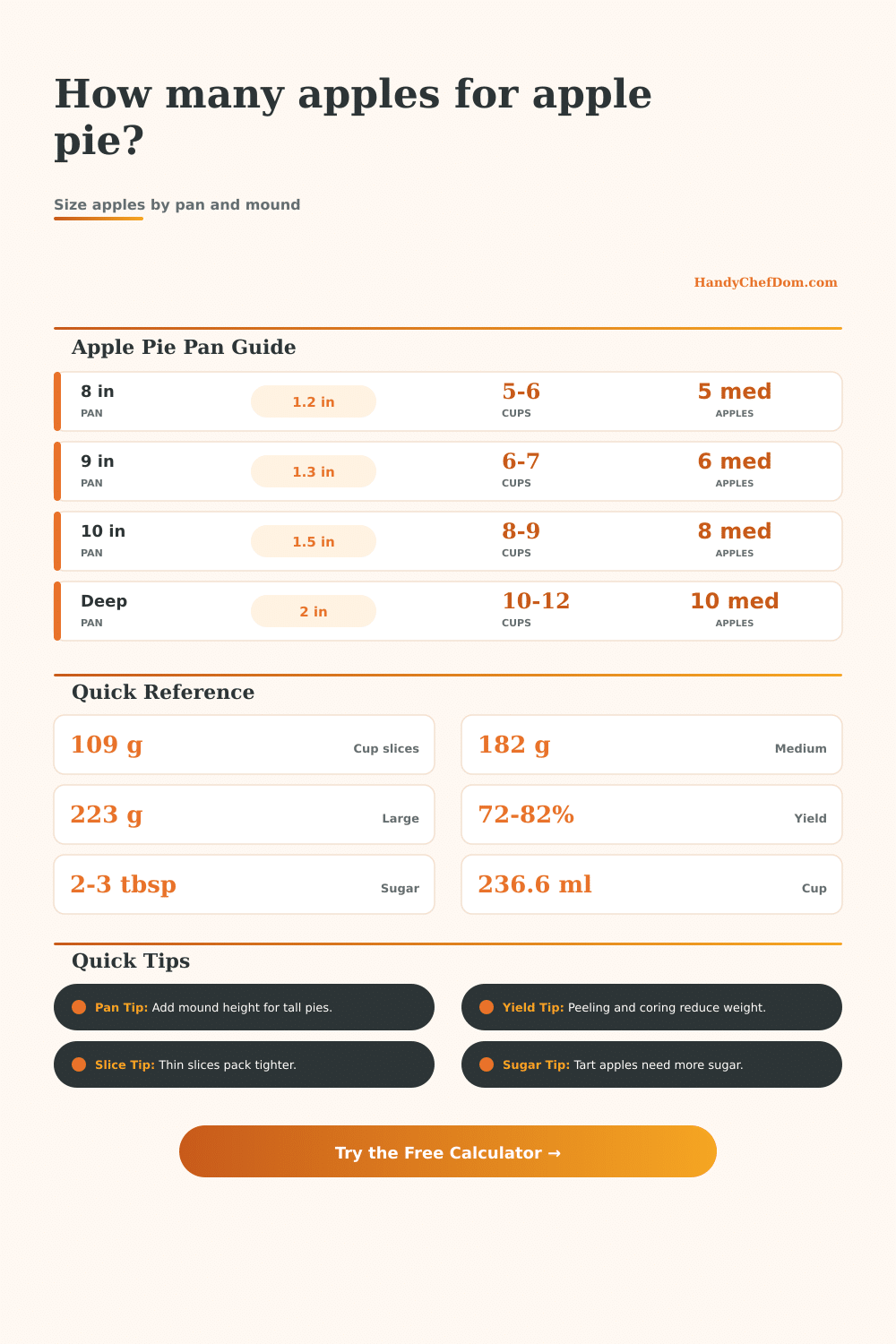
| Pan | Depth | Mound | Sliced Apples |
|---|---|---|---|
| 8 inch regular | 1.20 in | 0.60 in | 5.0 to 5.8 cups |
| 9 inch regular | 1.35 in | 0.80 in | 6.8 to 7.4 cups |
| 9 inch deep | 1.80 in | 1.00 in | 8.8 to 9.8 cups |
| 10 inch regular | 1.50 in | 0.90 in | 9.2 to 10.2 cups |
| 10 inch deep | 2.00 in | 1.20 in | 12.4 to 13.8 cups |
| Apple Size | Whole Weight | Prepared Yield | Approx Cups |
|---|---|---|---|
| Small | 149 g | 113 g at 76% | 1.0 cup |
| Medium | 182 g | 138 g at 76% | 1.3 cups |
| Large | 223 g | 169 g at 76% | 1.6 cups |
| Extra large | 260 g | 198 g at 76% | 1.8 cups |
| Variety | Pie Texture | Sugar Factor | Typical Use |
|---|---|---|---|
| Granny Smith | Firm tart | 1.15x | Classic tart |
| Honeycrisp | Juicy crisp | 0.95x | Balanced pies |
| Golden Delicious | Tender sweet | 0.90x | Softer filling |
| Fuji | Sweet firm | 0.85x | Low sugar |
| Braeburn | Firm aromatic | 1.00x | Spiced pies |
| Pink Lady | Tart crisp | 1.05x | Bright filling |
| Measure | Cups | Tablespoons | Milliliters |
|---|---|---|---|
| 1 tbsp | 0.0625 | 1 | 14.8 ml |
| 1/4 cup | 0.25 | 4 | 59.1 ml |
| 1/2 cup | 0.50 | 8 | 118.3 ml |
| 3/4 cup | 0.75 | 12 | 177.4 ml |
| 1 cup | 1.00 | 16 | 236.6 ml |
That’s usually when the panic starts: There you stand, in your kitchen, facing an empty pie shell and a bowl of naked apples. What did the recipe say? Three pounds, right? But wait: Too many apples? Or not enough? It is not usually a matter of taste; it is a matter of how much space they takes up. Because apples give up their structure and leak some juice as they cook, they shrink like crazy. What looks like a heaping bowl of raw apple slices becomes a pool of syrup by the time timer dings.
Know how apples change density, and you’ll have the perfect sliceable wedge instead of mushy dish. Once you know what type of apples you’re working with and which pan size you have, plug them into the calculator above, and it do the rest of the math for you. You won’t have to guess if those particular fruits will hold their shape in the oven.
How to Get the Right Amount of Apples for Your Pie
What most home bakers overlook is the geometry of the cooking pan itself: A typical nine-inch pie pan isn’t simply a flat disk; rather, it’s a cylindrical space with an established interior height that determines just how many cubic inches of solid material you can cram within it. A deep dish means triple the vertical volume but roughly equal surface area. That’s why so much more raw weight are required to create the same illusion of being “full.” The calculator models the volume of the base and adds on a cone-like estimate for excess apples that extend past its rim. That makes all the difference, as baked flat pies cook through uniformly whereas those baked up in a heap need careful heat distribution to avoid raw centers.
Variety is even more important than pan size in all of this. Certain apple types, such as Granny Smith, are famous for being not just firm but also tart. Holding tightly to their cellular structure throughout lengthy baking times, and tending to give off less juice then do some other softer kinds, such as Golden Delicious, for instance. Because they’re so structurally intact, too, you can stack them in the pan a bit tighter; they won’t fall apart immediately. Because of their acidity, you’ll need to use more sugar to balance out the flavor.
The chart on the page spells out these differences by giving each kind of apple its own sugar factor. This ensures your mix of Braeburns will come out tastefully tart, while one made from Fuji won’t be cloyingly sweet. Here, you’re essentially trading texture for moisture control. Slices packed thin will hold more closely and densely than thicker ones, the way bricks would fit together more compactly than loose stacks of stones. The amount of space they take up in the pan determines total cup volume. The tool asks for your desired slice thickness and turns that physical arrangement into a weight estimate. This tell you exactly how many whole apples to buy.
Then there’s the other secret ingredient: Yield. Even veteran cooks gets stumped by this number. An apple loses about twenty percent of its original weight once it’s cored and peeled. You’ll soon notice the difference if you purchase three pounds of fruit in bulk, expecting it all to fit into the pie. The calculator takes this “waste” factor into account, so you can plug in a reasonable estimate for your own yield, such as if you have thicker peels. Are you coring them aggressively? A smaller yield means you would of needed to buy more whole apples to reach the weight needed for your final pie. Not rocket science, but it saves you from racing out the door at noon on a frantic mid-afternoon shopping run because you’re now one pound of flesh away from having enough.
But here’s something that is more often treated as an afterthought: Sugar. It not only holds everything together, but also impacts amount of browning. Not enough and the filling will be watery; too much and it’ll draw moisture out of bottom crust and cause sogginess through osmosis. If you’re making tart types (or want a sweeter filling), the tool gives you a starting point in tablespoons that scales up for your needs. From there, you can adjust as needed to taste; but at least you have a mathematically sound place to start to ensure things holds up.
But really, that’s what making any good pie comes down to: learning the limitations of your physical world. After a while, when you know how much dough and how many pounds it takes to fill that ceramic pan, you can leave behind recipe-following, and worry only about having just the right amount of perfectly golden crust. Leave enough room for the apples, and they’ll cook correctly once they’re in the oven.