🍫 Cocoa Powder for Chocolate Cake Calculator
Scale cocoa powder from flour cups while checking cocoa type, chocolate intensity, pan volume, layers, servings, sugar, liquid, and leavening balance.
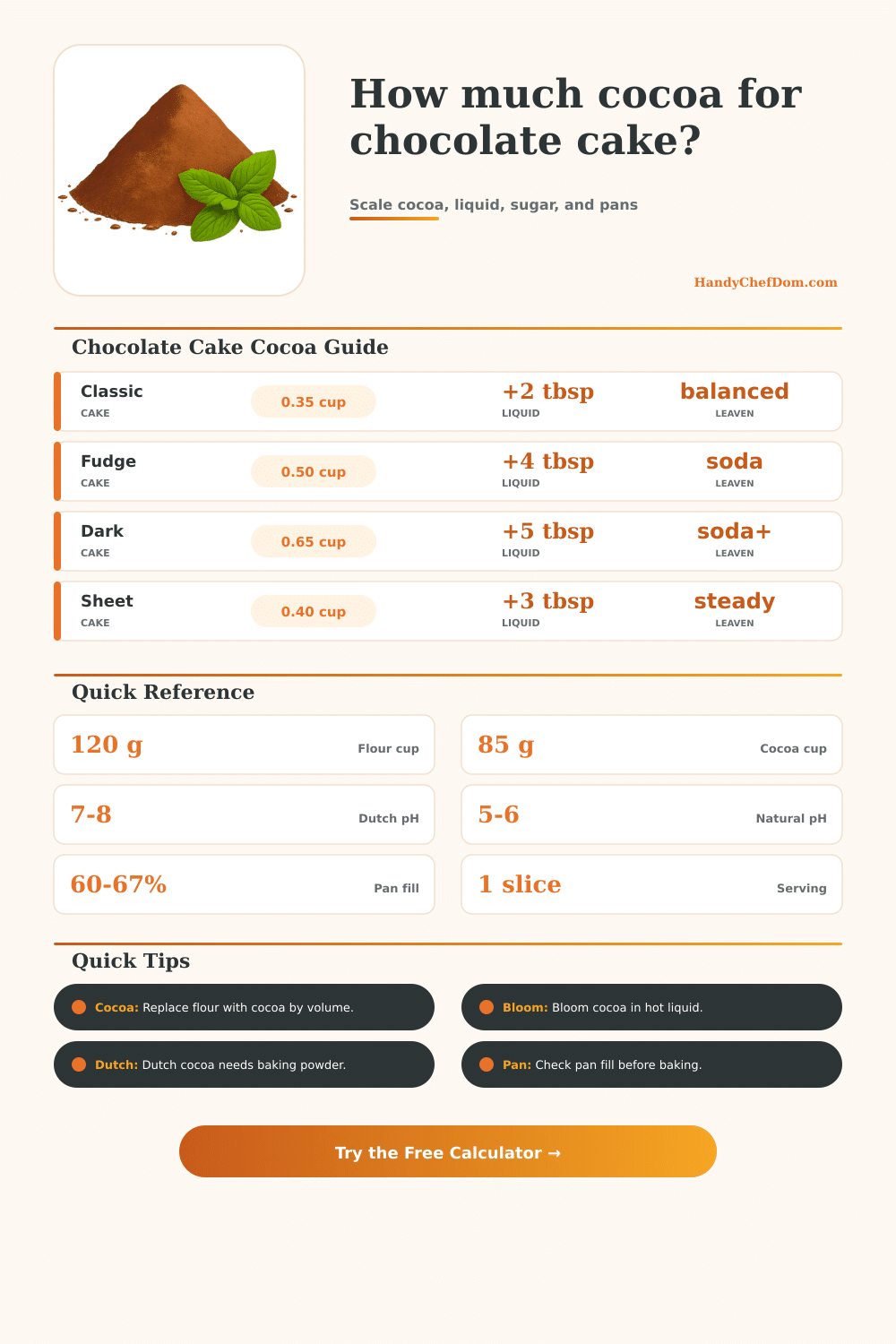
Use flour cups as the main scale, then adjust the cocoa load for cake style. The calculator treats cocoa as a dry ingredient that replaces some flour and asks for extra liquid, sugar, and leavening support.
| Cocoa Type | Approx Weight | Acidity Cue | Liquid Need | Chocolate Cake Use |
|---|---|---|---|---|
| Natural cocoa | 85 g per cup | Acidic, soda friendly | Moderate | Classic chocolate layer cakes |
| Dutch-process cocoa | 82 g per cup | Alkalized, powder friendly | Moderate high | Dark, smooth bakery crumb |
| Black cocoa | 76 g per cup | Very alkalized | High | Accent for deep color and cookie-like notes |
| Natural and Dutch blend | 84 g per cup | Balanced | Moderate | Reliable all-purpose chocolate cake |
| Red cocoa powder | 86 g per cup | Mild acid | Moderate | Warm red-brown chocolate cakes |
| High-fat cocoa | 90 g per cup | Usually mild | Slightly lower | Moist, rounded chocolate flavor |
| Extra dark blend | 80 g per cup | Mostly alkalized | High | Bold dark layer cakes |
| Original Flour | Classic Cocoa | Rich Cocoa | Extra Liquid | Flour Left |
|---|---|---|---|---|
| 1 cup | 0.32 cup | 0.42 cup | 2 to 4 tbsp | 0.68 to 0.58 cup |
| 2 cups | 0.64 cup | 0.84 cup | 0.25 to 0.5 cup | 1.36 to 1.16 cups |
| 3 cups | 0.96 cup | 1.26 cups | 0.4 to 0.75 cup | 2.04 to 1.74 cups |
| 5 cups | 1.6 cups | 2.1 cups | 0.7 to 1.25 cups | 3.4 to 2.9 cups |
| 8 cups | 2.56 cups | 3.36 cups | 1.1 to 2 cups | 5.44 to 4.64 cups |
| Pan Style | Typical Size | Good Batter Fill | Approx Servings | Chocolate Cake Note |
|---|---|---|---|---|
| Round layer | 8 x 2 in | 3.2 to 3.8 cups | 10 to 12 | Good for tall two or three layer cakes |
| Round layer | 9 x 2 in | 4.5 to 5.3 cups | 12 to 16 | Classic party layer size |
| Rectangle sheet | 9 x 13 x 2 in | 7.5 to 9 cups | 20 to 24 | Works well for moist cocoa batters |
| Loaf pan | 9 x 5 x 3 in | 3.8 to 4.5 cups | 8 to 10 | Use lower fill for fudgy loaf cakes |
| Cupcake cavity | Standard cavity | 0.20 to 0.24 cup | 1 each | Dark batters rise best below the rim |
| Cake Goal | Cocoa Per Flour Cup | Sugar Cue | Liquid Cue | Leavening Cue |
|---|---|---|---|---|
| Light sponge | 0.22 to 0.28 cup | 1.0 cup per flour cup | Small bloom addition | Moderate powder |
| Classic chocolate | 0.30 to 0.36 cup | 1.1 cups per flour cup | 2 to 3 tbsp per cocoa cup | Soda plus powder |
| Rich layer cake | 0.40 to 0.48 cup | 1.2 cups per flour cup | 3 to 4 tbsp per cocoa cup | Check acidity |
| Fudge-style cake | 0.50 to 0.58 cup | 1.25 cups per flour cup | 4 to 5 tbsp per cocoa cup | Lower lift, more moisture |
| Dark cocoa-forward | 0.58 to 0.70 cup | 1.3 cups per flour cup | Hot liquid strongly helps | Powder support |
Cocoa is not an ingredient that you treat merely as flavoring; instead, you treat it as a structural element. The amount of cocoa in a recipe alter not only the batter’s character but also its need for liquid. This will also shift flavor from bitter to sweet and back again. A lack of balance between your ingredients can make a cake taste flat or even harsh.
To adjust for this, change rest of your ingredients according to the cocoa. You’ll see in most recipes that you use part of your flour replaced by cocoa. The darker the cocoa flavor, the less flour there is. A heavier batter also requires more moisture to remain tender. As you increase the cocoa, keep in mind that you’re going to need to increase liquid or else you end up with a dry cake. Increasing the liquid without adjusting the dry ingredient will result in a batter that doesn’t set up correcty.
How to Balance Cocoa in Your Recipe
How does cocoa type affect the cake? Acidity is present in natural cocoa, which reacts with baking soda to lift the cake. However, since Dutch-process cocoa are less acidic, typically baking powder should of been used instead. Unless balanced carefuly for moisture and sweetness, black cocoa tastes more like a cookie then a chocolate cake.
The calculator above manages all math for you. Simply input the type of cocoa, flour amount and desired intensity, and it figure out the rest. This means there is no guesswork on how any change will affect final batter.
Baking pans differ, too. How much batter? For example: Switching from two round baking pan to one sheet pan? You must adjust the cocoa/liquid amounts to avoid overflowing. Pan size and layers is all about fill percentage, that is, whether your batter volume match what the pan can hold. Then there’s servings. Do you have a big or small gathering? How much cocoa are in each slice?
How cocoa affects your cake’s balance Bitterness from cocoa is balanced by sugar: Too little sugar makes for a harsh-tasting cake; too much sugar and it lose its chocolate flavor. Fat also help to balance the effect of cocoa. Richer batters can sustains more cocoa without drying out. Leaner batters are less forgiving, which results in a tighter, dry crumb.
Cocoa is usually an afterthought, and people ask what’s wrong with the cake? But it’s about how you handle the cocoa; its the ratios of cocoa to flour, liquid, sugar, and leavening that happen prior to the oven. Then once those ratio are aligned, you can pretty much predict the rest of the bake.