Coconut Flour to Replace Flour Calculator
Convert wheat flour cups or grams into coconut flour, then adjust eggs, liquid, binder, sweetness, servings, and batch scale for a more reliable recipe swap.
Your Coconut Flour Adjustment
Wheat Flour Behavior
Wheat flour brings starch structure and gluten-forming proteins, so the original recipe can usually hold more flour with moderate liquid and fewer eggs.
Coconut Flour Behavior
Coconut flour is high fiber and highly absorbent, so a smaller flour amount usually needs more eggs, added liquid, and sometimes a binder.
| Recipe type | Coconut flour per 1 cup wheat | Egg direction | Liquid direction |
|---|---|---|---|
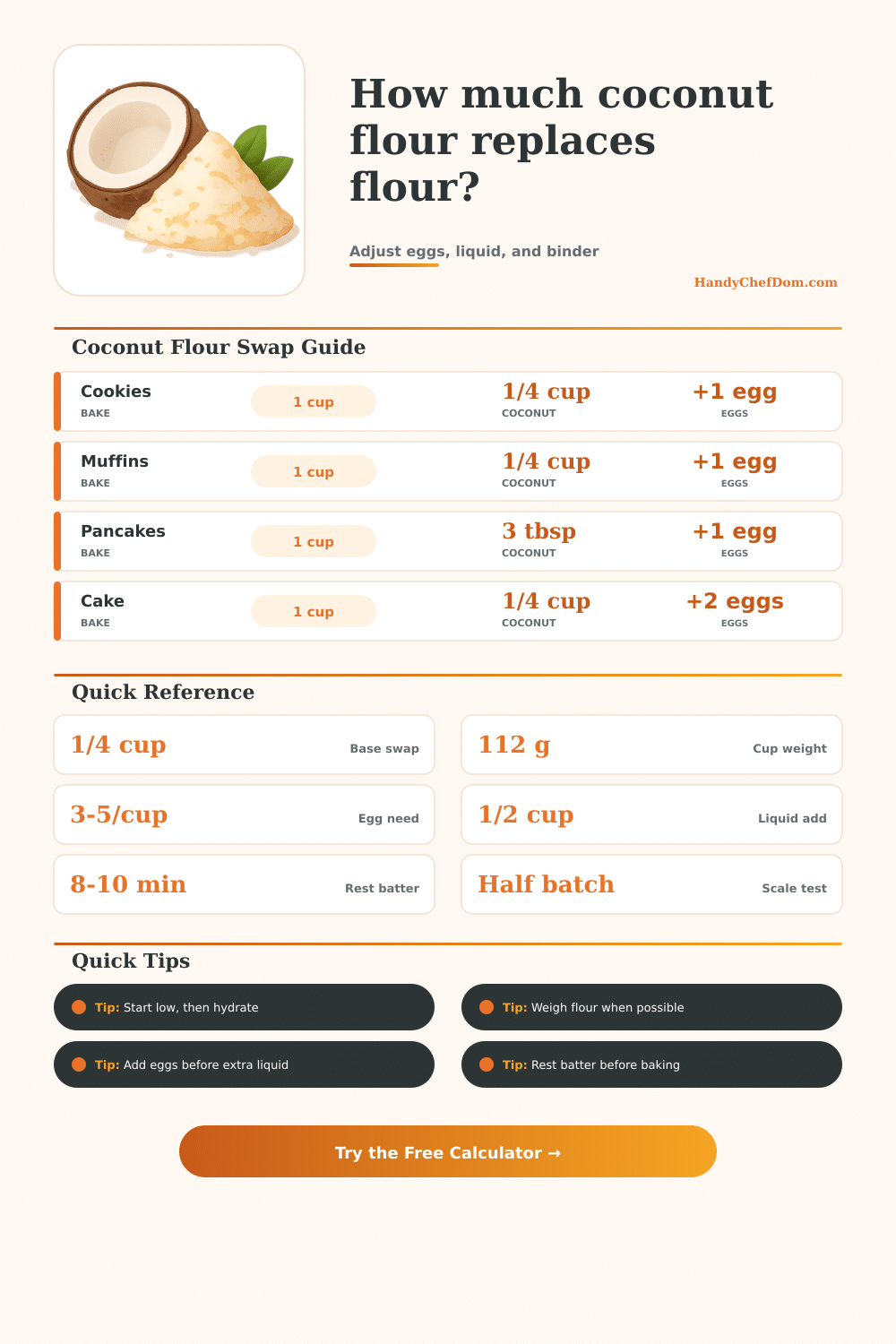
| Cookies and bars | About 1/4 cup | Add 1 egg per cup coconut | Add 2 to 4 tbsp |
| Muffins and quick bread | About 1/4 cup | Add 1 to 2 eggs | Add 1/4 to 1/2 cup |
| Pancakes and waffles | 3 tbsp to 1/4 cup | Add 1 egg | Thin batter after resting |
| Cakes and cupcakes | About 1/4 cup | Add 2 eggs if crumb is dry | Add milk gradually |
| Brownies | 3 tbsp to 1/4 cup | Add 1 egg | Keep batter glossy |
| Yeast bread | Small partial swap only | Binder usually needed | Expect a denser loaf |
| Flour type | Approx grams per cup | Best use | Swap note |
|---|---|---|---|
| All-purpose flour | 120 g | General baking | Baseline for most swaps |
| Bread flour | 127 g | Chewy doughs | Coconut swap loses gluten strength |
| Whole wheat flour | 113 g | Hearty bakes | Often already thirsty |
| Cake flour | 114 g | Tender cakes | Use a gentle binder |
| Pastry flour | 106 g | Soft crumb | Start slightly lower |
| Coconut flour | 112 g | High-fiber baking | Needs eggs and liquid |
| Recipe signal | What it means | Adjustment | Best flour choice |
|---|---|---|---|
| Batter thickens fast | Flour is absorbing liquid | Rest, then add liquid | Fine and thirsty |
| Crumb falls apart | Needs more structure | Add binder or egg | Xanthan or psyllium |
| Center is wet | Too much liquid or egg | Lower liquid next test | Standard absorbency |
| Edges brown early | Small batch is drying | Use lower ratio | Coarser flour |
| Tastes too sweet | Coconut adds natural sweetness | Reduce sweetener slightly | Slightly less sweet |
| Original flour | Typical coconut flour | Added liquid range | Common extra eggs |
|---|---|---|---|
| 1 cup wheat | 3 tbsp to 1/4 cup | 2 tbsp to 1/2 cup | 1 to 2 |
| 2 cups wheat | 1/2 cup | 1/2 to 3/4 cup | 2 to 4 |
| 3 cups wheat | 3/4 cup | 3/4 to 1 cup | 3 to 5 |
| 500 g wheat | 95 to 130 g | 180 to 300 ml | 4 to 6 |
| Partial swap | 10% to 20% | Add gradually | Often 1 |
Using coconut flour instead of wheat means you’re not only scooping differently, but also that you have to adjust the remaining ingredient to make sure your finished item taste good and holds up properly. Since coconut flour is primarily fiber, plus it sucks up moisture fast a few tweaks can be necessary when swapping flours.
That’s what this calculator does: It calculates based off how much wheat flour you started with, what kind of bake you’re creating, and how “thirsty” your particular coconut flour were behaving on that given day. But it’s not just about swapping the flour; the real adjustment is rarely just flour. In many case, coconut flour will also draw moisture from your batter, quickly making whatever you are baking too dry unless you adjust recipe with more eggs (or some other kind of added moisture). The magic lies in asking how much liquid was used originally and how many egg were called for. That way, it can predicts the right amount of moisture and structure after the swap. This stops you from having to guess when the batter start to thicken in the mixing bowl.
How to Use Coconut Flour Calculator
The reason why recipe types matter is because certain recipes respond to this swap different than others. For example, a batch of cookies can usually handles a higher coconut flour ratio then a yeast bread, since the cookies do not rely on gluten for lift. If you select which kind of baked good you want to make, then the calculator will adjust the recommended percentage accordingly (so you don’t find out after the fact that your bread didn’t rise or your cake collapsed in the center).
Similarly, there is absorbency settings. Sometimes a fresh bag of really fine coconut flour require more liquid than an older, coarser one that has already picked up some humidity. If you tell the tool what it is dealing with, it can adjusts the amount of liquid instead of treating every batch the same way.
There are also smaller, but helpful, ways to affect binding choices and sweetness direction. For example, coconut flour have a mild natural sweetness that causes some to reduce added sugar after making the switch. Some use a bit of psyllium (or even more xanthan) than the original recipe called for if it was low-egg to begin with. It’s possible to see the impact of those decisions in the calculator, without having to try all combinations yourself.
On the page it also has some reference tables that lay out cup weight to starting ratio patterns, so you can get a feel for what’s normal with various bake. They’re not intended to be a substitute for running through the calculator yourself.
The other thing I found out about coconut flour is it will continue soaking up moisture for several minutes following the mix. The result: what seems like a proper-looking batter initially might stiffen by the time your oven reach temperature. For this reason, the tool advise letting the mixture stand for a bit before deciding about additional liquid.
If you use the calculator as a jumping-off point, it’s a safe start, but the real test remain in the bowl and, eventually, the oven.