🥛 Calcium in Milk Calculator
Estimate calcium from milk type, cups or ml, fortification, servings, dilution, recipe use, and daily value target.
Use label values when you have them. This calculator starts with common per-cup calcium estimates, then adjusts for fortification, dilution, serving count, recipe portions, and daily target.
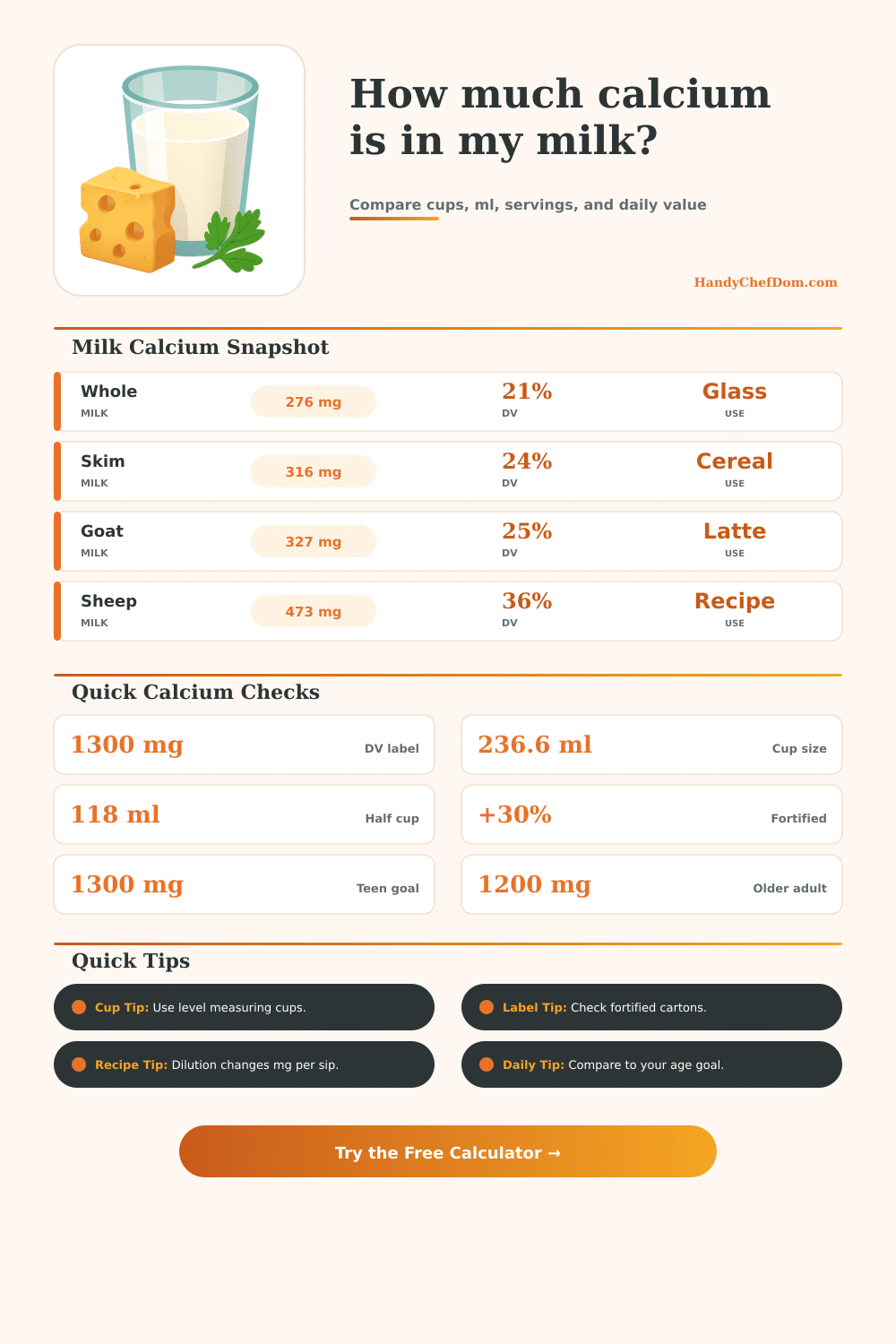
Values are typical per 1 cup, about 236.6 ml. Packaged milk varies, especially when calcium salts are added.
| Milk Type | Calcium / Cup | Protein | Best Calculator Use |
|---|---|---|---|
| Whole cow milk | 276 mg | 7.7 g | Drinking glass and sauces |
| 2 percent cow milk | 293 mg | 8.1 g | Everyday pours and cereal |
| Skim cow milk | 316 mg | 8.3 g | Higher calcium per calorie |
| Lactose-free cow milk | 300 mg | 8.0 g | Label-aware daily tracking |
| Goat milk | 327 mg | 8.7 g | Lattes and small servings |
| Sheep milk | 473 mg | 14.7 g | Rich recipes and portions |
| Evaporated milk | 658 mg | 17.2 g | Condensed sauces and baking |
| Plain kefir | 316 mg | 9.2 g | Snack cups and smoothies |
| Fortification Choice | Added Calcium | When To Use | Calculator Effect |
|---|---|---|---|
| Natural calcium only | 0 percent | Standard dairy labels | Uses base milk data |
| Light fortification | +15 percent | Some enriched cartons | Raises mg per cup slightly |
| Standard fortification | +30 percent | Many calcium-added milks | Strong daily value bump |
| High calcium carton | +50 percent | High-calcium label claims | Best for label matching |
| Use label extra | Custom mg | Carton lists extra minerals | Adds entered mg per cup |
| Label override | Exact mg | Nutrition panel gives calcium | Replaces base cup value |
| Comparison Target | Daily Calcium | One 300 mg Cup | Notes |
|---|---|---|---|
| Nutrition label DV | 1300 mg | 23 percent | Used on many US labels |
| Adult RDA | 1000 mg | 30 percent | Common adult planning target |
| Older adult RDA | 1200 mg | 25 percent | Often used after midlife |
| Teen RDA | 1300 mg | 23 percent | Higher growth-stage target |
| Child 4 to 8 RDA | 1000 mg | 30 percent | Use serving sizes carefully |
| Pregnancy RDA | 1000 mg | 30 percent | Personal needs can vary |
| Recipe Use | Calcium Kept | Dilution Impact | Best Reading |
|---|---|---|---|
| Drinking glass | 100 percent | No change unless ice melts | Total and per serving |
| Cereal bowl | 100 percent | Food absorbs milk volume | Per bowl calcium |
| Latte or cocoa | 99 percent | Coffee lowers mg per 100 ml | Drink concentration |
| Smoothie blend | 100 percent | Fruit increases total volume | Per glass calcium |
| Baking batter | 98 percent | Portion count matters most | Per baked portion |
| Sauce or pudding | 99 percent | Simmering thickens volume | Per recipe portion |
Calcium is an essential mineral for the bodies, and there are several factors that affect the amount of calcium that a person recieve. For instance, a person might pours milk into a glass or stir milk into a recipe. However, the amount of calcium in the product that a person drinks or consume can change depending on those various factor.
The type of milk that someone uses, the amount of milk that is used, and whether the milk is fortify with additional calcium can all alter the total amount of calcium that a person receives from milk. A calculator can make it easy for a person to determine how much calcium will be in the product that a person consumes. Using a calculator ensures that a person chooses an accurate amount of calcium rather than depending on the memory or the guess of the amount of calcium that is in a products.
How to Calculate Calcium in Milk
The amount of calcium in milk are not the same for each carton of milk. Whole cow milk has less calcium than skim milk because the fat in whole milk take up the space for the calcium containing liquid. Additionally, goat milk contains a different amount of calcium than cow milk, and sheep milk contains a different amount of calcium than goat milk.
These different amounts of calcium is essential to consider in determining how much of each type of milk a person should consume daily to meet the persons calcium target. A calculator allow a person to change the type of milk that is being consume so that the calcium calculation match the amount of calcium in the milk that is consumed. Another factor that can change the amount of calcium in milk is the fortification of milk.
Fortification is the addition of additional calcium to milk. Many carton of milk have added calcium salts. These additional calcium salts increase the amount of calcium that is in the milk.
Ensuring that a person enters the fortification level of milk into the calculator will allow the calculator to determine whether the calcium levels are already in the milk that a person consumes. The other factors that influence the amount of calcium that a person receive from milk include the amount of milk that is consumed and the number of serving of milk that a person uses in the kitchen. For example, if a person pours milk into a glass, the person consume all of the milk and receives all of the calcium that is in that carton of milk.
However, if that milk is used in another recipe, the amount of milk that the body consumes will change. Using the recipe calculator on the calculator will ensure that the total amount of calcium that enter the body is the same as the amount of calcium that is in the milk product. The amount of calcium that a person should consume daily can change depending on the age of the person or the life stage of the person.
For example, teenagers require more calcium in their diets than adults. Additionally, individuals who are recovering from stress placed upon their bones will require more calcium to restore their bone. An individual calcium requirement might differ from those of a teenager or an adult.
The calculator allow for the amount of calcium that a person should consume to be compared with the goals for the amount of calcium that an individual of any age should consume daily. When using milk in the kitchen, there are some variable that might impact the amount of calcium that is in the milk. For instance, leaving the milk in the carton for several days might introduce a change in the amount of calcium that is in the milk.
However, the changes will likely be very small. Using heat to make custard or sauces does not usually destroy the calcium in the milk. However, using heat will evaporate some of the liquid in the milk.
Removing the liquid from the milk will increase the concentration of calcium in the milk. Adding more milk to the products will reduce the concentration of calcium in the liquid that is consume by the body. A person might not remember that milk is an ingredient in many products.
For example, milk might be consume for breakfast in the form of milk or might be used to make oatmeal or mashed potatoes. Additionally, milk might be consume in the form of coffee. These products will increase the amount of calcium that a person consumes.
Using the calcium calculator will make these additional servings of milk visible to a person so that they can determine the total amount of calcium that they consume daily. Another table on the page contains the typical amount of calcium that is in milk. This table can allow a person to determine if a person should trust the label on the carton of milk or the exact amount of calcium that is in the milk.
Using this table will allow a person to understand their usual milk products so that they dont have to second-guess the amount of calcium that their bodies requires daily. Through using the calculator, a person will be able to recognize which products will help their body reach the target for the amount of calcium that should be consumed daily.