🥥 Coconut Milk for Curry Calculator
Estimate coconut milk cans, cups, milliliters, sauce coverage, richness, paste balance, and rice pairing for creamy curries.
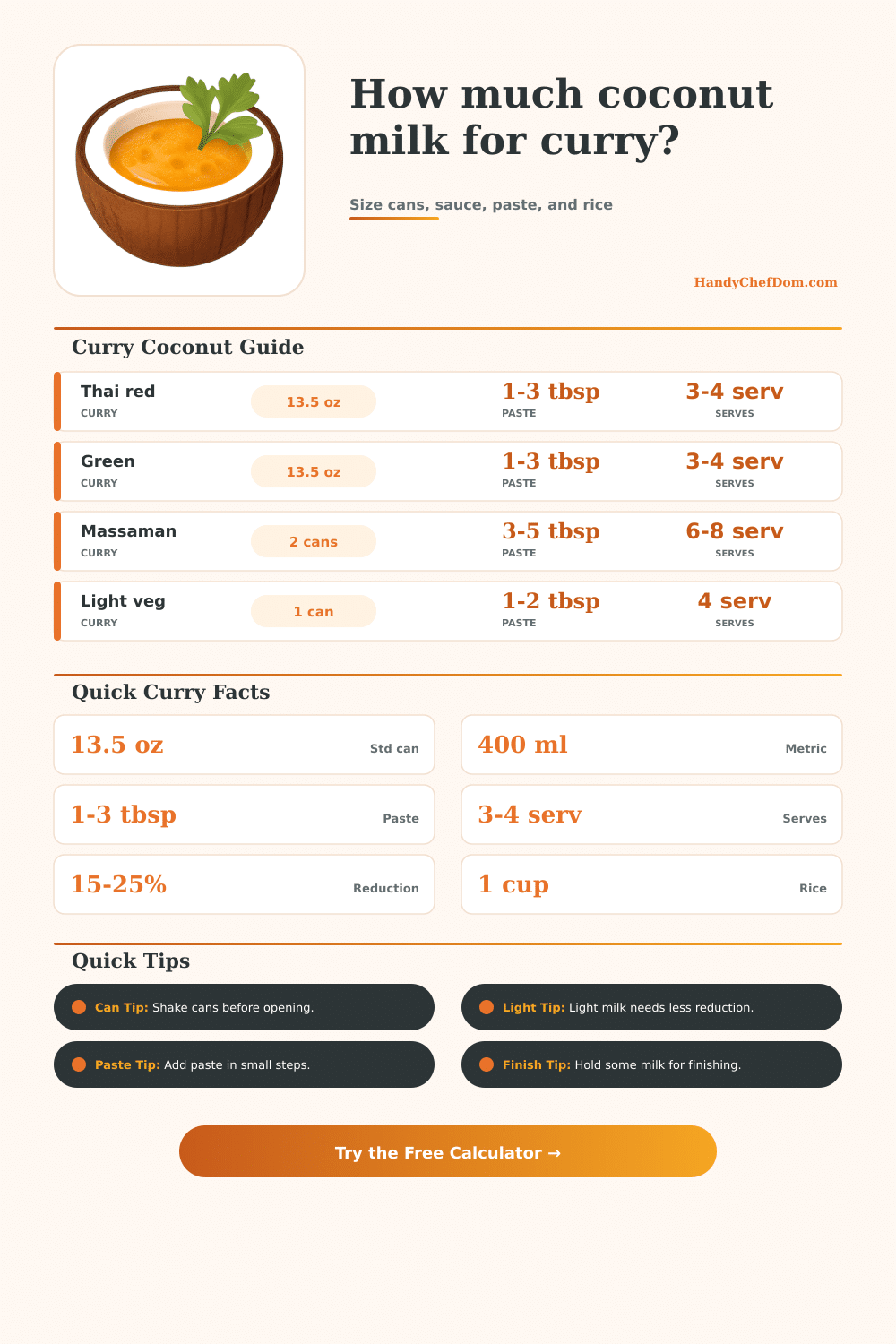
A standard 13.5 oz can of coconut milk often suits 3 to 4 curry servings with 1 to 3 tablespoons of curry paste. Adjust the fields below for sauce level, reduction, heat, and rice.
Coconut Milk Types
| Type | Richness | Best For | Note |
|---|---|---|---|
| Full-fat | High | Thai | Creamy |
| Light | Medium | Weeknight | Looser |
| Cream | Very high | Panang | Dense |
| Carton | Low | Soup | Thin |
| Powder | Adjusts | Travel | Mixable |
| Half mix | Medium | Large pot | Flexible |
Curry Ratios
| Style | Can | Paste | Serves |
|---|---|---|---|
| Thai red | 1 | 1-3 tbsp | 3-4 |
| Green | 1 | 1-3 tbsp | 3-4 |
| Yellow | 1 | 1-2 tbsp | 4 |
| Panang | 1.5 | 2-4 tbsp | 4 |
| Massaman | 2 | 3-5 tbsp | 6-8 |
| Veg light | 1 | 1-2 tbsp | 4-5 |
Can Sizes
| Can Size | Cups | ML | Use |
|---|---|---|---|
| 5.4 oz | 0.68 | 160 | Top-off |
| 8.5 oz | 1.06 | 251 | Small pot |
| 13.5 oz | 1.69 | 399 | Standard |
| 14 oz | 1.75 | 414 | Common |
| 15 oz | 1.88 | 444 | Saucy |
| 19 oz | 2.38 | 562 | Big pot |
Serving Coverage
| Servings | Protein | Veg Cups | Cans |
|---|---|---|---|
| 2 | 0.75 lb | 1-2 | 0.5-1 |
| 4 | 1-1.5 lb | 2-4 | 1 |
| 6 | 2 lb | 4-5 | 1.5-2 |
| 8 | 2.5 lb | 5-7 | 2 |
| 12 | 4 lb | 8-10 | 3-4 |
| 16 | 5 lb | 10-14 | 4-5 |
The quantity of coconut milk are everything in a curry. If it’s too little, the dish will taste harsh. Dominated by spices but also thin. If there’s too much, the richness overpowers the rest of flavor, masking them altogether.
The difference is seen in how liquid reacts to the paste, vegetables, protein, and heat in pot. Add coconut milk, for fat and body in the dish. It also add a subtle sweetness that softens chile heat. Why? Because full-fat coconut milks retains their structure when simmered. Traditional recipes often specify these type for that reason.
How to Get the Perfect Curry Consistency
Light coconut milk work fine for quick weeknight meals. But it break down more quickly. You end up with a sharper-tasting paste then expected.
Use the calculator to understand this tradeoff in advance (before you pop the top). The basic needs are protein weight and servings. As food (particularly meat/tofu) cooks, it sucks in liquid. Veggies will let go and thin things down. The tool takes this into account. You won’t have to guess if two cans means there’s barely enough to cover your rice or an overly abundant coat.
The other input, the percentage by which you want your curry reduced, make sense as well. Many recipes fail to even talk about it, but most home cooks simmer until they lose 15-25% of their volume. If you enter that number, you’ll avoid having to measure your milk at the beginning, only to look back and wonder where all liquid went.
It’s surprising how much a little goes a long way between paste amount and heat level. “One tablespoon per can” doesn’t seem like much…until you consider that sauce will reduce, concentrating the flavor. The calculator shows you the amount of paste per finished cup of sauce. Before you even taste it, you know if you’re on your way to something bold or just balanced. At this point, you can still save a splash of milk to add at the end, but you won’t be trying to fix an over-spiced pot at the table.
The rice portioning often gets forgotten until everyone has their food plated. How much sauce per rice serving? Enough so that each bowl feels complete. Do it beforehand and skip the awkward “oh wait there’s no more rice!” moment.
Planning like this helps you make do with what you have, which is useful actualy for shopping once/cooking once, knowing if a large can or a regular one will last longer. You will know when to use light milk rather than full fat. It saves money and reduces any excess richness you really don’t want. The flavor are adjusted just enough depending on how much you’re making so that each curry night doesn’t turn into an experiment.