🥩 How Much Meat From a Cow Calculator
Estimate live weight, dressing percent, carcass weight, boneless beef, cut split, freezer space, servings, and cooking shrink for a whole, half, or quarter beef share.
Use the live weight if you are estimating before harvest, or enter a known hanging weight to override the live-weight dressing calculation.
A split quarter is usually near 25% of the carcass.
Leave as 0 when you only know live weight.
Vacuum packs stack tighter than paper-wrapped odd cuts.
| Beef Stage | Typical Range | What It Means | Calculator Field |
|---|---|---|---|
| Live animal weight | 900-1,500 lb | Scale weight before harvest; heavier animals do not always mean higher trim yield. | Live animal weight |
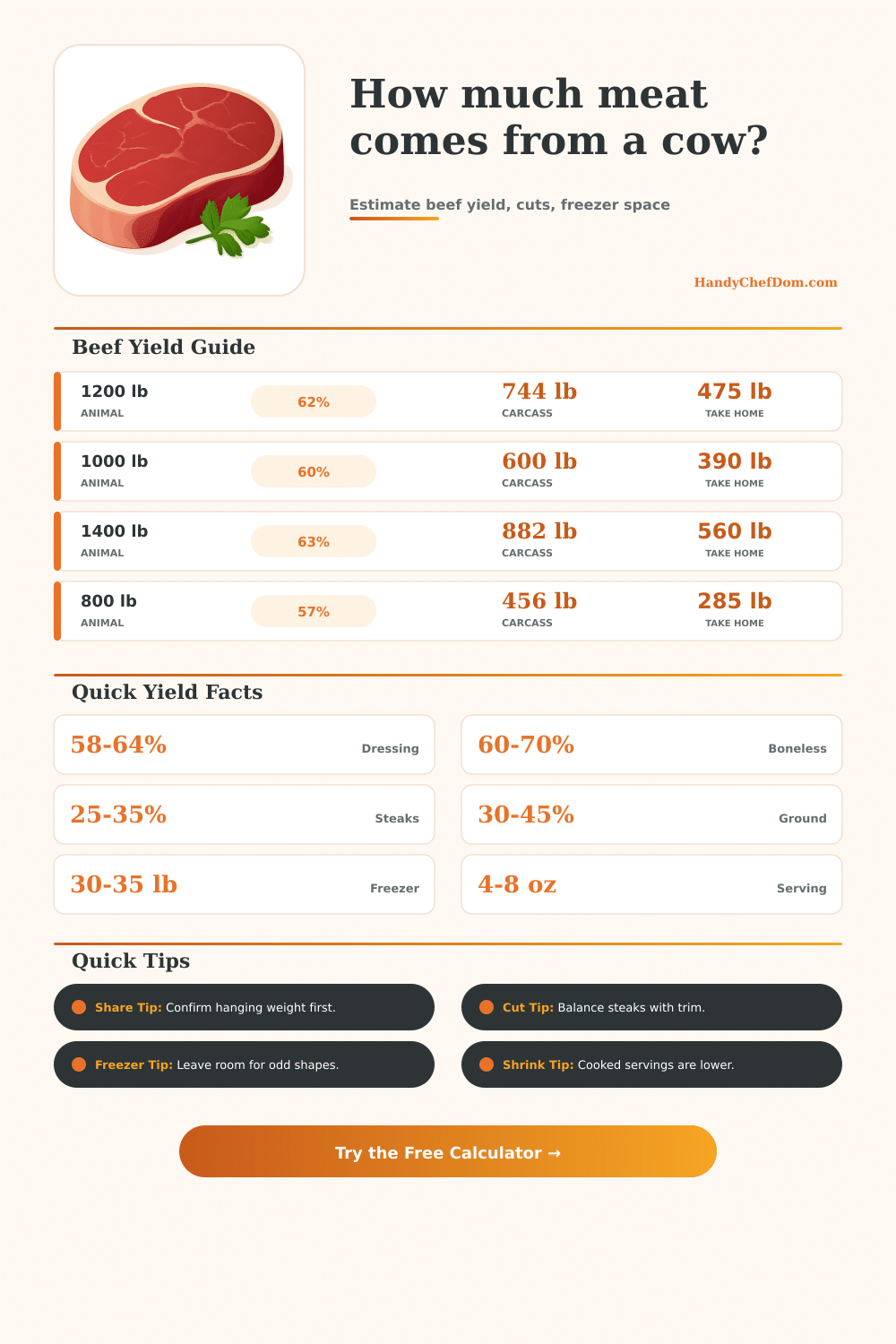
| Dressing percentage | 58-64% | Live weight converted to hanging carcass after hide, head, blood, and viscera are removed. | Dressing percentage |
| Hanging carcass weight | 520-900 lb | The weight most beef shares are discussed from before boneless cutting and packaging. | Known hanging override |
| Boneless take-home | 60-70% | Packaged edible beef after bones, excess fat, and trim losses are removed or ground. | Boneless retail yield |
| Cooked edible yield | 70-85% | Finished plate weight after moisture and fat shrink during cooking. | Average cooking shrink |
| Share Size | Carcass Share | Likely Packaged Beef | Freezer Planning Note |
|---|---|---|---|
| Whole beef | 100% | 380-560 lb | Usually needs a large chest freezer or multiple freezer spaces. |
| Half beef side | 50% | 190-280 lb | Good for frequent beef meals and broad cut variety. |
| Split quarter | 25% | 95-140 lb | Popular first share because it balances steaks, roasts, and ground beef. |
| Eighth share | 12.5% | 45-75 lb | Works for smaller households with limited freezer space. |
| Custom box | 5-20% | 20-110 lb | Use the custom share percent when the butcher gives a specific split. |
| Cut Split Style | Steaks | Roasts | Ground and Trim |
|---|---|---|---|
| Balanced freezer beef | 28-34% | 20-26% | 32-40% |
| Steak-forward order | 34-42% | 16-22% | 28-36% |
| Roast-forward winter box | 22-30% | 30-40% | 26-36% |
| Ground-heavy meal prep | 15-24% | 14-22% | 48-65% |
| Lean trim profile | 24-32% | 18-26% | 38-48% |
| Packaged Beef | Freezer Space | 6 oz Raw Servings | After 20% Shrink |
|---|---|---|---|
| 50 lb | 1.5-2.0 ft³ | About 133 | About 107 |
| 100 lb | 3.0-3.8 ft³ | About 267 | About 213 |
| 200 lb | 6.0-7.5 ft³ | About 533 | About 427 |
| 350 lb | 10.5-13.5 ft³ | About 933 | About 747 |
| 500 lb | 15.0-19.0 ft³ | About 1,333 | About 1,067 |
Buying beef by the animal is a different decision than buying steaks at a grocery store. Buying beef by the animal require people to think about freezer space, meal plans, and the cost of the beef. The outcome of buying beef by the animal depends on how the animal is raised, how the animal is processed, and how much of the carcass the butcher keeps.
A yield calculator help people buy beef by the animal by taking the live weight of the animal, the percentage of the animal that the buyer will take, and the cut of beef that they would like and providing an estimate for how much hanging weight, take-home meat, freezer weight, and cooked servings there will be. The inputs for the calculator depend on the stages of the production of the beef. The first input will be the live weight of the animal because the live weight will determine the other numbers.
How to Use a Beef Yield Calculator
The next input will be the dressing percentage of the animal. The dressing percentage determines how much of the live weight of the animal will become the hanging carcass once the butcher removes the hide, head, and organs from the animal. Some people will use the known hanging weight to calculate the percentages.
By using the known hanging weight, the yield calculator will use the weight that the processor knows the beef will weigh once it is processed. The next input will be the share percentage. The share percentage will determine how much of the carcass will belong to the buyer.
The buyer can select a whole, half, or split animal. Once the processor weighs the carcass, the weight of the bones and fat will be subtracted to determine the weight of the boneless beef. Finally, the weight of the beef that will be cooked will be determined after the cooking shrinkage of the beef is subtracted from the boneless beef totals.
People can use the cut percentages to determine how much of each type of cut they would like. If people want more steaks, they will have less ground beef. If they would like more roasts, the beef will weigh less and take up less space in the freezer.
The cut percentages will be in four different categories: steaks, roasts, ground beef, and stew or specialty meats. These percentages must equal one hundred percent. The cut percentages can be adjusted to accommodate the eating habits of the people in the household.
Freezer space can be an underestimated component of the purchase of beef by the animal. One reason that freezer space is important is due to the different ways that the meat will take up space in the freezer. Vacuum-sealed flat packs of beef will take up less space in the freezer than roasts, ribs, and soup bones.
The calculator will account for the density of the beef to determine the weight of the vacuum-sealed packs of beef. People will also want to use a buffer percentage in the calculator for the space that may be taken up by extra box of beef that are ordered from the butcher. Using a percentage for the buffer will ensure the beef takes up space on the shelves in the freezer.
People are often surprised by the cooking shrink of beef. Cooking shrink is the amount of weight that is lost by the beef once it is cooked. Depending on the cut of beef, twenty percent of the raw beef will be lost to shrinkage when cooked.
Once the take-home beef total is calculated, the cooking shrinkage will be subtracted. After cooking shrinkage is subtracted, the final weight of the beef will be divided by the serving size of the beef that will be cooked. The calculator will provide the count of the cooked portions of beef.
There are reference tables on the page to provide context for the information that is entered into the calculator. The reference tables will show typical ranges for dressing percentage and boneless yield. The reference tables will also show the pounds of beef that will be packaged according to the share sizes of beef that are selected.
While the information in the tables does not need to be memorized, they can be used to ensure that the numbers that the calculator calculates are within the parameters of normal beef yields. The real yield of the beef will vary in relation to several factors that cannot be accounted for in the calculator. For instance, grass-finished cattle will have a lower dressing percentage than grain-finished cattle because grass-finished cattle will have less fat.
Additionally, if the beef is aged for a longer dry age, moisture and trim will be lost from the beef, but the flavor will be improved. If the buyer requests bone-in beef, the total weight will increase, but there will be no increase in the amount of edible beef. The instructions on the butcher’s cut sheet will also impact the results of the calculator.
Each extra steak will move the weight of the beef from the ground beef category to the steak category. While the yield calculator will provide the buyer with a figure for the beef yield, it is important to acknowledge these variables. Many times, people will misjudge the amount of beef that they will cook during a period of time.
One hundred pounds of beef may seem like alot, but the beef will be gone quickly with the number of meals that are prepared with beef for weeknight dinners and holidays. The cooked-serving estimate will tell how many cooked portions of beef are in the one hundred pounds of raw beef. This will allow the buyer to see if the quarter share will last the buyer three months or six months.
Ultimately, the decision to buy beef by the animal is a decision to match the beef to the freezer and the cooking habits of the individuals in the household. The yield calculator will remove the guesswork from the process of buying beef by the animal. With the numbers that the calculator calculates, the individual can determine if they have enough space in their freezer, if the cuts of beef will meet their cooking habits, and if the amount of beef will satisfy the appetites of the individuals in the household.
Actualy, it’s a very moddern way to shop. Youll find that the math works out better then you think. You should of checked the freezer space first.
The furnitures in the kitchen might be in the way of teh freezer too.