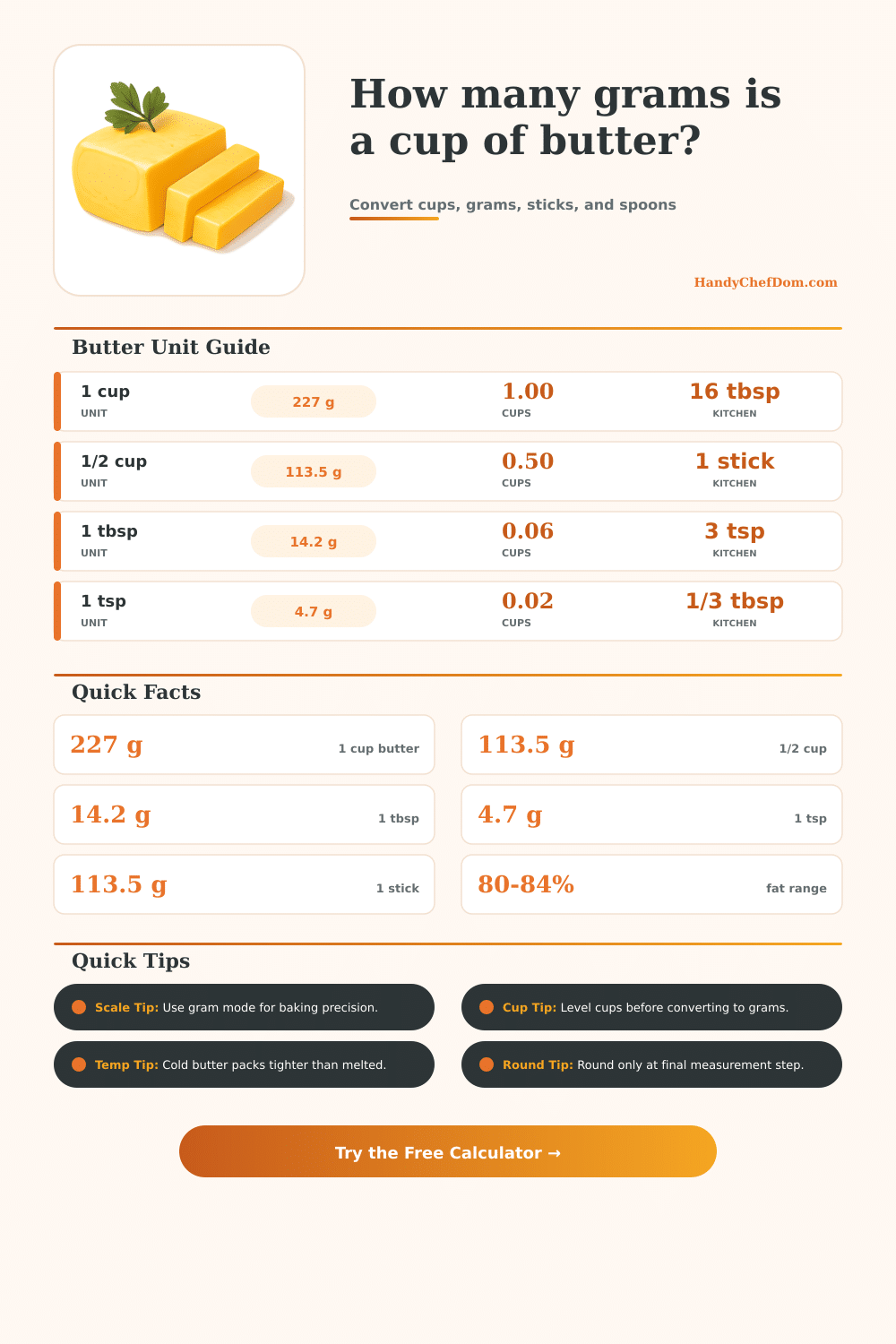
Butter Cup to Grams Converter
Convert butter between cups, grams, sticks, tablespoons, and teaspoons with type-specific density and adjustment options for accurate prep.
| Measure | Grams | Sticks | Tablespoons |
|---|---|---|---|
| 1 tsp | 4.7 g | 0.04 | 0.33 |
| 1 tbsp | 14.2 g | 0.13 | 1.00 |
| 1/4 cup | 56.8 g | 0.50 | 4.00 |
| 1/3 cup | 75.7 g | 0.67 | 5.33 |
| 1/2 cup | 113.5 g | 1.00 | 8.00 |
| 2/3 cup | 151.3 g | 1.33 | 10.67 |
| 3/4 cup | 170.3 g | 1.50 | 12.00 |
| 1 cup | 227.0 g | 2.00 | 16.00 |
| Recipe batch | Cups | Grams | Use case |
|---|---|---|---|
| Cookie tray | 0.50 | 113.5 g | Home bake |
| Cake layer | 0.75 | 170.3 g | Two pans |
| Frosting bowl | 1.00 | 227.0 g | Standard batch |
| Pastry fold | 1.25 | 283.8 g | Laminated dough |
| Holiday prep | 1.50 | 340.5 g | Party volume |
| Large bakery | 2.50 | 567.5 g | Multi tray |
| Profile | g per cup | Fat % | Use note |
|---|---|---|---|
| US unsalted | 227.0 | 80% | Baseline baking |
| US salted | 228.0 | 80% | Everyday cooking |
| European style | 230.0 | 82% | Richer pastry |
| Cultured | 229.0 | 82% | Tangy buttercream |
| Whipped | 170.0 | 63% | Spread style |
| Clarified | 218.0 | 99% | Butter oil prep |
| Plant blend | 220.0 | 78% | Dairy alternative |
| Ghee style | 216.0 | 99% | High fat baking |
Butter is a fat that is use in baking. Because butter can be difficult to measure, the volumes of butter can differ depending on various factor. One cup of butter does not contains the same weight as one cup of flour or one cup of sugar.
The weight of the butter depend on the density of the butter. This density can change based on the temperature of the butter and the fat content of the butter. Cold butter is more denser than butter that has been softened.
How to Measure Butter for Baking
At room temperature, butter that is softened will occupy more space within a measuring cup than butter that is cold. Butter that contain a higher fat content will be heavier than butter that has a lower fat content. European style butter contains more fat than standard American butter.
Therefore, it is heavier. When packing the butter into the cup, there is different ways to fill the cup. Some people prefer to pack the butter into the cup while others prefers to scoop the butter into the cup.
A butter conversion tool will allow you to select which way you fill the cup when entering your recipe. The weight of the butter must account for how you fill it into the cup or the weight will be incorrect. Many people uses volume measurements for butter.
Professional bakers use weight measurements like gram. Volume measurements are not as consistent as weight measurements because the volume of butter will change based on the temperature of the butter. Using a conversion tool to change the volume of butter to grams will ensure that the amount of butter to the recipe is consistent.
Consistency of ingredients ensure that the results of the recipe will be the same each time. The fat percentage of the butter is essential to consider if baking items that are particularly delicate like puff pastry or cakes. The amount of water in the butter will impact the baking of these items.
The conversion tool will show a profile table that displays the fat content of the various type of butter. This table can help individuals decide what type of butter to use in their recipe. If individuals are making a recipe that must be doubled or even more, care must be taken with the type of butter that is use.
If butter is doubled the weight of the butter should be doubled but the weight of the butter may change based on the temperature of the kitchen. Using the servings field on the conversion tool will automatically multiply the number of grams of butter that is need. This will prevent error that could happen with mental math.
Using the servings field will also prevent the individual from rounding the numbers of grams for the butter too early in the recipe. There are various types of butter. A common mistake is to treat all butters the same.
For instance, you can measure whipped butter the same as European style butter. These two butters are not the same in terms of density. Using the wrong amount of butter will create incorrect results in the baking project.
Using the butter conversion tool will allow individuals to see the difference between various butters so that the individual can select the correct type for there recipe. The butter profile that is used should be the same for the entire baking project. Butter can change the temperature of the butter while baking.
If the butter changes the temperature the density of the butter may change. The weight of the butter can change as a result of this difference in density. By keeping the butter profile the same the individual will ensure that the weight of the butter will remain the same.
If a recipe calls for butter in a different state than solid butter the conversion tool can be used. The conversion tool will not change the recipe instructions for the butter but instead it will provide the correct amount of butter in grams. This is important for recipes that contain a high percentage of butter.
Any error in the weight of the butter in these types of recipes will create an even more larger error if the recipe is increased in size. Weighing butter will eliminate the need for the individual to perform arithmetic with the butter measurement. The weight of the butter will ensure that the individual does not have to guess the type of scoop or fill the butter into the cup.
The individual can focus on the texture that the butter should achieve when mixing the dough together. If the individual measures the amount of butter correctly the baking project will be successful.