Decaf Coffee Caffeine Calculator
Estimate caffeine in decaf coffee by decaf method, serving volume, brew strength, cups, time window, and body weight
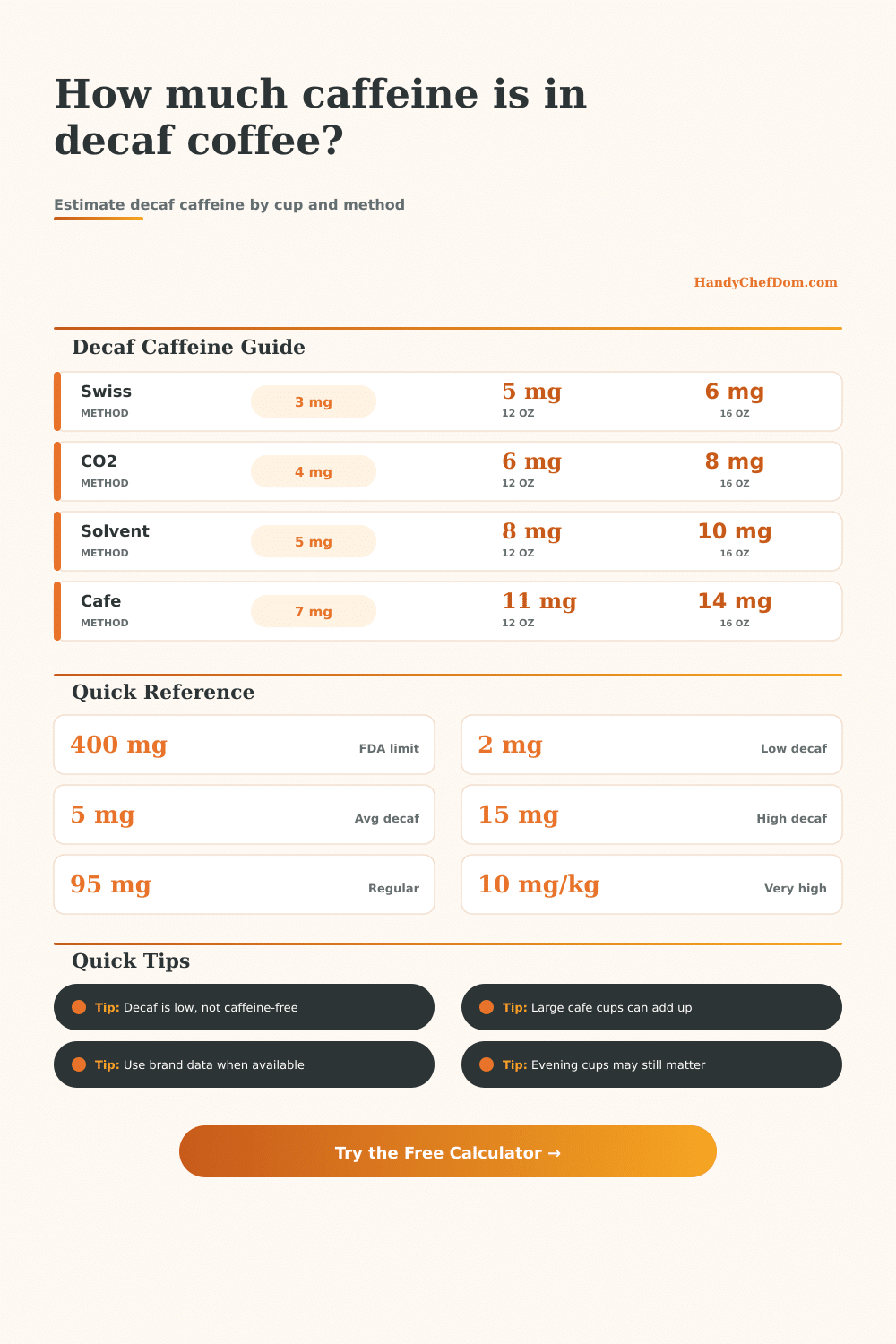
| Method | Base mg/8 oz | Range Used | Best Calculator Use |
|---|---|---|---|
| Swiss Water Process | 3 mg | 2-6 mg | Low-caffeine decaf beans |
| CO2 Process | 4 mg | 3-8 mg | Modern decaf roasts |
| Solvent Decaf | 5 mg | 3-10 mg | Typical packaged decaf |
| Ethyl Acetate Decaf | 5 mg | 3-10 mg | Fruit-process decaf |
| Instant Decaf | 2 mg | 1-5 mg | Prepared instant decaf |
| Cafe Decaf Brew | 7 mg | 3-15 mg | Coffee shop decaf cups |
| Decaf Espresso | 6 mg | 3-12 mg | Per 1 fl oz shot |
| Decaf Cold Brew | 9 mg | 5-18 mg | Large steeped servings |
| Serving | fl oz | mL | At 5 mg/8 oz |
|---|---|---|---|
| Small cup | 6 | 177 | 3.8 mg |
| Standard cup | 8 | 237 | 5.0 mg |
| Mug | 12 | 355 | 7.5 mg |
| Large cafe cup | 16 | 473 | 10.0 mg |
| Iced tumbler | 20 | 591 | 12.5 mg |
| Travel thermos | 24 | 710 | 15.0 mg |
| Reference | Amount | Use In Calculator | Source Anchor |
|---|---|---|---|
| Most healthy adults | 400 mg/day | Default reference limit | FDA and Mayo |
| Pregnancy or breastfeeding | Ask clinician | Often set 200 mg | Mayo guidance |
| Very high body load | 10 mg/kg | Body-weight warning line | Mayo mg/kg note |
| Pure caffeine risk | 1200 mg | Not a coffee target | FDA warning |
| Drink | Serving | Typical Caffeine | Compared With Decaf |
|---|---|---|---|
| Decaf brewed coffee | 8 oz | 2-15 mg | Baseline |
| Regular brewed coffee | 8 oz | 95 mg avg | About 6-48x higher |
| Decaf espresso | 1 oz | 3-12 mg | Small but concentrated |
| Black tea | 8 oz | 25-48 mg | Usually higher |
| Cola | 12 oz | 34-46 mg | Usually higher |
| Energy drink | 16 oz | 160+ mg | Much higher |
If you’re ordering decaf coffee, it’s probably for one reason: you want the experience without the buzz. You want to feel calm and collected as everyone else chugs espresso at their desks and you sit in the sun with a steaming mug. The issue? Decaf isn’t usualy caffeine free. It’s just lower caffeine. And if you are particularly sensitive to caffeine, or have a set amount of caffeine you aim for each day, that makes all the differance.
This page’s calculator closes that gap. It turns vague guesses about how much caffeine you consume into exact numbers in milligrams based off your tolerance limits, brew method, and cup size.
Why Decaf Coffee Still Has Caffeine
When it comes to decaf, most folks think what the label claims: no caffeine at all. But in truth, there’s a loophole in federal regulations that allows manufacturers to get away with pulling out just 97 percent of the caffeine in the bean. If you’re sensitive or drinking big volume, that last three percent can realy start to add up. Standard café brews can be well into the double digits, whereas the Swiss Water Process generally produce closer to three milligrams per eight ounces. Get to know how your local shop makes their stuff and you’ll start to understand why some mornings are peaceful, and others makes you feel like a wire. It’s not magic. It’s chemistry and volume.
So instead, the inputs on the tool above let you plug in what matters to you, your preferred decaf approach, an adjustment for desired strength, and then finally your serving size. It then take into account the number of cup you intend to enjoy during that period. Most estimates don’t consider that caffeine doesn’t dissipate immediately, but has about a five-hour half-life… Which means it lingers in your body beyond what you might realize. Drinking a single massive mug? That’s different than enjoying three large mugs spread out across several hours.
The tool accounts for this total impact and sets it against typical reference points such as the FDA guideline of four hundred milligrams daily for adult consumption. This also goes for bodyweight; what’s a tolerable dose for a large-bodied individual may prove jarring for a smaller one. After inputing your weight, it calculates an individualized mg per kg ratio, and it’s this that paints a more accurate portrait of how your body will respond rather than just raw totals. That way, when 4pm rolls around and you’re tempted to have a decaf, you’ll know if you realy want to do that or just switch to herbal tea. This turns abstract health recommendations into practical, personal data.
Another wrinkle that no general chart addresses is brand variety. Even if you’re drinking what’s labeled “decaf,” two cafes could still has different processes, one using solvent-removed beans, another using a high-caffeine cold brew method. As the table on this page makes clear, café decaf can contain 15 milligrams or more per serving, meaning they pack three times as much caffeine as some home-brew options. This helps explain why it felt so much more accurate to track my own consumption using this tool, rather than just rely on a single average online number.
But what about those other sources of caffeine? A lot of us don’t account for our morning tea, afternoon chocolate, and evening soda. You can log your other daily caffeine in the tool’s other caffeine field too, so that you understand where decaf sits within the rest of your intake. That seemingly harmless cup of decaf could be enough to put you over the edge if you’re already at (or close to) your limit with other beverages. For those dealing with sleep quality, anxiety, or pregnancy restrictions, this complete view matter.
Taking the guesswork away from relaxing means knowing your numbers. No more wondering if there’s something lurking inside that will make me jittery. Just knowing I’m having a less intense coffee and reveling in the ritual for exactly what it is. Being aware makes each sip intentional, whether you are curious about your daily intake or swapping regular coffee for something milder.
Let’s be real. Relaxation isn’t about being perfect. It’s about being aware so that when you have that cup of coffee at the end of the night it really helps you relax instead of keep you up. And that peace of mind? It would of been totally worth the couple of seconds spent checking the math.