💧 Elderly Hydration Calculator
Plan daily fluids for an older adult in cups and ml, including age, weight, medications, activity, temperature, meal fluids, mobility, and reminder timing.
Enter the usual day first. The calculator subtracts fluid already coming from meals, estimates a cup or ml target, and spaces reminders across awake hours.
| Older Adult Profile | Planning Baseline | Cups Equivalent | Caregiver Check |
|---|---|---|---|
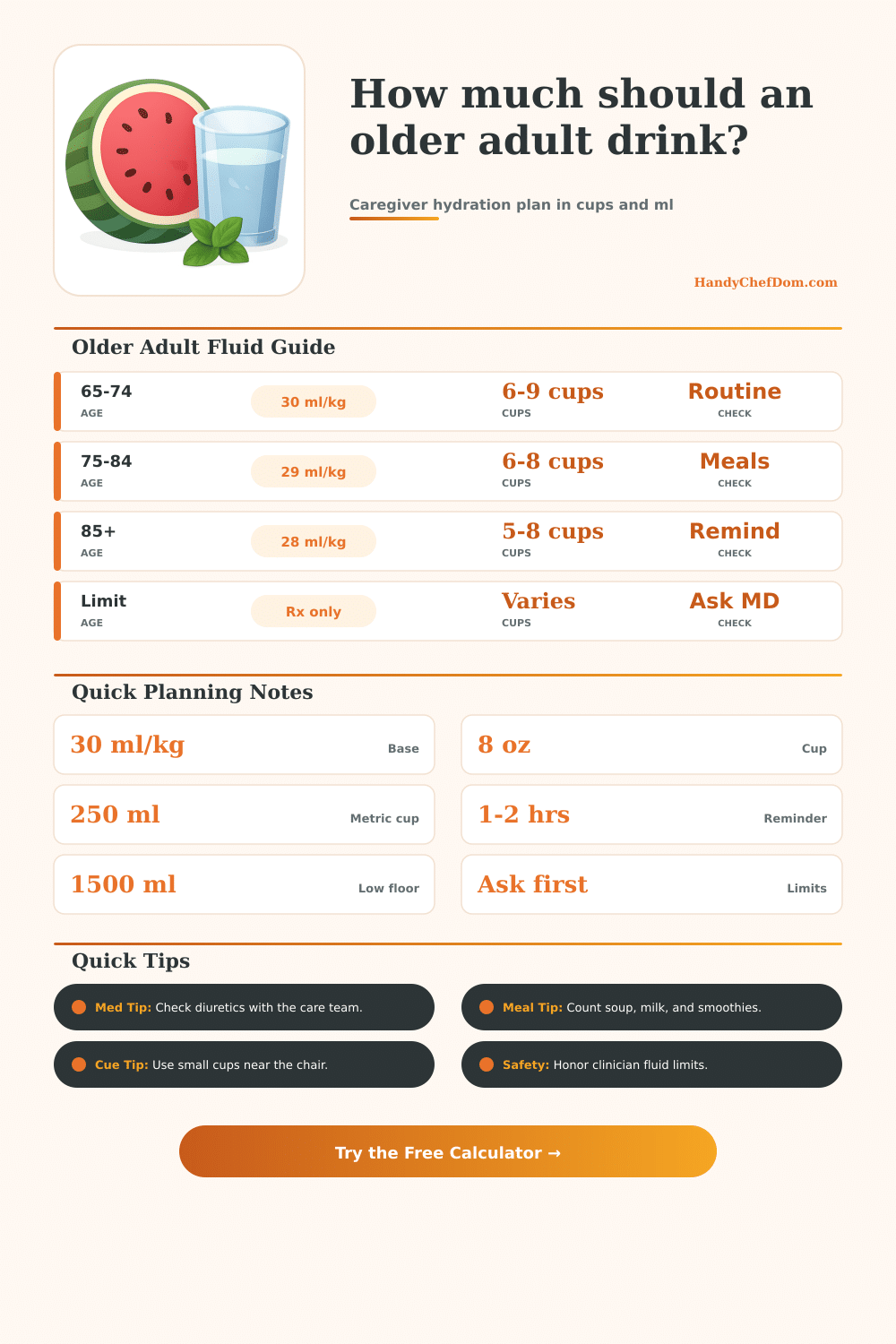
| 65 to 74, steady appetite | About 30 ml per kg | 6 to 9 cups for many adults | Offer with meals and between meals |
| 75 to 84, slower thirst cues | About 29 ml per kg | 6 to 8 cups for many adults | Use visible cups and routine prompts |
| 85 plus, frailty possible | About 28 ml per kg | 5 to 8 cups for many adults | Use smaller servings more often |
| Under fluid restriction | Clinician limit overrides estimate | Varies by care plan | Track total drinks and meal fluids |
| Low intake day | Review for barriers | May need added reminders | Watch urine, dizziness, and alertness |
| Very warm day | Add heat allowance if allowed | Usually split into small servings | Confirm if swelling or shortness of breath |
| Medication or Condition Flag | Why It Matters | Calculator Handling | Care Team Question |
|---|---|---|---|
| Diuretic or water pill | May change urine output and timing | Adds a review flag, not a prescription | Should drinks cluster near medication time? |
| Laxative or bowel regimen | Loose stools can increase fluid losses | Adds modest allowance if no limit exists | When should symptoms trigger a call? |
| Multiple medication flags | Fluid needs may vary by day | Shows a higher caution status | Who confirms daily target and limits? |
| Heart or kidney fluid limit | Too much fluid may be unsafe | Caps the target at the entered limit | What total ml should be tracked? |
| Unknown medication list | Caregiver may miss fluid effects | Keeps estimate conservative | Can pharmacy or clinic review the list? |
| Low sodium history | Excess plain water may be risky | Displays clinician-review warning | Are electrolytes or limits needed? |
| Day Pattern | Extra Fluid Cue | Reminder Shape | Practical Serving |
|---|---|---|---|
| Mostly seated indoor day | Small or no activity add-on | Hourly or meal-med prompts | Half cup to one cup at a time |
| Short walks or errands | Small activity add-on | Before leaving and after return | Four to six ounces per prompt |
| Rehab or therapy blocks | Moderate activity add-on | Before therapy and after each block | Small cup plus meal fluids |
| Gardening or outdoor chores | Higher activity add-on | Frequent shaded drink breaks | Six to eight ounces if allowed |
| Warm indoor room | Heat allowance may apply | Keep cup visible and refilled | Cool drink within easy reach |
| Very hot day | Highest caution category | Shorter intervals, more observation | Confirm limit if heart or kidney issues |
| Reminder Schedule | Best Fit | Typical Checks | Caregiver Setup |
|---|---|---|---|
| Small hourly sips | Independent or mild cue needs | 10 to 14 checks | Use a marked bottle or cup station |
| Meals plus medication rounds | Medication-centered routines | 6 to 8 checks | Pair drink with safe swallow plan |
| Every 2 hours | Simple home routine | 5 to 8 checks | Set phone alarms or fridge notes |
| Caregiver check-ins only | Needs help pouring or opening | 4 to 6 checks | Pre-pour safe amounts if allowed |
| Memory cue cards and alarms | Forgetfulness or low thirst cues | 8 to 12 checks | Place cues by chair, bed, and meals |
| Overnight care shift | Awake at night or split schedule | Custom checks | Avoid unsafe rushing to bathroom |
Sources used for the planning logic include common geriatric hydration rules of thumb such as 30 ml per kg per day, total water intake references, and clinical warnings that medication, illness, and heat can change needs. This page is for planning conversations, not medical orders.
When an older adult begin to skip drinks, there are some signs that indicate the change in the habits of those adults. For instance, an older adult may mention feeling tiredly during the afternoon, or the older adult may leave a glass of water on the table near they chair. Furthermore, it is possible that the older adults water bottle may remains full after dinner.
These changes are common among the older adults, but the changes occurs due to the aging body of those adults (specifically), because the thirst signal of an older adult are often slower, the body changes in how it hold fluid, and their daily routine change. In order to determine how much fluid is enough for an individual, there are several factor that must be considered. For instance, the weight, age, and activity level of the individual will help to determine the amount of fluid that is necessary for that individual to consume each day.
How to Plan Drinks for Older Adults
An individual that is physically active will require more fluid than an individual that is not physical active. Additionally, an individual may lose more fluid if they is taking medications or if the room in which they are located is warm. These factors a fluid plan calculator can account for.
The inputs that ask for the size of the body of the individual, any medication that are taken by the individual, and the temperature at which the body is livig will impact the total amount of fluid that should be consumed by that individual. These factors will not replace the fluid limits that their clinician may prescribe to an individual, but they will provide the individual with some insight into whether or not their fluid need change. In addition to these factor, it is important to include fluids that are consume during meals.
Fluids like soup, milk in coffee, and smoothies all count towards the total amount of fluid that is consumed by the individual each day. By subtracting these fluids from the total amount of fluid that the individual should consume each day, the plan ensure that the individual will drink enough fluid to meet their needs, but not consume too much fluid during their meals. In addition to fluid intake, the mobility of the individual is another factor that should be considered.
An individual that is independent will have access to fluids at all necessary time, but an individual that uses a walker may require fluids to be provide to locations where that individual rest. Additionally, an individual that requires assistance to pour fluids may require small amounts of fluid to be provided during their care routine. These factors will not change the total amount of fluid that is required of that individual, but it will impact the ability for the individual to consume the fluids necessary to remain proper hydrated.
Another factor that the fluid plan calculator may consider is the potential for utilizing different type of reminders of the need to consume fluid. For instance, if the person provides fluid in hourly amount, fluid can be included in their meal or other activities that can occur hourly. Additionally, medications can also be used as reminders of the need to consume fluids, as can memory and check-ins with a caregiver to ensure that the individual drinks enough fluids.
The fluid plan calculator account for these different types of reminders to ensure that the individual consume the amount necessary each day. An individual will lose more fluid if the activity level are high or if the environment is warm. For instance, if the individual performs various chore in the warm air of the house, they will lose more fluid than if they are resting at home in a cool area.
Additionally, an individual that participate in rehab sessions will lose more fluid than an individual that remain in bed all day. These factors are accounted for by the fluid plan calculator, as. The fluid that is calculated with the fluid plan calculator should not be treated as a fixed number.
For instance, if an individual has a medical limit to the amount of fluid that they can consume each day, that limit should take precedence over the calculation made by the fluid plan calculator. Additionally, if an individual avoids drinking fluids due to concern regarding needing to use the restroom, it is the concerns regarding the fluids that should be addressed. Finally, if it become warmer in the environment in which the individual lives, it is necessary to re-assess the fluid plan calculator to reflect that change in fluid loss.
The table included at the fluid plan calculator may help provide general information regarding the fluid intake that is normal for an individual. For instance, the tables may indicate that an older adult should consume between 1.5 and 2.5 liter of fluid per day. These tables are not medical prescription, though; the amount of fluid consumed by the individual may be low but the individual may still feel sluggish.
In such cases, it is recommended to investigate for other potential cause of the sluggishness. The fluid plan calculator also allow for an individual to spread the amount of fluid that should be consumed during the awake hour of the individual. For instance, if the individual is awake during the evening or the early morning hours, it is important to provide fluids at those specific time.
The fluid plan calculator help ensure that these amounts of fluid are provided during these times so that the individual does not have to consume the fluids only during their daylight hours. Finally, one of the most important habit of an individual is to continuously observe the body of that individual. For instance, the color of the individuals urine, their energy during the afternoon, and their level of confusion can all be indicator of whether or not the fluid plan calculator was created for that individual.
Thus, the fluid plan calculator will help to provide an estimate to the amount of fluid that the individual should consume each day, but the observations of that individual will determine if that calculated number is the proper amount for that adult.