Jumbo Shrimp Per Pound Calculator
Estimate jumbo shrimp pieces, pounds to buy, shell-on yield, and guest coverage for cocktail trays, seafood boils, and dinner portions
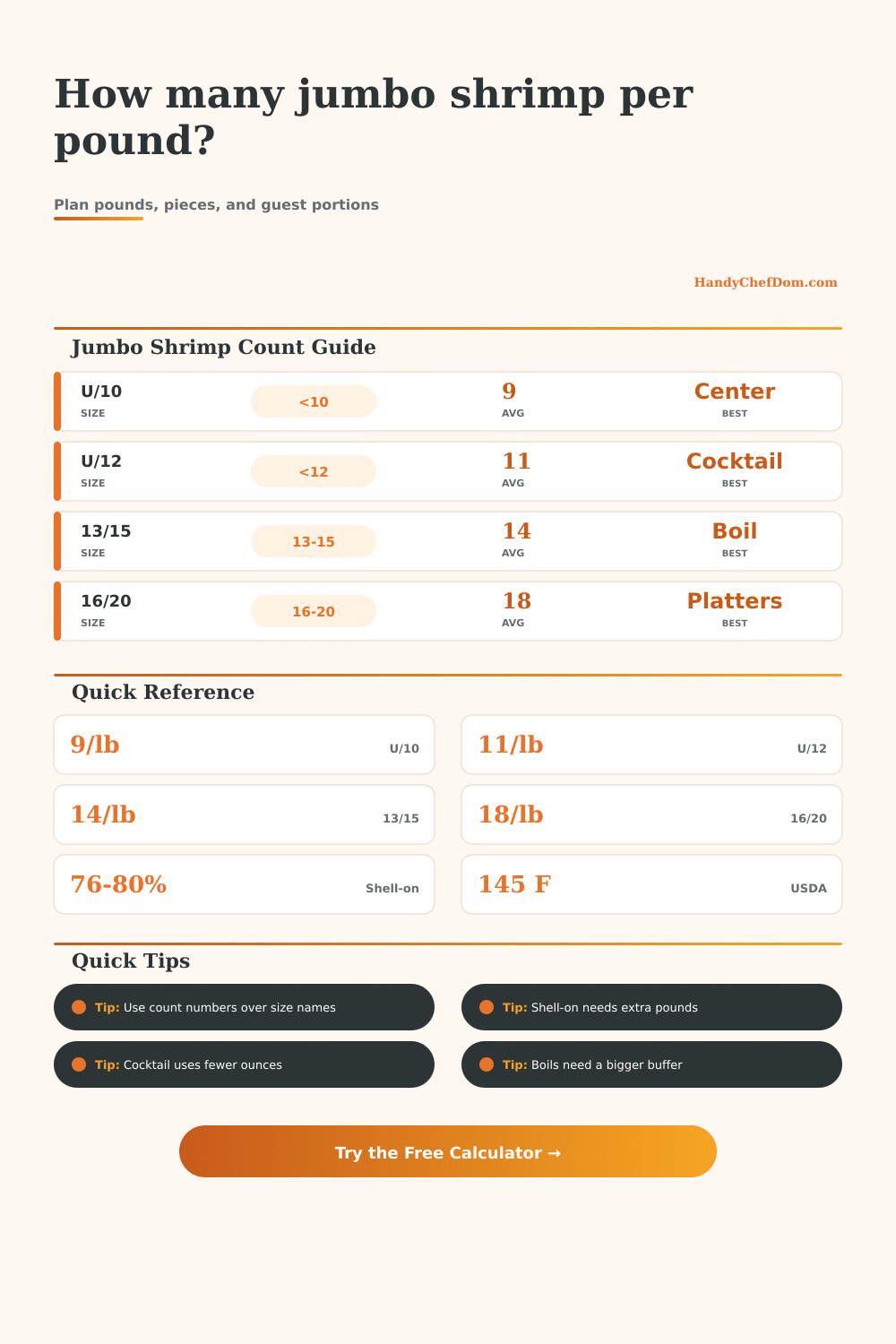
| Market Count | Common Name | Per Pound | Average Used |
|---|---|---|---|
| U/10 | Super Colossal | Under 10 | 9 shrimp/lb |
| U/12 | Colossal | Under 12 | 11 shrimp/lb |
| 13/15 | Extra Colossal | 13 to 15 | 14 shrimp/lb |
| 16/20 | Jumbo | 16 to 20 | 18 shrimp/lb |
| Style | Edible Oz/Guest | Typical Pieces | Planning Note |
|---|---|---|---|
| Cocktail starter | 3.0 oz | 3 to 5 | Before a meal |
| Heavy cocktail | 5.0 oz | 5 to 8 | Tray focus |
| Dinner entree | 8.0 oz | 8 to 12 | Main protein |
| Seafood boil | 6.5 oz | 7 to 11 | With sides |
| Prep Type | Yield Used | Buy More By | Best Match |
|---|---|---|---|
| Peeled deveined | 100% | 0% | Fast portions |
| Tail-on peeled | 96% | 4% | Cocktail |
| Easy-peel shell-on | 80% | 25% | Boils |
| Shell-on headless | 76% | 32% | Grill or boil |
| Head-on shell-on | 55% | 82% | Whole shrimp |
| Cooked peeled | 100% | 0% | Ready trays |
| Group | Cocktail | Dinner | Boil Shell-On |
|---|---|---|---|
| 4 guests | 0.8 lb | 2.0 lb | 2.2 lb |
| 8 guests | 1.5 lb | 4.0 lb | 4.5 lb |
| 12 guests | 2.3 lb | 6.0 lb | 6.7 lb |
| 24 guests | 4.5 lb | 12.0 lb | 13.4 lb |
| Reference | Value | Visual Cue | Use In Calc |
|---|---|---|---|
| USDA/FSIS | 145°F | Seafood safe temp | Reference only |
| FoodSafety.gov | Opaque | Pearly or white | Reference only |
| Planner | Raw weight | Before cooking | Buy amount |
| Count size | Per lb | Package label | Piece estimate |
How do you know how many shrimp to serve? Hosting a dinner party often hinges on this one deceptively simple question. You need to know how many pieces are in a pound (count sizes) and what percentage of the raw shrimp will end up on the plate (yield percentage). Without this, you might as well be playing darts at a dart board when trying to figure out what quantity of shellfish to order.
That’s why I created this shrimp calculation tool, which does the math for you based off your number of guests. It works whether you are serving cocktail hors d’oeuvres, grilled entree shrimp, or some other form of service. Because if you don’t use enough, you’ve got empty plates; if you order too much for your group, then you have wasted money. This isn’t just about pounds, it’s about meat that gets on the plate.
How to Calculate How Much Shrimp to Buy
To confuse most shoppers: the way that shrimp packages are labeled as “U/10” or “21-30” is how many pieces are in a pound before they’ve been cooked or peeled. (The ‘U’ stands for under). So if you read U/10 on your package, there will be fewer then ten shrimp per pound, which means that each one should of been pretty big! If it says 16/20, then that’s about eighteen shrimp to the pound. The shrimp calculator takes all this into account to give you an idea of how many shrimp you’ll get in individual pieces. It shows how much is for a main dish versus a cocktail tray serving size.
When you’re at grocery store with a shopping cart jam-packed with everything else, the numbers can get confusing quick. By understanding the count though, you can picture what a serving size looks like before even weighing out each individual shrimp.
When it comes to grilling up a bunch of shrimp for a platter or boiling some up for a seafood boil, many people overlook an important factor: the shell. If your meal include shell-on shrimp, that head and shell will add quite a bit of bulk to each piece of shrimp. This tool compensates by accounting for the percentage of yield depending on how you prepare the shrimp. Generally speaking, peeled and deveined shrimp has at least a 100% edible yield. This means that roughly every pound labeled as such is going to be nearly all meat.
Shell-on shrimp may only provide 75-80% edible yield once they’ve been peeled. That’s a big enough discrepancy to require buying extra pounds of shell-on shrimp to feed the same number of guests as you would with pre-peeled shrimp. Otherwise, you’ll end up with hungry diner with not much to show for their money.
Portion targets are heavily influenced by serving style too. For example, fewer ounces per person should be served if it’s an appetizer vs. It is a main course with shrimp and other proteins. The calculator breaks down options into categories like: Seafood Boils with Sides; Dinner Mains; Heavy Trays; Light Appetizers. Within each type there are varying starting amounts of edible ounce per guest. Additionally, you can choose to increase the appetite level and include a buffer % to account for surprise guests or extra hungry eaters. This allows you to plan based on real-world variables instead of sticking to rigid average portions. This prevents the risk of falling short.
The last thing to watch out for when cooking any seafood dish is temperature safety. According to the reference section, the USDA standard for doneness is 145 degrees Fahrenheit. Once the internal temperature reach this level, it’s safe to eat. You can also tell that your shrimp is cooked through by looking at it- if the flesh appear pearly white and looks opaque, it’s done. When overcooked, the tender meat becomes rubbery. This makes the amount you start with in the bag just as important as the time it cooks. To be on the safe side, always keep an eye on the clock, and you’ll end up with some tasty dishes no matter what size bag you start with.
You will have less stress on event day by planning in advance, which allows you to make adjustments as needed. You can change from a cocktail party setting to a plated dinner setting. You can adjust your guest count and see how changing your menu affects the amount of pounds you’ll need, all without having to do any math yourself! By using this tool, you can see the impact and change settings until you’ve narrowed down what works within your storage space and budget. For instance, if you’re hosting a cocktail party for 24 people with additional menu items, you may need up to six pounds (or more), whereas a sit-down dinner for four guests could call for just two.
To that end, there are some handy reference tables in the app which give you an idea of what the average yield might be per guest (as well as other typical group sizes). If you like, you can double-check your math against those and then run out to the market. Or just keep the tables around as a reminder. They will help the next time you go to a new market where packaging or labeling might change slightly. They also help if you are just shopping for yourself, because keeping a clear mental model of how yields work will make planning ahead much simpler.
In conclusion, purchasing shrimp isn’t a matter of guesswork; it’s a matter of understanding how weights work. Shells hide their weight from you until peeling time. Value lies in size counts. Purchase quantities is based on yield percentages. If you get those three, figuring out what to buy for dinner becomes easy rather than stressful. Use the calculator to do the math, then use your gut instinct to make the last call. The result? A bunch of fresh shrimp for all to enjoy, no waste.