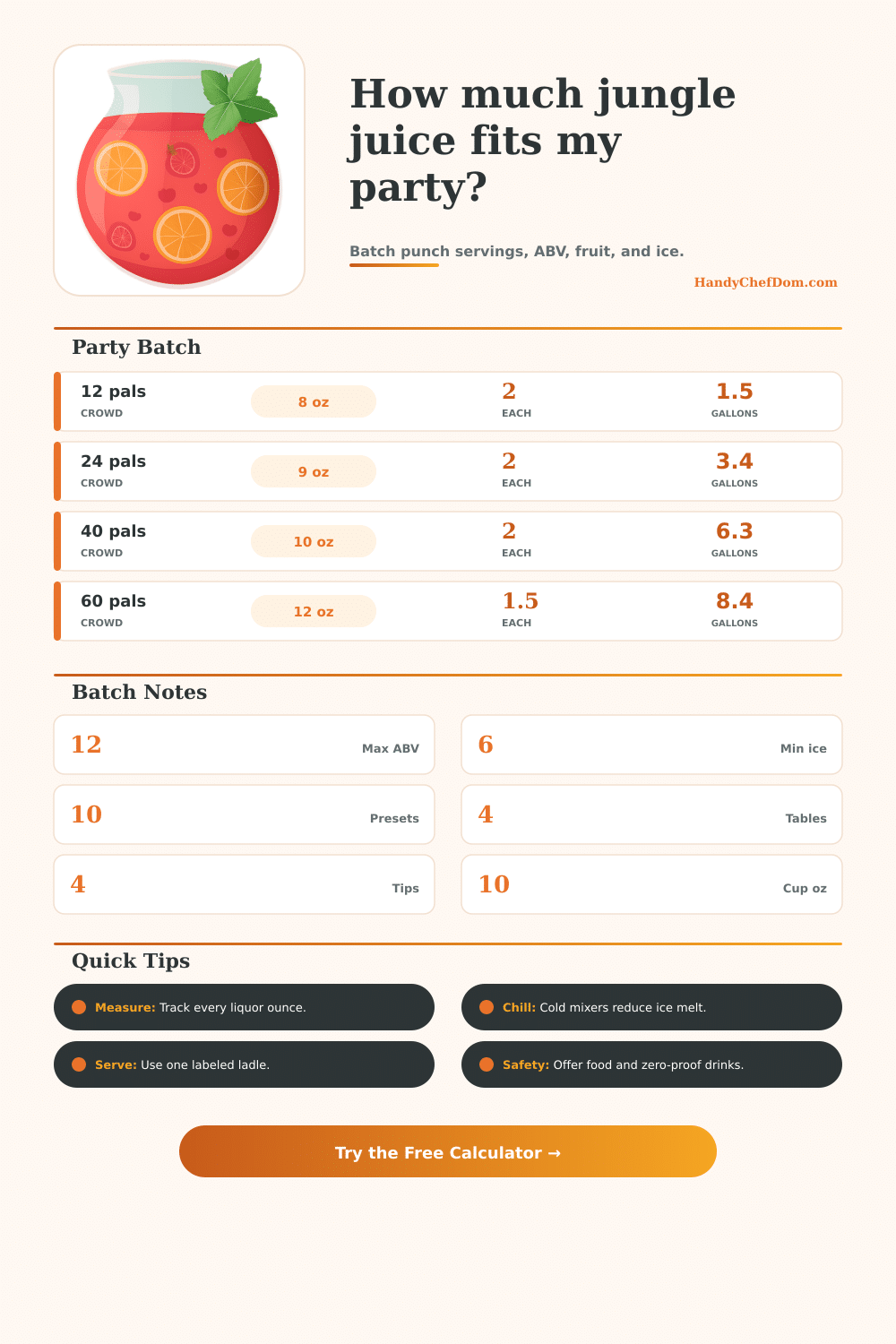
Jungle Juice Calculator
Build a measured punch batch from guests, cup size, servings per person, spirits, liqueur, wine, mixers, fruit, ice, and safe serving pace. The goal is a clear batch plan, not a mystery tub that is stronger than anyone expects.
Use a preset as a starting point, then adjust the exact guest count and recipe. Alcohol percentages are batch estimates after mixers, fruit juice, and ice melt; actual strength depends on measured pours, product ABV, chilling, and serving habits.
Your jungle juice batch estimate
Estimated finished ABV after selected melt.
If you add one more half-gallon of mixer.
If ingredients stay cold and dilution is lighter.
Approximate pure alcohol per serving.
| Preset | Best setting | Base idea | Typical ABV | Host note |
|---|---|---|---|---|
| Red Cup Classic | Apartment party | Vodka, fruit punch, lemon-lime soda, citrus slices | 6% to 8% | Simple, sweet, and easy to over-pour unless cups are measured. |
| Tailgate Cooler | Outdoor cooler | Vodka, lemonade, iced tea, orange slices, lots of ice | 4% to 6% | Outdoor batches melt faster, so start chilled and keep a scoop nearby. |
| Tropical Rum Tub | Beach theme | White rum, pineapple juice, orange juice, coconut water | 5% to 7% | Fruit-forward flavor can hide alcohol; keep the ABV label visible. |
| Citrus Vodka Punch | Clean tart batch | Vodka, grapefruit soda, lemonade, lime wheels | 6% to 9% | Acidity balances sweetness, but carbonation fades if mixed too early. |
| Brunch Fruit Bowl | Daytime event | Prosecco, juice, berries, orange, low liqueur | 3% to 6% | Lower proof fits longer grazing events with food and coffee. |
| Wedding Afterparty | Late-night station | Vodka, cranberry, lemonade, club soda, berries | 4% to 7% | Keep servings small because guests may have already been drinking. |
| Berry Lemonade Batch | Summer patio | Vodka, berry lemonade, strawberries, sparkling water | 5% to 7% | Sweet berries add flavor, color, and a little serving displacement. |
| Dorm Cooler Batch | Budget crowd | Vodka, fruit drink, soda, frozen fruit | 6% to 10% | Use strict measuring because low-cost recipes are often strongest. |
| Low-Proof Social | Mixed-age group | Wine, cider, juice, soda, fresh fruit | 2% to 4% | Good for guests who want flavor without cocktail-level strength. |
| Zero-Proof Fruit Punch | Sober option | Juice, tea, soda, citrus, berries, herbs | 0% | Serve in a separate labeled vessel with its own ladle. |
| Batch ABV | Closest feel | 10 oz serving | Planning guidance |
|---|---|---|---|
| 0% | Fruit punch | 0 drinks | Keep this available all night for pacing and sober guests. |
| 2% to 3.5% | Light cider | 0.3 to 0.5 drinks | Works well for long events with food and casual refills. |
| 4% to 5.5% | Beer-like | 0.5 to 0.8 drinks | Still alcoholic; label it and avoid jumbo cups. |
| 6% to 8% | Strong beer | 0.8 to 1.1 drinks | Common jungle juice zone; use measured cups and food. |
| 9% to 12% | Wine-like | 1.2 to 1.6 drinks | Serve smaller portions and avoid sweet masking flavors. |
| Over 12% | Cocktail-like | 1.6+ drinks | Consider adding mixer or reducing spirits before serving. |
| Item | Calculator source | Buy unit | Rounding rule | Storage note |
|---|---|---|---|---|
| Base liquor | Spirit ounces | 750 ml bottle | Round up to whole bottles | Pre-chill if possible and measure before adding. |
| Liqueur | Liqueur ounces | 750 ml bottle | Round up if used | Keep sweet liqueur modest so punch is not syrupy. |
| Wine or bubbly | Wine ounces | 750 ml bottle | Round up to bottle count | Add bubbles near service to keep fizz. |
| Juice mixers | Mixer ounces | Half gallon | Round up to cartons | Reserve some for last-minute dilution. |
| Soda or seltzer | Optional mixer share | 2 liter bottle | Round up to bottles | Open late to preserve carbonation. |
| Cut fruit | Fruit cup input | Quart container | Four cups per quart | Wash, slice, and keep cold until mixing. |
| Ice | Ice pound input | 10 lb bag | Round up to bags | Use one bag for chilling and one for serving. |
| Vessel | Practical fill | Fits about | Best use | Watch out |
|---|---|---|---|---|
| 1 gallon pitcher | 110 fl oz | 11 small cups | Test batch or dinner party | Fruit takes space; do not fill to the rim. |
| 2 gallon drink jar | 220 fl oz | 22 ten-ounce cups | Small party service | Spigot fruit clogs if pieces are too small. |
| 3 gallon dispenser | 330 fl oz | 33 ten-ounce cups | Countertop self-serve | Label ABV and cup size beside the dispenser. |
| 5 gallon cooler | 560 fl oz | 56 ten-ounce cups | Tailgate or patio | Outdoor heat increases melt and weakens flavor. |
| 10 gallon tub | 1150 fl oz | 115 ten-ounce cups | Large backyard party | Use separate chilled refills rather than one mystery tub. |
| Punch bowl | 140 fl oz | 17 eight-ounce cups | Brunch or shower | Ladle size changes actual serving count quickly. |
How this jungle juice calculator works
The calculator first estimates the number of servings you need from guests, cup size, servings per person, and the overage buffer. It then adds the recipe volume from spirits, liqueur, wine, mixers, fruit displacement, and the selected percentage of melted ice. That finished volume becomes the basis for gallons, cup count, vessel fit, and servings per hour.
For strength, each alcoholic component is converted into pure alcohol ounces by multiplying volume by ABV. Pure alcohol is divided by the finished batch volume to estimate batch ABV, and divided by 0.6 fl oz to estimate U.S. standard drinks. Because jungle juice is often sweet, fruity, and served in casual cups, the page intentionally highlights ABV, per-cup alcohol, and safer pacing rather than only giving a large batch volume.
Making a batch of jungle juice require an understanding of the relationship between the liquids and the total volume that will be created. Many people try to make jungle juice by pouring the bottles of liquid into a container without calculating the total volume that the liquid will create. Often, the result is a batch of jungle juice that is either too strong or too weak to taste good.
Using a jungle juice calculator will help to create your various bottles of jungle juice into a predictable volume of the drink. The jungle juice calculator will calculate the number of servings that your batch will create and you will know the strength of the liquid due to the calculator’s consideration of the volume of liquor, the volume of the mixers, and the volume of the ice and fruits that will be used in the drink. The first step in using a jungle juice calculator is to enter the total number of guest that will attend the event.
How to Use a Jungle Juice Calculator
The size of the cup that each guest will consume and the number of servings of that cup that each guest will drink must also be entered. These three numbers is necessary to calculate how many total ounces of liquid each guest will consume at the event. For example, if each guest consumes two cups of ten ounces each, they will drink twenty ounces of liquid.
Alternatively, four servings of five ounces of liquid will also create twenty ounces of liquid consumption by each guest. However, you must also add a percentage of the total number of guests for the possibility that some of the guests will spill there drinks or consume more than anticipated. If this percentage is not added, the liquid may become depleted before all of the guests have had a chance to drink.
After entering the number of guests and the parameter of the liquid that each guest will consume, the recipe for the jungle juice must be entered into the jungle juice calculator. The number of ounces of each of the liquor components must be entered. In addition to the number of ounces, you must enter the percentage of alcohol that is contained in each component into the jungle juice calculator.
For example, vodka has a higher percentage of alcohol than liqueurs. The jungle juice calculator will calculate how many ounces of ethanol the ingredients will create, and it will divide that amount of ethanol by the total volume of the jungle juice. The resulting number is the ABV (alcohol by volume) percentage of the jungle juice.
An important factor to consider when creating the jungle juice is the volume of the ice that will melt. When the ice melts, it will become liquid and increase the volume of the liquid jungle juice. One pound of ice will melt into approximately fifteen ounces of water.
A percentage of the total amount of ice that will melt must be entered into the calculator. This percentage is based off the length of time that the jungle juice will sit in the environment and the temperature of that environment. For example, if the environment in which the jungle juice will sit is warm and expose to direct sunlight, a higher percentage of the ice will melt compared to if the jungle juice was to be stored in a cooler and indoor environment.
Using a higher percentage of ice melt will result in a lower ABV for the jungle juice. If this parameter is not considered, the taste of the liquid will be too weak for the desired level of ABV. An additional factor that will change the volume of the jungle juice is the addition of fruit to the liquid.
When the fruit is added to the container, the volume that the fruit takes up will increase the total volume of the jungle juice. The amount of fruit that is to be used must be entered into the jungle juice calculator. The total volume of fruit can change the total volume of the jungle juice that is created.
Additionally, some fruits will change the taste of the alcohol such that the added fruit masks the taste of the alcohol. However, the addition of fruit to the liquid will not change the amount of ethanol. When all of the parameter have been entered into the jungle juice calculator, the calculator will output several figures regarding the batch of jungle juice that will be made.
The jungle juice calculator can determine the total gallons of liquid that will be created, the number of servings of the liquid that can be provided for the guests, the ABV percentage of the liquid, and the total number of standard drinks of alcohol that are contained within the batch. These four figure can be used to determine whether or not the recipe is as you have intended for the event. For example, if the ABV of the liquid is too high, you can decrease the amount of liquor or increase the amount of mixer to lower the ABV percentage of the liquid.
Additionally, if the number of servings of the batch is too low to supply all of the guests that will attend the event, this can be seen prior to beginning to mix the jungle juice. In addition to the figures that the jungle juice calculator outputs, there is also a comparison grid in the jungle juice calculator. The comparison grid allows the creator to see how the ABV of the liquid can change if additional mixer is added or if the amount of liquor is changed.
For example, the comparison grid can help the creator of the recipe to determine how many additional cartons of juice will be required to decrease the ABV of the liquid by a certain percentage. This grid allows the jungle juice maker to alter the recipe before purchasing the ingredients for the drink. Furthermore, knowing how the ABV will change when the recipe is altered will help to ensure that the ABV percentage of the jungle juice is the appropriate strength for the individual that will be served.
Another feature of the jungle juice calculator is a shopping list estimator. The shopping list estimator will transform the jungle juice recipe into a list of the items that must be purchased for the drink to be made. This shopping list will include the number of 750-milliliter bottles of each type of liquor that is required for the recipe.
Additionally, the shopping list will also include the number of cartons of mixer that will be required for the recipe. Finally, the shopping list will indicate the number of bags of ice that must be purchased to create the liquid. This shopping list estimator will ensure that too little or too much of any ingredient is purchased for the recipe.
Common mistakes in the creation of jungle juice is the failure of the individual to keep track of the total volume of the mixture that is to be created. Individuals often measure the amount of liquor that they intend to use for the recipe, but they do not measure the amount of mixer that they plan to use. This mistake will make it impossible for the individual to know the ABV percentage of the jungle juice that they will create.
Other mistakes include adding the ice too soon after beginning to create the jungle juice. The amount of ice that is added will melt over time, increasing the total volume of the liquid and decreasing the ABV percentage of the drink. Such mistakes can be avoided by simply entering all of the ingredients and environmental factors for the recipe into the jungle juice calculator.
By using the jungle juice calculator, the individual will be certain of the total volume of the drink, the total number of servings that the jungle juice will contain, and the total amount of strength of the drink.