🎃 Protein in Pumpkin Seeds Calculator
Estimate pumpkin seed protein from tablespoons, ounces, or grams, with hulled or shell-on seeds, prep style, salt option, servings, and protein target.
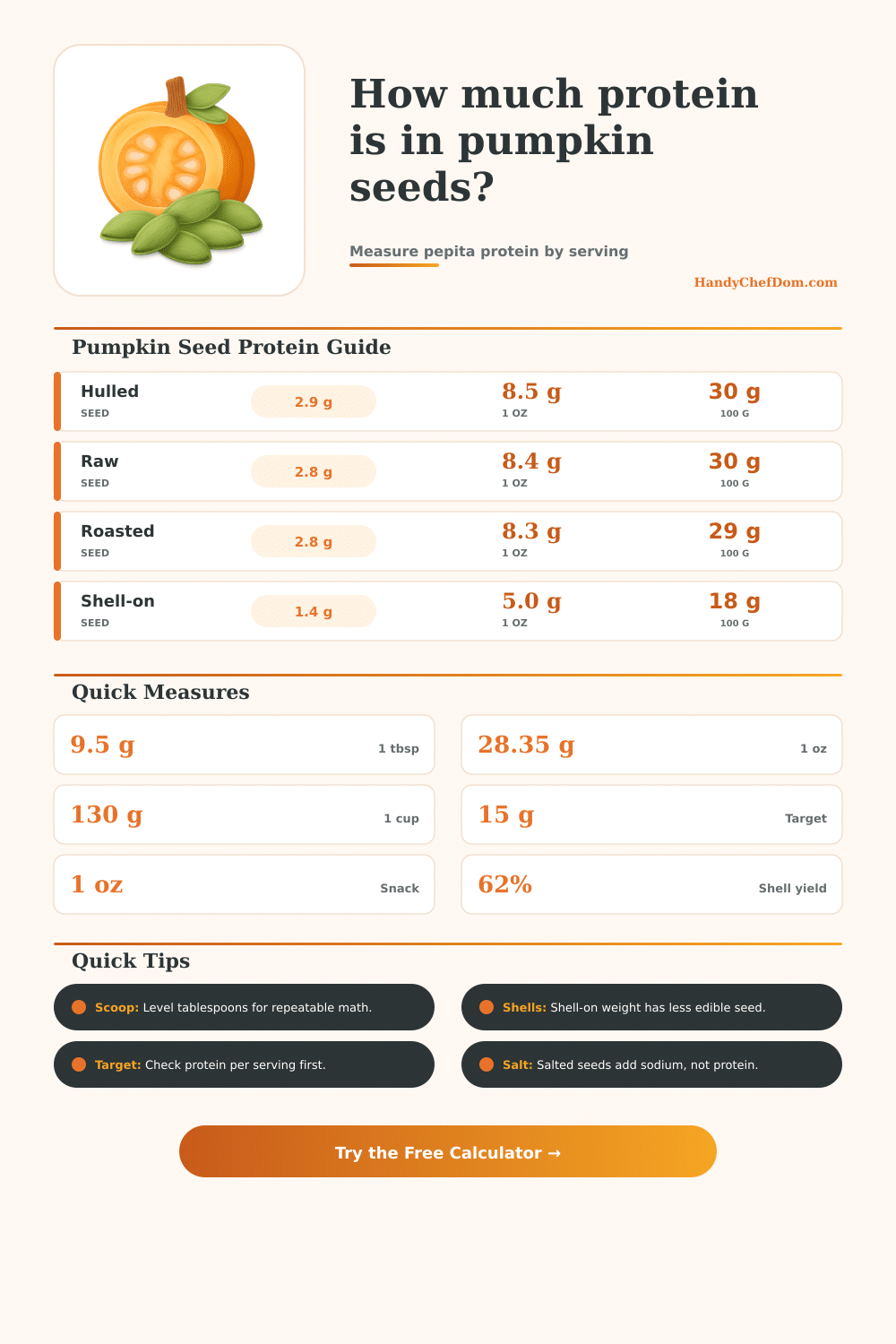
Use hulled pepitas when you eat the whole measured amount. Choose shell-on when the bowl includes hull weight, because only part of that weight is edible seed.
| Seed form | Protein per 100 g | Tablespoon weight | Edible factor |
|---|---|---|---|
| Hulled raw pepitas | 30.2 g | 9.5 g | 100% |
| Hulled dry roasted | 29.8 g | 9.2 g | 100% |
| Oil roasted pepitas | 29.0 g | 9.4 g | 100% |
| Sprouted dried pepitas | 28.5 g | 8.8 g | 100% |
| Ground pumpkin seed meal | 32.0 g | 7.8 g | 100% |
| Shell-on roasted seeds | 30.0 g edible kernel | 7.0 g total | 62% |
| Common measure | Hulled grams | Shell-on total grams | Approx protein |
|---|---|---|---|
| 1 teaspoon hulled | 3.2 g | 2.3 g | 1.0 g hulled |
| 1 tablespoon hulled | 9.5 g | 7.0 g | 2.9 g hulled |
| 2 tablespoons hulled | 19 g | 14 g | 5.7 g hulled |
| 1 ounce hulled | 28.35 g | 28.35 g | 8.5 g hulled |
| 1/4 cup hulled | 32.5 g | 24 g | 9.8 g hulled |
| 1 cup hulled | 130 g | 96 g | 39.3 g hulled |
| Use style | Typical seed amount | Protein estimate | Portion note |
|---|---|---|---|
| Snack handful | 1 oz hulled | 8.5 g | One compact snack cup |
| Salad crunch | 1.5 tbsp hulled | 4.3 g | Enough for one large bowl |
| Smoothie topping | 2 tbsp hulled | 5.7 g | Works over yogurt too |
| Soup garnish | 1 tbsp roasted | 2.7 g | Use after portioning bowls |
| Baking add-in | 1/2 cup hulled | 19.6 g | Divide across slices |
| Meal prep cups | 3/4 oz each | 6.4 g | Pack dry in small cups |
| Preparation | Calories per 100 g | Fat per 100 g | Carbs per 100 g |
|---|---|---|---|
| Raw dried pepitas | 559 | 49.1 g | 10.7 g |
| Dry roasted pepitas | 574 | 49.0 g | 14.7 g |
| Oil roasted pepitas | 600 | 52.5 g | 13.0 g |
| Sprouted dried pepitas | 545 | 45.0 g | 12.0 g |
| Ground seed meal | 560 | 46.0 g | 9.0 g |
| Salted roasted pepitas | 574 | 49.0 g | 14.7 g |
Pumpkin seeds can be use in many different ways. Pumpkin seeds can be used as an small garnish for your dishes or as a significent source of protein for your diet. If you use a small amount of pumpkin seeds to top your soup, pumpkin seeds will act as a garnish.
However, if you consume a large amount of pumpkin seeds as a snack, pumpkin seeds will act as a significent source of protein for your body. The amount of protein that pumpkin seeds contains depends on the amount of pumpkin seeds that you eat. Additionally, the amount of protein that pumpkin seeds contain also depends on whether or not the pumpkin seeds that you consume has shells or whether you hull the pumpkin seeds.
How to Measure Protein in Pumpkin Seeds
Pumpkin seeds that contain shells will weigh more than pumpkin seeds that do not contain shells because shells do not contain protein. Many peoples prefer to eat hulled pepitas because they make it easy to measure the amount of protein that they are consuming from the pumpkin seeds. The shells that you find on pumpkin seeds add to the weight and bulk of the pumpkin seeds, but they do not add any protein to the meal.
When calculating the protein that pumpkin seeds contain, people must account for the edible portion of the pumpkin seeds. Additionally, the preparation of pumpkin seeds can change the amount of protein that pumpkin seeds contain. Pumpkin seeds that people have roasted in oil will contain more calories from the oil, but the oil will not contribute to the amount of protein that pumpkin seeds contain.
Pumpkin seeds that are coated in salt will also change in density, so people must use a calculator to determine the impact that salt have on pumpkin seeds protein content. The portion size that a person consumes from pumpkin seeds is a major factor in the amount of protein that they consume from pumpkin seeds. However, portion size is often difficult to track.
A single tablespoon of pumpkin seeds may seem like a small portion for a person to consume, yet it is possible that the individual will consume two or three tablespoons of pumpkin seeds during one sitting. A calculator will allow a person to set a target for the amount of protein that they want to consume from pumpkin seeds. The calculator will provide the exact amount of pumpkin seeds that a person must consume to reach there target for protein.
Such a calculator is useful for measuring pumpkin seeds by weight, by volume, or by the number of servings. This is especially helpful for recipes that require different units of measurement. During one day, a person may choose to use pumpkin seeds in different ways.
For example, pumpkin seeds may be used as a light garnish for meals or they may be used as a snack. The calculator allows a person to change the use case for pumpkin seeds without having to change any of the other settings on the calculator. Another factor to consider with pumpkin seeds is the salt levels in the pumpkin seeds since high levels of sodium can influence the number of pumpkin seeds that a person eats.
People may often underestimate the number of pumpkin seeds that they eat when seasoned. Thus, people may consume seasoned pumpkin seeds more quick than pumpkin seeds that contain no salt added to them. The difference between raw pumpkin seeds and roasted pumpkin seeds can make a difference in the protein content in pumpkin seeds.
Dry roasting pumpkin seeds can change their texture and slightly change the protein content of pumpkin seeds. People dont have to memorize the protein content that is contained in raw versus roasted pumpkin seeds because calculators makes adjustments for the protein content of raw and roasted pumpkin seeds. A person’s preference for dry roasted pumpkin seeds over raw pumpkin seeds may make a person consume more pumpkin seeds since flavor is a major motivation to consume pumpkin seeds.
A person’s eating habit, such as choosing to eat pumpkin seeds with their shells or hulled pumpkin seeds, can also make a difference in the total number of pumpkin seeds that a person consumes. If you use a calculator to track how many pumpkin seeds you consume, you will eventualy discover patterns in the amount of protein that you consume. For example, a standard portion size of hulled pumpkin seeds will contain the same amount of protein whether or not the pumpkin seeds are raw or roasted.
The amount of protein that you consume will depend on the number of servings of pumpkin seeds that you consume and whether you consume extra pumpkin seeds for texture. The calculator will show you these variable so that you do not have to remember them. Over time, using the calculator will allow you to stop ignoring pumpkin seeds in your diet and to start treating them as a major component of your daily protein intake.
Before you eat your pumpkin seeds, you should always check the gap between the amount of protein that you currently consume and the amount of protein that your body needs. If the amount of protein that pumpkin seeds contain does not meet the amount of protein that you need, you can either eat more pumpkin seeds or you can adjust the amount of protein that you expect from your meals. Both choice are acceptable once you understand how to measure the amount of protein that pumpkin seeds contain.