🧀 Lactose in Mozzarella Calculator
Estimate lactose in fresh, low-moisture, part-skim, whole milk, or buffalo mozzarella by weight, serving count, label carbs, moisture, recipe use, and personal lactose limit.
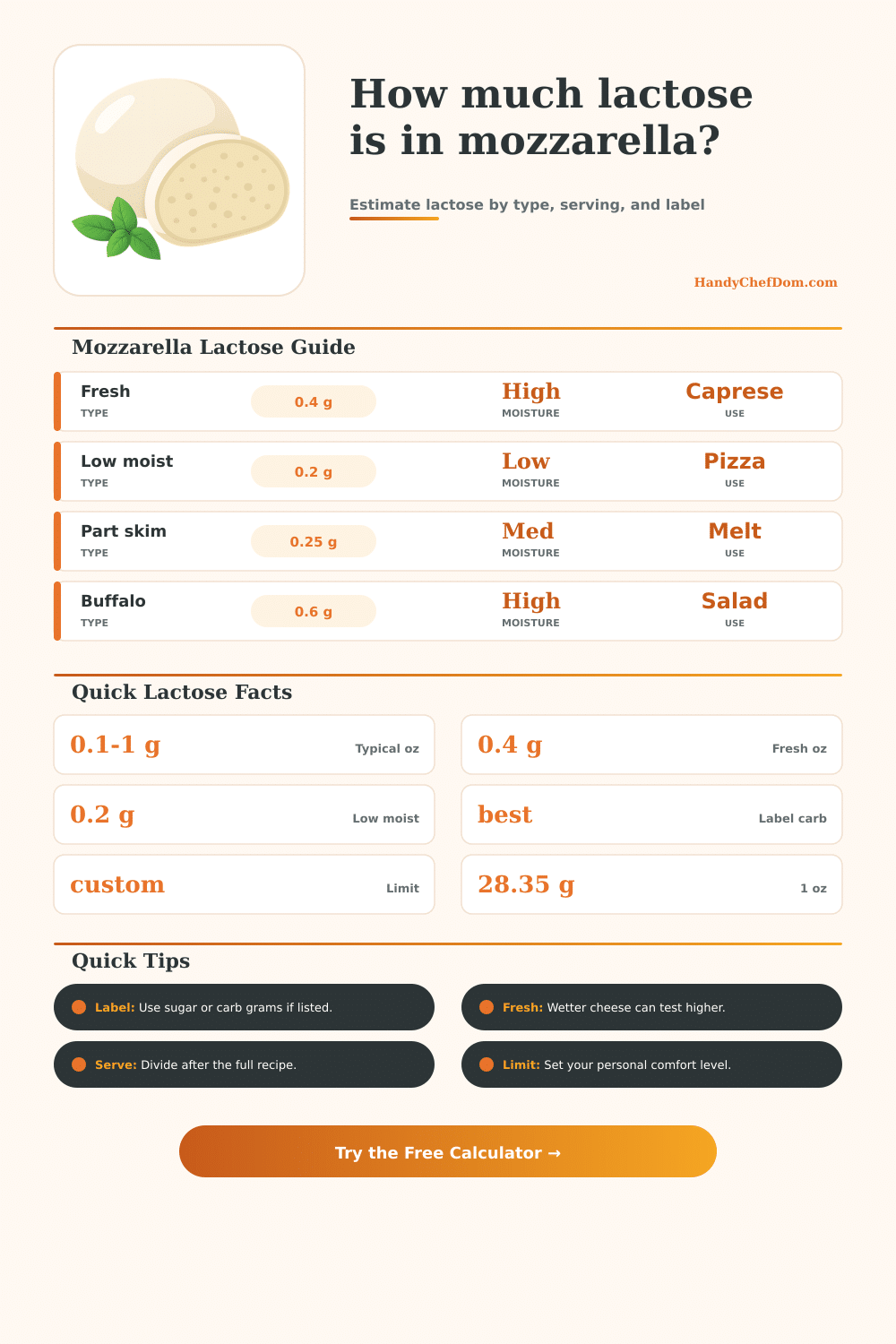
Mozzarella is generally a low-lactose cheese, often around 0.1 to 1 g lactose per ounce depending on type, moisture, and label. If your package lists sugar or carbohydrate grams, use that number as the best override.
| Cheese | Estimated Lactose per Oz | Lactose Level | Calculator Note |
|---|---|---|---|
| Mozzarella | About 0.1-1 g | Low | Moisture and label carbs matter most. |
| Cheddar | About 0-0.2 g | Very low | Aged cheeses usually have less lactose. |
| Parmesan | About 0-0.1 g | Very low | Hard aged cheese comparison. |
| Ricotta | About 0.3-1.2 g | Low to moderate | Fresh whey-based cheeses can be higher. |
| Cottage cheese | About 0.8-1.5 g | Moderate | Varies widely by curd and label. |
| Cream cheese | About 0.6-1.0 g | Moderate | Use label carbs for best estimate. |
| Mozzarella Type | Default Lactose per Oz | Moisture Style | Best Calculator Setting |
|---|---|---|---|
| Fresh mozzarella | 0.40 g | Higher moisture | Use fresh or very fresh if packed in whey. |
| Low-moisture mozzarella | 0.20 g | Drier block or shred | Use low-moisture for pizza cheese. |
| Part-skim mozzarella | 0.25 g | Medium moisture | Use for sticks, slices, and shreds. |
| Whole milk mozzarella | 0.35 g | Richer and moist | Use for melting cheese with full milk fat. |
| Buffalo mozzarella | 0.60 g | Fresh and wet | Use label carbs when available. |
| Serving Measure | Approx Weight | Fresh Mozz Lactose | Low-Moisture Lactose | Use Case |
|---|---|---|---|---|
| 1 thin slice | 20 g | 0.28 g | 0.14 g | Sandwich or snack plate. |
| 1 ounce | 28.35 g | 0.40 g | 0.20 g | Package label comparison. |
| 2 ounces | 57 g | 0.80 g | 0.40 g | Caprese or pizza portion. |
| 1/2 cup shredded | 56 g | 0.79 g | 0.40 g | Common shredded recipe measure. |
| 125 g fresh ball | 125 g | 1.76 g | 0.88 g | Shared salad or plate. |
| 8 ounce block | 227 g | 3.20 g | 1.60 g | Recipe batch or meal prep. |
| Label Field | What To Enter | Why It Helps | Example |
|---|---|---|---|
| Total carbohydrate | Carb grams per serving | In plain mozzarella, carbs are mostly lactose. | 1 g per 1 oz |
| Total sugars | Sugar grams per serving | Sugar can be the cleanest lactose proxy. | 0.5 g per 28 g |
| Serving size | Label weight or slice count | The override must match the package serving. | 28 g or 1 slice |
| Zero carb label | Leave override at 0 or enter 0.1 | Rounded labels can hide trace lactose. | 0 g listed |
| Seasoned cheese | Use label carbs | Added starches or flavors can raise carbs. | 2 g per oz |
Mozzarella cheeses contains varying amount of lactose, and the amount of lactose that is contained in the cheese also depend upon the specific type of mozzarella cheese that people consume. For instance, some types of mozzarella cheese is fresh and contain liquid (whey) that is contained within the cheese, while other types of mozzarella cheese are low-moisture mozzarella cheeses that cooks use to make pizza. The fresh type of mozzarella cheese contain more moisture than the low-moisture cheese, and because the cheese contain more moisture, it also contain more lactose.
Thus, the type of mozzarella cheese that is selected have a direct effect on the amount of lactose that is contained in the cheese. The lactose calculator is used to provide an estimate of the amount of lactose that is contained in the mozzarella cheese that is selected for consumption. The calculator utilize specific inputs to determine the amount of lactose.
How Much Lactose Is in Mozzarella Cheese
One of the questions that the calculator will ask is for the type of mozzarella cheese that will be consumed. Additionally, you must also enter the amount of mozzarella cheese that will be consumed into the calculator. The amount of mozzarella cheese that is to be consumed is important in determining the total amount of lactose that will be consumed with the cheese.
Furthermore, the label override can be used for brands of mozzarella cheese that contains specific counts of carbohydrates (or sugars) on the cheese label. Since lactose is a type of sugar, the sugar count on the cheese label is one way to indicate the lactose content of that cheese; thus, using the sugar grams for that brand of mozzarella cheese will allow the lactose content to be calculated more accurate with the lactose content calculator. The results of the calculator will reveal two specific piece of information.
First, the calculator will reveal the total amount of lactose that is contained in the mozzarella cheese that is to be consumed. Second, the calculator will reveal what percentage of an individual’s personal lactose limit the amount of lactose from the mozzarella cheese represent. These two answers will allow an individual to decide whether or not the mozzarella cheese is an acceptable food product for their body, or whether they need to consume less of the cheese to stay within there lactose limit.
Additionally, the calculator will display a cheese equivalent figure that allows individuals to compare different types of mozzarella cheese. Many individual make mistakes when calculating the lactose content of mozzarella cheese. For instance, one mistake is to assume that all mozzarella cheese is the same, when in fact, due to the different ways in which mozzarella cheese is produced, the lactose content can differ between brand and types of mozzarella.
Another mistake is to calculate the amount of lactose in the cheese after it has been cooked, rather than calculating the total amount of mozzarella cheese that was used in the recipe. Furthermore, another mistake is to not use the label override for brands of mozzarella cheese that has specific labels indicating the sugar content of the cheese. In this case, using the lactose content calculator without overriding the brand label will result in inaccurate calculations of the lactose content of that brand of cheese.
Based off this information, individuals can make changes to the way in which they consume mozzarella cheese. For instance, they may choose to use a different type of mozzarella cheese that contains less lactose than the type that they currently consume. Additionally, the amount of cheese that an individual consume can be altered according to the information provided by the lactose content calculator.
Thus, the lactose content calculator allow individuals to have control over there consumption of mozzarella cheese. By knowing how much lactose is contained in the cheese that they consume, they can make a decision regarding there meal that does not rely upon the guesswork of how much lactose their cheese contain.