Mozzarella Per Gallon of Milk Calculator
Estimate finished mozzarella yield from milk gallons or liters, milk fat and protein, moisture style, curd loss, citric acid or vinegar method, rennet dose, salt, whey volume, and target batch size.
1Mozzarella Presets
2Milk And Yield Inputs
Estimated mozzarella yield
Adjust milk solids, moisture, and curd loss to match your cheesemaking process.
3Batch Ingredient Cards
4Moisture Comparison Grid
Higher water retention, tender slices, best for same-day serving.
Balanced pull and moisture for everyday mozzarella batches.
More draining and kneading lowers weight but improves shredding.
Higher fat and protein lift yield when curd handling is steady.
5Mozzarella Reference Tables
| Milk profile | Typical fat | Typical protein | Yield direction |
|---|---|---|---|
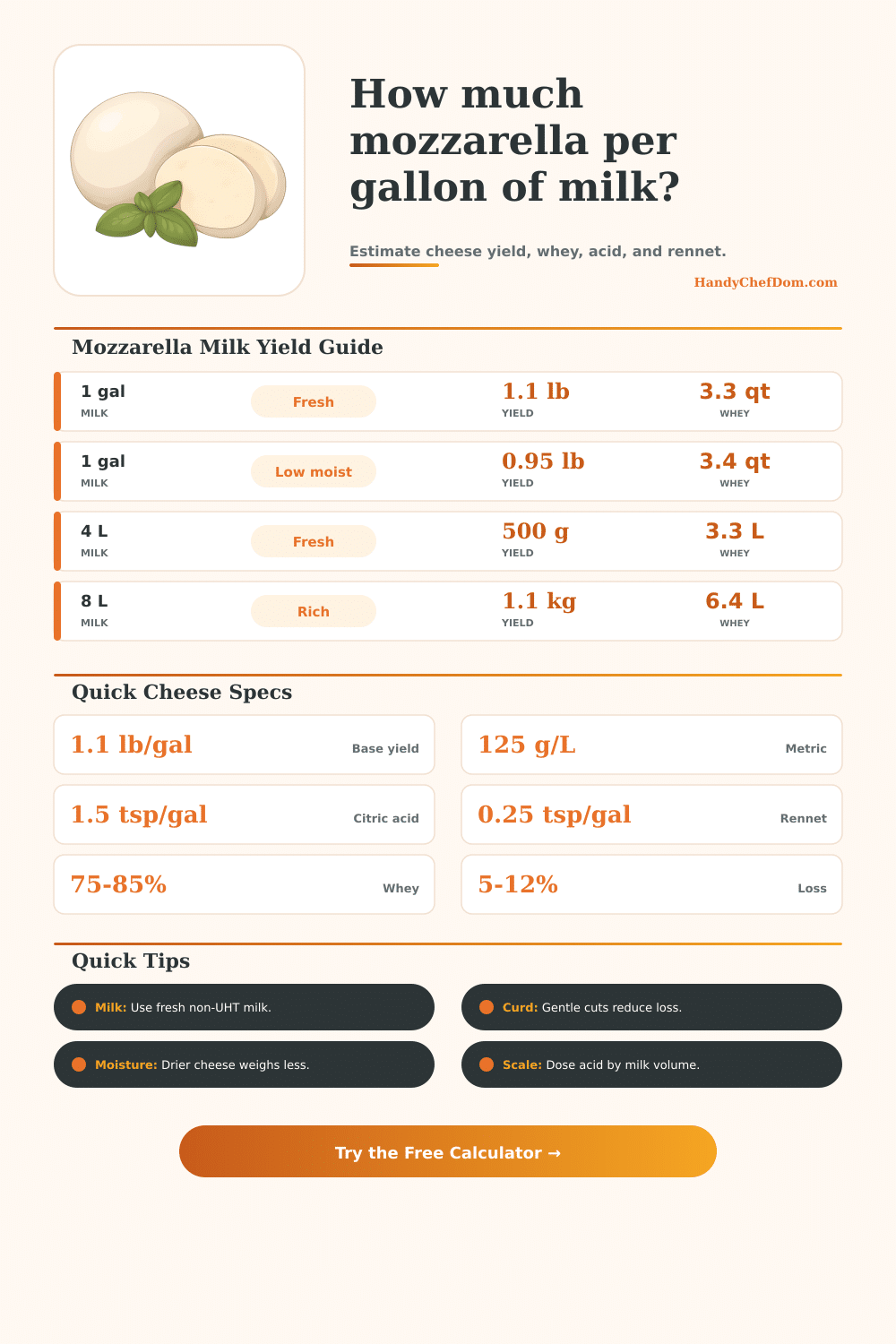
| Whole cow milk | 3.25% to 3.8% | 3.1% to 3.4% | Reliable baseline around 1 lb to 1.2 lb per gallon. |
| 2% cow milk | 1.8% to 2.2% | 3.1% to 3.4% | Lower yield and slightly leaner body. |
| Jersey or creamline | 4.5% to 5.5% | 3.5% to 4.0% | Richer curd with noticeably higher yield. |
| Goat milk | 3.5% to 4.5% | 3.0% to 3.6% | Good yield but softer curd structure. |
| Buffalo-style rich milk | 6% to 8% | 4% to 5% | High yield, very rich texture, less common for home batches. |
| Moisture style | Yield factor | Texture aim | Calculator note |
|---|---|---|---|
| High moisture hand-pulled | 1.08x | Soft, juicy, delicate | More water stays in the cheese, so yield reads higher. |
| Fresh mozzarella | 1.00x | Tender ball or log | Default for per-gallon home cheesemaking estimates. |
| Standard stretch | 0.94x | Balanced chew | Some moisture leaves during draining and stretching. |
| Low moisture pizza | 0.82x | Dryer, sliceable, shreddable | Lower finished weight from longer draining. |
| Small pearls | 0.96x | Small, evenly salted pieces | Extra handling can cost a little curd and moisture. |
| Method | Acid guide per gallon | Rennet guide per gallon | Yield effect |
|---|---|---|---|
| Citric acid plus rennet | 1.5 tsp citric acid | 1/4 tsp liquid rennet | Good stretch and reliable curd retention. |
| Vinegar quick mozzarella | 1/4 cup 5% vinegar | 1/4 tsp liquid rennet | Slightly lower yield if curd turns brittle. |
| Lemon juice quick acid | 1/3 cup lemon juice | 1/4 tsp liquid rennet | Variable acidity, useful for small practice batches. |
| Cultured acid plus rennet | Culture instead of direct acid | 1/5 to 1/4 tsp liquid rennet | Often strong flavor and good solids retention. |
| Acid-only practice curd | Direct acid only | None | Less classic stretch and lower retained cheese. |
| Milk amount | Liters | Fresh mozzarella range | Likely whey |
|---|---|---|---|
| 1 quart | 0.95 L | 4 to 5 oz | 0.75 to 0.85 qt |
| 1 gallon | 3.79 L | 1.0 to 1.2 lb | 3.1 to 3.5 qt |
| 2 gallons | 7.57 L | 2.0 to 2.4 lb | 6.2 to 7.0 qt |
| 4 liters | 4.00 L | 475 to 575 g | 3.2 to 3.5 L |
| 10 liters | 10.00 L | 1.2 to 1.45 kg | 8.0 to 8.8 L |
6Cheesemaking Yield Tips
A certain quantity of milk will produce so many pounds of cheese. Or not. Factors include how much moisture is kept, protein content and the fat content. And then there is that amount of curd remaining suspended in whey.
Knowing this make it simple to plan for a batch. The final weight of your cheese depend on the solids in the curd. Protein make up the structure that keeps cheese together and fat give a softer texture. Milk with a bit more protein or fat per gallon will result in more cheese then typical store milk. That’s why milk from Jersey cows (or buffalo) tends to feel so generous.
How Much Cheese Will You Make?
Test various type of milk using the calculator… No need to guess what results will be!
Not only does it matter what kind of milk you use, but also moisture style you’re going for. If fresh, these are made into balls to be eaten right away and contain more water, resulting in a heavier end product. If making pizza, they’re drained and kneaded further to get them drier and ready to shred. It take out some of the weight while using same amount of milk initially. Click on the style button to see difference in final pounds before you put the pot over the flame.
The yield depends on rennet dose and type of acid used as well. A direct addition of citric acid results in a firm curd with little loss of solids. Using vinegar may result in a brittle curd that will lose some fine particles to the whey. While not noticeable on a single gallon, at a bigger batch size this difference add up. Adjust the loss percent in the calculator to account for handling losses as any stirring will move some curd into the whey.
When you begin to plan ahead, whey is where it’s at. The majority of your initial milk will turn into whey, a portion of which can be kept warm for stretching or storing the finished cheese. Keeping track of how much you have on hand ensures that you don’t run out of hot water when it’s time to work on those curds.
The math isn’t exact; real batches aren’t like that. Pressing too firmly affect the outcome. Things like pasteurizing at a higher temperature or using aged milk will affect result.
Run a batch of your typical milk through first (once you’ve got a formula in mind). This give you your base yield. Make adjustments to your process. See how yield changes by adjusting moisture/loss setting. In a couple of tries, you’ll get a sense of where your process falls: does it lose moisture or retain more? From then on out planning is quicker.
It’s not about perfecting on paper. It’s just about knowing, prior to heating up the milk whether or not you can stretch cheese to make dinner or need another gallon to get the desired amount.