Oven Temperature Conversion Calculator
Convert between Celsius, Fahrenheit, and gas mark, then tune your oven setting for fan bake, altitude, rack position, and browning goals.
Start with the recipe temperature and var the calculator convert the oven scale while applying fan, altitude, rack, and bakeware adjustments.
| C | F | Gas Mark | Typical Use |
|---|---|---|---|
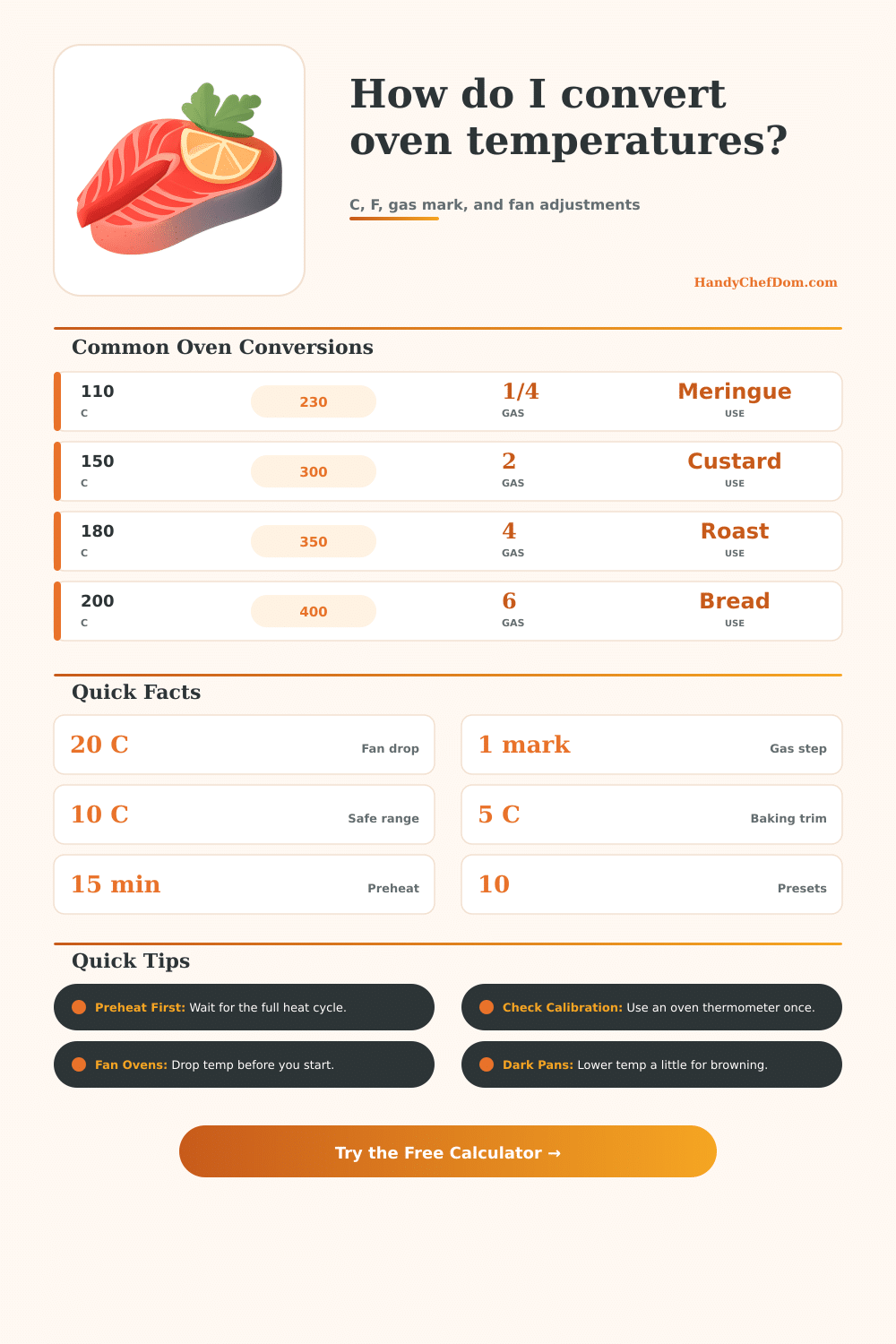
| 110 | 230 | 1/4 | Meringue |
| 130 | 265 | 1/2 | Slow bake |
| 150 | 300 | 2 | Custard |
| 180 | 350 | 4 | Roast |
| 200 | 400 | 6 | Bread |
| 220 | 425 | 7 | Hot bake |
| Fan Oven | Drop | When to Use | Note |
|---|---|---|---|
| Fan | 20 C | General bake | Air moves fast |
| Convection | 25 C | Even browning | Good for trays |
| Combi steam | 10 C | Moist bake | Gentler crust |
| Gas oven | 0 C | Classic use | Dial by heat |
| Bench test | 15 C | Calibration | Compare with probe |
| Air fryer | 30 C | Small items | Use lower heat |
| Recipe Type | Shift | Reason | Result |
|---|---|---|---|
| Cake | -5 C | Protect crumb | Even rise |
| Bread | +10 C | Boost oven spring | Better crust |
| Pastry | -10 C | Reduce burn | Flaky layers |
| Pizza | +20 C | Strong base heat | Crisper base |
| Custard | -15 C | Gentle set | Smoother finish |
| Slow roast | -30 C | Lower drying | Tender texture |
| Bakeware | Shift | Best For | Notes |
|---|---|---|---|
| Light metal | 0 C | All-round | Balanced heat |
| Dark metal | -5 C | Cakes | Brownes fast |
| Glass | -10 C | Caseroles | Retains heat |
| Ceramic | -5 C | Roasts | Gentle heat |
| Stone | +5 C | Pizza | Strong bottom heat |
| Cast iron | -5 C | Skillet bake | Holds heat well |
This oven temperature conversion calculator translates between Celsius, Fahrenheit, and gas mark, then applies fan, altitude, rack, and bakeware adjustments so recipes land at the right heat.
When you look at a recipe that use Celsius as an unit of measurement for cooking temperature, it’s possible that your oven use Fahrenheit for the same measurement. Because these scales is different, youll need to make a conversion from Celsius to Fahrenheit to ensure your food cook to the recipes specifications. On the Celsius scale, water freeze at 0 degrees and boils at 100 degree.
On the Fahrenheit scale, water freezes at 32 degrees and boils at 212 degrees. If you do not make the correct conversion from Celsius to Fahrenheit, your food may not cook proper to what the recipe intend for the food to taste and cook. In addition to the temperature measurement, some recipes also use gas mark, which are another measurement of heat used in some regions of the world.
Convert Celsius to Fahrenheit and Set Your Oven
The type of oven that you use in your kitchen can also impact the way in which the temperature work in your kitchen. If you use a fan assisted oven, which is common in moddern ranges, the oven uses a fan to circulate the hot air within the oven. Because the oven circulates hot air around the food to be cooked, food cooks much more faster in these ovens than in conventional ovens.
Because fan assisted ovens cook food faster than conventional ovens, you must lower the temperature setting of a fan assisted oven to the conventional oven setting. There are a few other factor that can impact how heat affect your food in the oven. One such factor is the altitude in which you live.
At high altitude, the boiling point of water is lower, and the air is thinner. Thin air can cause baked goods to rise too quickly and then collapse. The position of the oven rack can also affect the cooking of your food.
The type of bakeware that you use can impact the heat of your food within the oven. Metal bakeware will heat up much faster than bakeware made of other metal. Additionally, dark metal pans will heat up faster than light metal pans or pans made of other material.
Because these pans heat up so rapid, the food may brown too quickly within the oven. Different types of food require different temperature setting when cooking. For instance, bread require high heat to set the crust while custards and meringues requires low heat so that the custards and meringues dont curdle.
Pizza require heat at the bottom of the oven to crisp the base while roasts requires slow heat to make the roasts tender. Because different types of food require different heat setting, it is important to not rely upon a single heat setting for all cooking. Instead, it is important to understand how to adjust the heat settings according to the types of food that you should of prepare.
There are steps that can be followed to manage the changes in oven temperature. First, you should convert the temperature from raw measurements of Celsius or gas marks to Fahrenheit. Second, you should adjust the temperature settings according to the type of oven in which the food will be cooked.
Third, you should adjust the temperature settings according to the type of bakeware in which the food will be cooked. Finally, you should measure the temperature in the oven with an oven thermometer. Oven thermometers are device that help to ensure that the temperature in the oven is set correctly, as stoves often heat to temperatures hotter or colder than those that is indicated on the thermostat control of the oven ranges.
It is also important to make sure that the oven is preheated to the correct temperature. Preheating the oven mean running the oven until the temperature within the oven reaches the desired cooking temperature. If the oven isnt preheated, the temperature within the oven may fluctuate while the food is cooking, which may ruin the food.
Finally, it is important to understand how fan ovens, convection ovens, and steam ovens work. Fan ovens allow heat to be distributed evenly throughout the oven, convection ovens allow for intense heat within the oven, and steam ovens allow for the distribution of moisture within the oven. Each of these types of ovens work differently, so you must make the adjustment to the cooking temperature based off the type of oven that is being used.