🧀 Parmesan for Carbonara Calculator
Size the grated cheese for carbonara, then check egg richness, pasta water, cured pork salt, pepper, and the final salt risk before you toss.
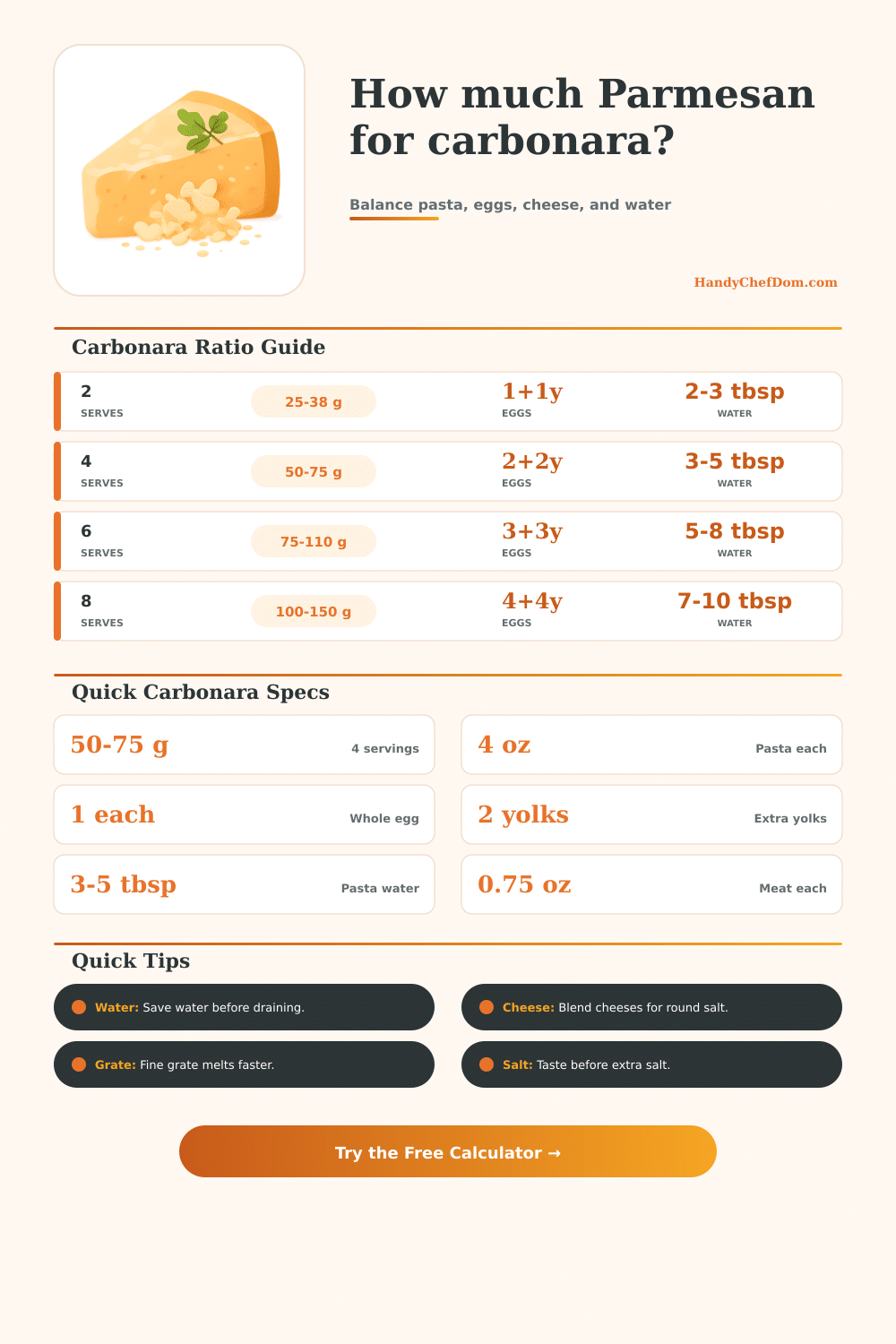
A classic 4-serving carbonara usually lands near 50-75 g grated hard cheese. This calculator scales that range by pasta weight, cheese style, egg richness, water, and salt target.
| Serving Count | Dry Pasta | Cheese Range | Egg Pattern | Water Range |
|---|---|---|---|---|
| 2 servings | 7-8 oz | 25-38 g | 1 whole + 1 yolk | 2-3 tbsp |
| 3 servings | 10-12 oz | 38-56 g | 1 whole + 2 yolks | 3-4 tbsp |
| 4 servings | 14-16 oz | 50-75 g | 2 whole + 2 yolks | 3-5 tbsp |
| 6 servings | 21-24 oz | 75-110 g | 3 whole + 3 yolks | 5-8 tbsp |
| 8 servings | 28-32 oz | 100-150 g | 4 whole + 4 yolks | 7-10 tbsp |
| Cheese Style | Best Role | Cheese Factor | Salt Pressure | Carbonara Note |
|---|---|---|---|---|
| Parmigiano-Reggiano | Nutty base | 1.04x | Medium | Smooth and rounded |
| Mild Parmesan | Soft flavor | 1.08x | Low | Needs pepper lift |
| Pecorino Romano | Sharp bite | 0.92x | High | Use less added salt |
| 50/50 blend | Balanced bite | 0.98x | Med-high | Classic mixed style |
| 70/30 blend | Gentle Roman | 1.00x | Medium | Easy to emulsify |
| Pecorino-heavy | Salty punch | 0.94x | High | Best with more water |
| Grana blend | Sweet nutty | 1.06x | Low-med | Good for families |
| Pasta Shape | Typical Portion | Cheese Behavior | Water Need | Best Cheese Cut |
|---|---|---|---|---|
| Spaghetti | 3.5-4 oz | Coats evenly | Medium | Fine snowy grate |
| Bucatini | 4 oz | Needs extra gloss | Medium-high | Microplane or fine |
| Rigatoni | 4-4.5 oz | Holds pockets | High | Fine packed grate |
| Tonnarelli | 3.5-4 oz | Clings strongly | Medium | Snowy hand grate |
| Mezze maniche | 4 oz | Heavy coating | High | Coarse then fine mix |
| Grated Cheese Style | Approx g per Cup | When to Use | Cup Cue | Risk |
|---|---|---|---|---|
| Microplane cloud | 35 g | Fast melting | Very fluffy | Easy to overcup |
| Snowy fine grate | 40 g | Carbonara sauce | Loose mound | Best default |
| Fluffy hand grate | 45 g | Fresh grating | Lightly filled | Stable measure |
| Coarse grate | 60 g | Texture boost | Visible shreds | Slower melting |
| Packed fine cup | 70 g | Measured prep | Pressed level | Can turn thick |
| Deli-style grated | 85 g | Dense cup | Heavy scoop | Clumping risk |
A good carbonara is not about following any recipe but knowing how each ingredient pulls the sauce in different direction; this is why amount of cheese matters (too little makes for a thin sauce, too much will have been salty and gritty before you get your first forkful). The balance shift at every turn: Should I grate my cheese fine? Coarse? How much of the cured pork do I want to flavor the dish? I think secret to good carbonara lies here: knowing these things.
First choose the number of servings (above), the amount of dry pasta, the type of cheese, and the desired salt level. The tool then calculate the proper quantities. These settings all affect final result in small ways that is easy to miss.
How to Balance Ingredients for Perfect Carbonara
Using a finer grater will result in less weight per cup, for instance, and therefore fewer actual-grams-per-cup of finished cheese. Adding more guanciale or a saltier cheese increase the saltiness, so you has to use less cheese in recipe; otherwise the dish won’t be creamy, it’ll be cured. By entering amount of water you plan to use, you’re telling the calculator if your emulsion will be looser or tighter. Starchy liquid help transport the cheese as a glossy coat instead of leaving it in lumpy clumps along the strands.
What I’ve found most folks do is overthink the egg:cheese ratio and underthink salt from the pork. An ounce of guanciale per person are very salty, so when you multiply for a bigger table that tally will add up quicky. The calculator adds weight of meat and cheese together, highlights total, and then compares it against typical targets. If it lights up red due to high-salt risk, it’s not typically “add some more egg.” Usually it’s “back off the cheese,” “use a milder pork option” or just “hold off on any additional table salt till we toss it all together.”
In real life, the amount of cheese required are also affected by pasta shape. Tubes hold pockets, which can create sense of heaviness. Ridges hold sauce, but long strands like spaghetti spread it out over a large area. When these occur, using a slightly coarser grate slows the melting of the shreds, allowing the sauce enough time to spread out before cheese becomes too thick. This is why the tool’s density selector adjust to match different shapes.
The number on your cup show the number that will end up in the pot. Where running the numbers really comes into its own, though, is if you vary one thing at a time; switching from using just Parmigiano to a 50/50 mix of both… And then see what happens to suggested range. Does more water help (as we suspect) by diluting it down to a lower concentration where the salt risk decreases? These are little tweaks that wouldn’t fall out of your head during cooking but become evident once you start running the numbers.
You should of used these tips earlier. The rest is easy once the numbers work out: Save extra pasta water; render the pork till the fat is clean; get the water on for the pasta and grate the cheese. A good guide is the online tool, but the proof is always in the fork. Is there enough sauce coating each strand (but not dripping) and does the salt fall between the pepper? If so, then you’re in the right spot.