🥔 Potato Flour to Use in Bread Calculator
Calculate potato flour by total flour weight, loaf style, softness target, substitution cap, water adjustment, cups, grams, and moisture retention for bread dough.
Use total flour as the flour weight in the finished dough. The calculator substitutes potato flour into that total, checks the loaf-style cap, converts cups and grams, then adds water for potato flour absorption and soft crumb retention.
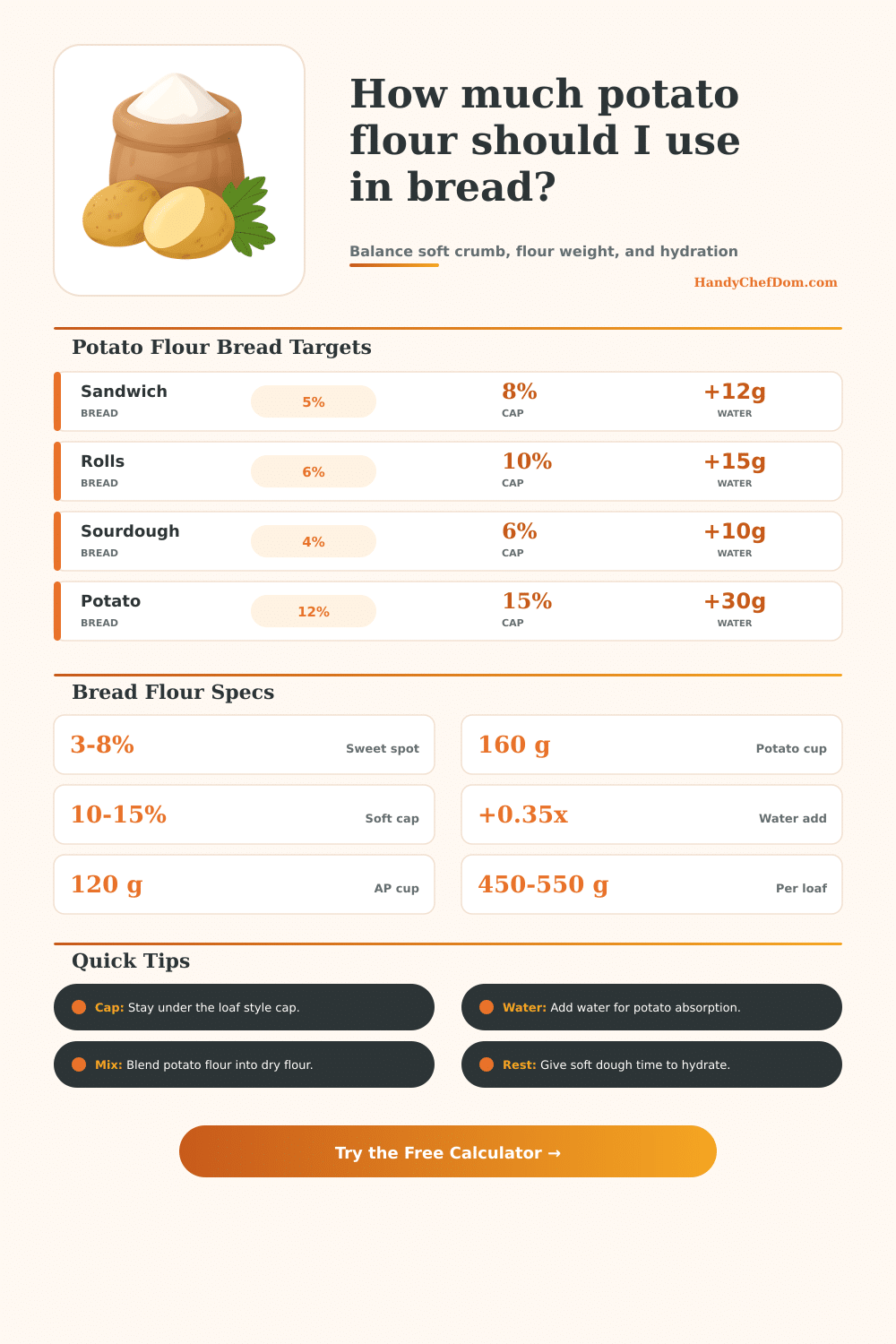
| Bread Style | Target Potato Flour | Substitution Cap | Hydration Clue |
|---|---|---|---|
| Soft sandwich loaf | 4% to 6% | 8% | Add about 10 g to 18 g water per 500 g flour |
| Classic potato bread | 10% to 12% | 15% | Use a soft dough and mix potato flour evenly |
| Dinner rolls | 5% to 7% | 10% | Extra water supports a plush pull-apart crumb |
| Sourdough boule | 3% to 5% | 6% | Long fermentation makes high potato dough looser |
| Whole wheat pan loaf | 5% to 8% | 9% | Bran plus potato flour both raise water demand |
| Bagels or pizza | 1% to 3% | 3% to 4% | Keep potato flour low to protect chew and stretch |
| Potato Ingredient | Approx Cup Weight | Water Adjustment | Bread Use |
|---|---|---|---|
| Fine potato flour | 160 g per cup | About 0.35 g to 0.45 g water per gram | Soft sandwich loaves and potato bread |
| Potato starch | 152 g per cup | About 0.18 g to 0.28 g water per gram | Tender crumb with less potato flavor |
| Plain potato flakes | 60 g per cup | About 0.65 g to 0.85 g water per gram | Very soft rolls and pan bread |
| Instant mashed flakes | 55 g per cup | About 0.70 g to 0.90 g water per gram | Use only plain, unsalted flakes for clean math |
| Total Flour | Potato Flour 4% | Potato Flour 8% | Potato Flour 12% |
|---|---|---|---|
| 400 g flour | 16 g | 32 g | 48 g |
| 500 g flour | 20 g | 40 g | 60 g |
| 750 g flour | 30 g | 60 g | 90 g |
| 1000 g flour | 40 g | 80 g | 120 g |
| 1200 g flour | 48 g | 96 g | 144 g |
| Hydration Situation | Adjustment Rule | Why It Helps | Quality Example |
|---|---|---|---|
| Fine potato flour | Add 0.35 g to 0.45 g water per gram | Prevents tight, dry dough | 40 g potato flour adds about 16 g water |
| Whole grain above 25% | Add about 0.15 hydration point per grain point | Bran competes for dough water | 50% whole grain adds about 19 g water in 500 g flour |
| Very plush crumb | Add 1% to 2% total flour water | Supports a softer slice after cooling | 500 g flour may need 5 g to 10 g extra water |
| Long fermentation | Hold back 0.5% to 1% water if dough slackens | Potato dough softens as it ferments | Add reserved water only if dough feels tight |
Bread recipes often call for potato flour, which changes baked crumb’s texture, though there’s more then just your preference at play when deciding on the right amount. The amount affect the strength of the dough, the moisture level, and whether next-day slice cuts cleanly. Too little, and you get no advantage from using it; too much, and structure may be compromised (or the loaf turn gummy and soft). That’s where the percentage comes into it.
Once you know what sort of loaf shape you’re making (the options is listed on the left in the calculator up top), how much flour you’ve got, and the hydration percentage you want to shoot for as your starting point, the calculator do the math for you and then applies a cap to protect dough against too much loss of gluten strength. Potato flour affects different breads differently. Selecting a specific bread tell us how much potato flour we can use before causing problems. A bagel dough won’t be able to accommodate as much potato flour as a sandwich loaf, for example, so the tool show you a recommended target, along with safe upper limit.
How Potato Flour Changes Your Bread
Once you add potato flour, however, hydration must go up as well; that ingredient sucks water into the dough and holds it there in oven. Because one type of potato product absorbs less water (flakes) than another (fine flour/starch), the calculator adjust for that too. It also factors in your planned fermentation. A longer cold ferment make the same hydration percentage seem looser than a same-day batch. It also considers what kind of softness you want.
A common error is substituting for flour instead of adding more, which weaken the gluten network in dough. Substitute by weight to maintain total dough size. You’ll be able to see how much wheat flour remain after entering your substitution so you can see the split clearly before mixing. And this is another one of those factors where it’s not just a matter of numbers: What happens when bread has cooled down? Is it softer because of all that retained moisture? Or is crust softer sooner (if you leave bread in its bag)? If a baker want their bread to have longer shelf-life, she may use a bit less, or combine the potato flour with a small amount of milk powder or oil to slow staling.
When starting from scratch to build a recipe, or adapting one from another source, page’s reference tables help put your ingredient amounts into ballpark (typical ranges for potato ingredients and various types of loaves). It also includes how much a cup weigh with instant versus fine flours or flakes, so that if you are measuring by cups instead of weight, the conversions will be realistic.
In the end, we want to make sure it stays together while still being tender. Now that you know how potato flour alters not just the structure but also absorption, you can use the calculator as a shortcut to get that balance right for various types of bread without having to guess every time.