🥔 Potatoes Per Pound Calculator
Estimate potatoes per pound by russet, Yukon, red, or fingerling size, then plan servings, trimming loss, cooked yield, and bag count.
Use servings for menu planning, target weight for a recipe, or bags on hand when you need to know how many portions a pantry bag can cover.
| Potato Type | Average Each | Potatoes Per Pound | Best Use |
|---|---|---|---|
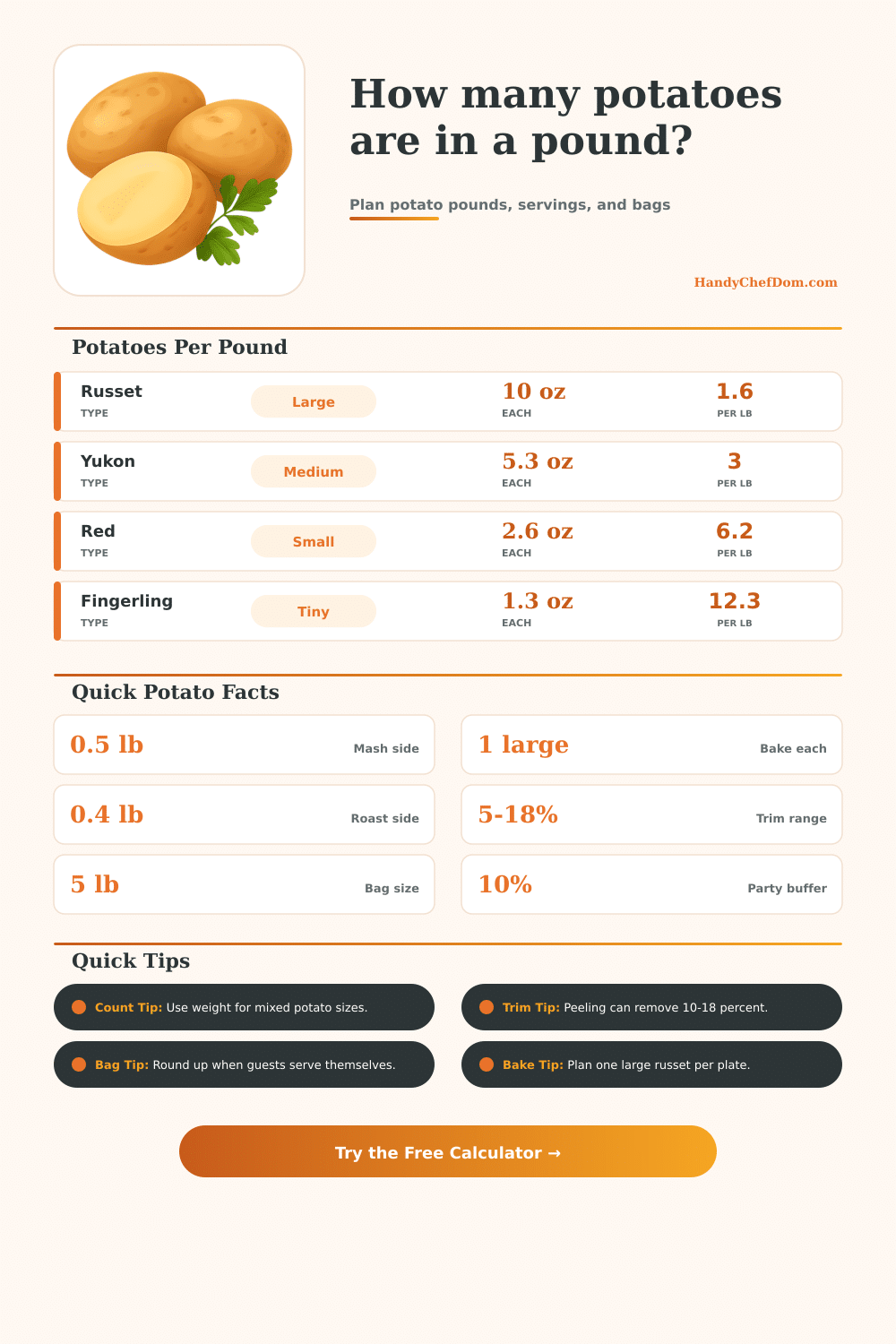
| Large russet | 10 oz / 284 g | 1.6 | Baked potatoes, wedges, fluffy mash |
| Medium russet | 7 oz / 198 g | 2.3 | General cooking, mash, hash |
| Medium Yukon Gold | 5.3 oz / 150 g | 3.0 | Mash, roast, gratin portions |
| Baby Yukon Gold | 2.5 oz / 71 g | 6.4 | Whole roasting and small sides |
| Medium red potato | 5 oz / 142 g | 3.2 | Boils, salads, chunked roasts |
| Small red potato | 2.6 oz / 74 g | 6.2 | Salads, sheet-pan sides, boils |
| Fingerling | 1.3 oz / 37 g | 12.3 | Roasts, composed sides, tasting plates |
| Mixed pantry bag | 4 oz / 113 g | 4.0 | When sizes vary and weight is safer than count |
| Cooking Use | Raw Serving | Typical Trim | Cooked Yield Note |
|---|---|---|---|
| Mash or smashed | 0.50 lb / 227 g | 10-18% | Peeling and mashing usually reduce the final weight. |
| Roasted side | 0.40 lb / 181 g | 5-10% | Skin-on chunks keep more edible weight. |
| Baked potato main | 0.65 lb / 295 g | 0-5% | Count whole russets more than small pieces. |
| Potato salad | 0.35 lb / 159 g | 5-12% | Dressing and add-ins stretch the portion. |
| Boiled dinner side | 0.38 lb / 172 g | 4-10% | Small reds and Yukons hold shape well. |
| Fries or wedges | 0.55 lb / 249 g | 12-20% | Cutting squared edges raises trim loss. |
| Group Size | Mash Pounds | Roast Pounds | Baked Russets |
|---|---|---|---|
| 4 people | 2.0 lb / 0.9 kg | 1.6 lb / 0.7 kg | 4 large potatoes |
| 6 people | 3.0 lb / 1.4 kg | 2.4 lb / 1.1 kg | 6 large potatoes |
| 8 people | 4.0 lb / 1.8 kg | 3.2 lb / 1.5 kg | 8 large potatoes |
| 12 people | 6.0 lb / 2.7 kg | 4.8 lb / 2.2 kg | 12 large potatoes |
| 25 people | 12.5 lb / 5.7 kg | 10.0 lb / 4.5 kg | 25 large potatoes |
| 50 people | 25.0 lb / 11.3 kg | 20.0 lb / 9.1 kg | 50 large potatoes |
| Bag Size | Russet Count | Yukon Count | Serving Range |
|---|---|---|---|
| 1 lb loose | 1-2 large | 3 medium | 2 mash or 2-3 roast servings |
| 2 lb small bag | 3-5 medium | 6 medium | 4 mash or 5 roast servings |
| 3 lb bag | 5-7 medium | 9 medium | 6 mash or 7 roast servings |
| 5 lb bag | 8 large or 12 medium | 15 medium | 10 mash or 12 roast servings |
| 10 lb bag | 16 large or 23 medium | 30 medium | 20 mash or 25 roast servings |
| 15 lb bag | 24 large or 34 medium | 45 medium | 30 mash or 37 roast servings |
Have you ever felt potato panic? You’re planning to have a dinner party for eight people, and then you realize that the grocery store bag says five pounds and your recipe calls for four servings of mashers. What gives? Why doesn’t math work out?
Potatoes come in all sizes. One big russet can be a pound by itself; it takes lots of fingerlings to add up to even one pound. How do you convert the weight on your bags to servings? It comes down to variation: One pound of smallish red potatoes has more units than one pound of big fluffy russet. When mashed, those russets take up a greater volume, but there is fewer individual potatoes.
How to Calculate the Right Amount of Potatoes
To help you plan in terms of people rather than guesses, this page asks which variety you’re using and then figures out the math for you. Because it takes into account the average weight per type.
Another thing that can impact your outcome is trim loss. Until a bowl’s empty, many home cooks fail to take it into account. If you’re mashing some potatoes, peeling off the skins will cost you from 10-18 percent of the potato’s raw weight. Very little gets wasted when it’s roasted with skin on. You can set this percentage in the calculator, depending on what you do with the produce. If you don’t account for trim loss, you might end up purchasing fewer pounds than needed to completely fill all plate.
Portion control varies by preparation. One large russet potato (a pound) is typically adequate for each person if it’s served as a main course (as in a baked potato). Half a pound of mashed spuds per person work well as a side dish. Rough-cut roasted chunks fall somewhere in between. Use the reference charts to see what your raw product will become after it shrinks during cooking. Keep in mind that potato itself is measured as a volume: its weight changes through peeling, shrinking during boiling, or evaporating while roasting.
What about bigger parties? It gets tricky. If it’s just you and a few family members, getting a single bag doesn’t matter much. But if you’re feeding twenty people, those fractions add up fast. Use the calculator. Plug in how many people you’re feeding and pick a level of appetite. That’ll adjust the per-person estimate to reflect that. Then plug in some waste (for seconds, or maybe someone skipping out on potatoes).
Then there’s storage. A bag of potatoes purchased on Monday weighs more then the same bag does on Friday. They are losing moisture. Storing those potatoes in a dark, cool place makes that change slower. This is something you’d want to consider if you are meal prepping, and it’s why the tool can help you determine how much you need to purchase now versus later.
Later. It takes an imprecise inventory check and makes it a specific shopping list. Potatoes are all about working with volume. You peel them, boil them, roast them and transform those raw tubers into something to eat. At each step, they loses weight and get smaller. If you understand that process, it is easy to predict the end results.
If you know roughly how much one pound of potatoes will provide for your particular variety, there’s no more guesswork at the dinner table: full plates only. And when you’re at the grocery store, you’ll have a number firmly fixed in your head. No hoping that five pounds will do; just good old-fashined planning should of kept your evening running smoothly (and prevent any kitchen mistakes).