Shrimp Carb Calculator
Estimate shrimp net carbs by count size, raw or cooked weight, peeled yield, breading, sauce, serving count, and appetizer or main-dish scale.
Shrimp Carb Results
Large Plain Cocktail
Large 31-40 count, plain shrimp, 3 oz appetizer, cocktail sauce. Most carbs usually come from sauce.
Jumbo Garlic Main
Jumbo 16-20 count, plain shrimp, 6 oz main, garlic butter. High protein with very low net carbs.
Medium Crispy Basket
Medium 41-50 count, crispy breading, 5 oz portion, aioli. Breading drives most of the carb load.
Extra Large Sweet Glaze
Extra large 21-25 count, plain shrimp, bowl portion, sweet chili. Sauce can exceed the shrimp carbs.
| Shrimp Size | Typical Count | Pieces In 3 oz | Pieces In 6 oz |
|---|---|---|---|
| Colossal | 13-15 per lb | 2-3 shrimp | 5-6 shrimp |
| Jumbo | 16-20 per lb | 3-4 shrimp | 6-8 shrimp |
| Extra large | 21-25 per lb | 4-5 shrimp | 8-10 shrimp |
| Large | 31-40 per lb | 6-8 shrimp | 12-15 shrimp |
| Medium | 41-50 per lb | 8-10 shrimp | 16-19 shrimp |
| Salad shrimp | 71-90 per lb | 13-17 shrimp | 27-34 shrimp |
| Preparation | Net Carbs Per 100 g | Protein Per 100 g | Best Calculator Use |
|---|---|---|---|
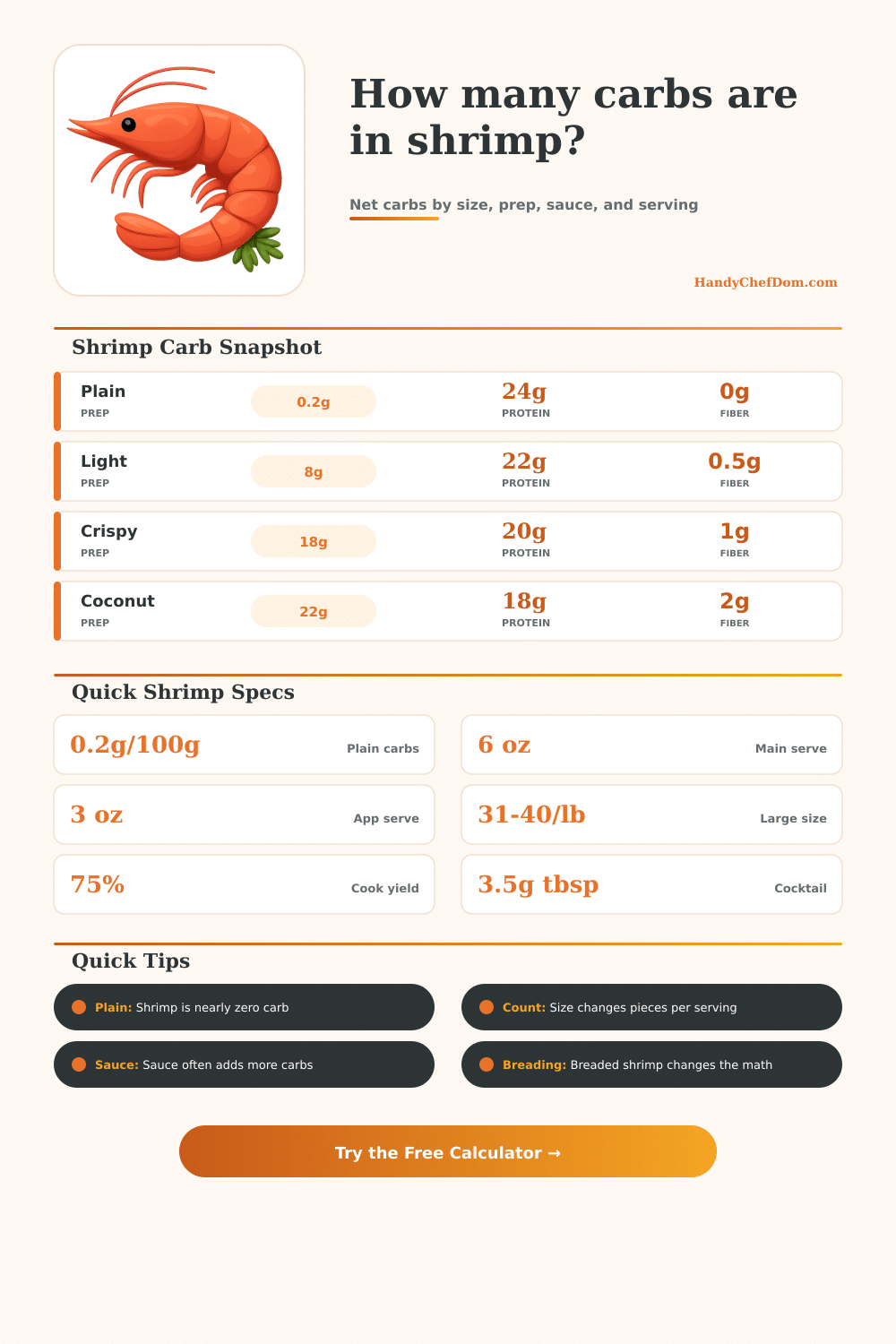
| Plain shrimp | 0.2 g | 24 g | Keto plates, cocktail shrimp, scampi, salads |
| Lightly breaded shrimp | 8 g | 22 g | Thin flour or crumb coating |
| Crispy breaded shrimp | 18 g | 20 g | Basket-style fried shrimp portions |
| Coconut breaded shrimp | 22 g | 18 g | Sweet coconut crumb coating |
| Sauce | Net Carbs Per Tbsp | Typical Use | Carb Note |
|---|---|---|---|
| No sauce or dry seasoning | 0 g | Any portion | Keeps shrimp nearly carb-free |
| Cocktail sauce | 3.5 g | Appetizers | Tomato base adds sugar |
| Garlic butter | 0.2 g | Mains and skewers | Very low carb add-in |
| Teriyaki glaze | 4.8 g | Bowls and stir-fry | Sweet glaze changes totals quickly |
| Sweet chili sauce | 6 g | Dipping and bowls | Usually the highest sauce carb |
| Aioli or mayo dip | 0.3 g | Breaded baskets | Low carb unless sweetened |
| Serving Role | Cooked Shrimp Per Person | Raw Peeled Needed | Piece Context |
|---|---|---|---|
| Appetizer or cocktail plate | 3 oz / 85 g | 4 oz / 113 g | About 6-8 large shrimp |
| Main dish protein | 6 oz / 170 g | 8 oz / 227 g | About 12-15 large shrimp |
| Topping for salad or tacos | 2.5 oz / 71 g | 3.3 oz / 94 g | About 5-6 large shrimp |
| Meal prep or rice bowl | 4.5 oz / 128 g | 6 oz / 170 g | About 9-11 large shrimp |
| Buffet or seafood tray | 4 oz / 113 g | 5.3 oz / 150 g | About 8-10 large shrimp |
If you’re looking for seafood with very few carbohydrates, try shrimp. In its most basic form (i.e., plain cooked), it’s almost carb-free and rich in protein. Per 100-gram serving, plain cooked shrimp has only 0.2 grams of net carbs, which is small enough that it barely registers on most carb-tracking apps. That means you can enjoy a big plate of shrimp without worrying about kicking yourself out of ketosis or spiking your blood sugar levels.
That said, things get messy once you start adding other foods to the dish. There are pounds of shrimp. A lot of folks purchase their shrimp per pound. They think they’ve bought protein by the pound. They forget that shrimp are sold raw and in the shell, but you end up with cooked, shelled shrimp on your plate. This means weight is lost through water evaporation and loss of shell. The calculator takes into account the loss of water from cooking and impact of whether the shell is on or peeled. This accounts for whether the shrimp is shell-on or peeled. More weight will be left over if the shrimp is sold with a shell on rather than pre-peeled.
How to Eat Shrimp on a Low Carb Diet
This calculation impacts your final number of pieces available per person. Underestimate the yield and you could find yourself running out of food just as everyone starts to get hungry.
Shrimp on its own isn’t normally a danger zone for low carb eaters, but all too often it’s the sauce and breading that kill your carb goals. Just a couple grams of carbs from a lightly floured coating won’t do any harm. Now, get some crispy breading on there, and suddenly you’re dealing with substantial carbs that soak up the oil and distract you from your protein goal. In this case, a basket of breaded shrimp will require you to include amount of the coating when calculating overall carbs. Use the tool to distinguish between the portion of carb load attributable to the shrimp vs. This is the portion coming from the batter. That lets you judge whether the crunch is worth the price of elevated blood sugar.
Sauces are another low-carb trap. Because they’re made with tomatoes, cocktail sauce looks harmless. But it frequently has added sugar, which adds up fast on a platter. Sweet chili sauces and teriyaki glazes are syrup in disguise. They add flavor, but they will put you over your carbohydrate limit. Garlic butter can have hidden carbohydrates, too. Be sure to read labels for flour and cornstarch thickeners. Typical carb counts for such ingredients is listed in the reference tables with the calculator so you don’t get a shock when you buy the bottle. Creamy sauces aren’t off-limits, just choose aioli over sugary ones and keep an eye on portion size.
When it comes to feeding your friends over a casual dinner party, the biggest area that people get tripped up in is portion planning. Your appetizers are far smaller than what you’re serving as your main course, and combining these together will result in hunger pains (or wasted food). For example, a typical main-dish shrimp portion is about 6 ounces each, but your appetizer portion is only 3 ounces. If you choose “main dish” for your role, the calculator will calculate accordingly so that you don’t end up serving small portions during a dinner that’s supposed to be the star of the show. And if you need to feed a big group (or if some of your friends have bigger appetites than others), this will help you scale appropriately.
In addition to knowing what shrimp size you want, it’s important to know the number of shrimp per pound so that you can plan accordingly. There are colossal jumbo varieties down to small salad shrimp, and each has a different number of pieces per pound. For example, 3 ounces of colossal shrimp would equal maybe two or three shrimp but the same amount (3 oz) of large shrimp may be closer to six or eight. That will help you determine roughly how many ounces of uncooked shrimp to purchase for your occasion. And it will keep you out of trouble if recipes specify an exact number of shrimp instead of weight (for instance). If you don’t want to weigh each shrimp individually on a scale, you can enter the number of pieces into the tool.
Here is a basic guide to carb control. At the end of the day, eating shrimp without carbs isn’t really about denial; it’s about being mindful. Because shrimp has very few carbs, very little fat, and a lot of good-for-you protein, it can be put into nearly any eating plan naturaly. The trick is to prepare the shellfish in such a way that it keeps its nutrients. So no need to slather on sugary sauces or heavy batter coatings; just use some herbs, lemon juice, and maybe a hint of spice and still enjoy a meal that tastes amazing.
Knowledge is power, once you know what to look out for when it comes to hidden carbs, you can still indulge with confidence and avoid making an uninformed dietary mistake.