Shrimp Sodium Calculator
Estimate shrimp sodium from count size, raw or cooked weight, fresh/frozen/brined source, peeled yield, serving count, sauce and seasoning add-ins, daily limit, and appetizer or main-course scaling.
1Shrimp Sodium Presets
2Shrimp Amount, Source, Yield, Sauce, and Serving Inputs
Choose raw weight, cooked weight, piece count, or a package-label sodium total. Shell yield is applied before sodium density so head-on or shell-on shrimp can be estimated as edible peeled shrimp.
Shrimp sodium result
Choose shrimp details, then calculate.
3Live Shrimp Sodium Snapshot
4Shrimp Type, Prep, and Sodium Grid
| Shrimp type or prep | Typical sodium basis | Calculator value | Best use | Sodium note |
|---|---|---|---|---|
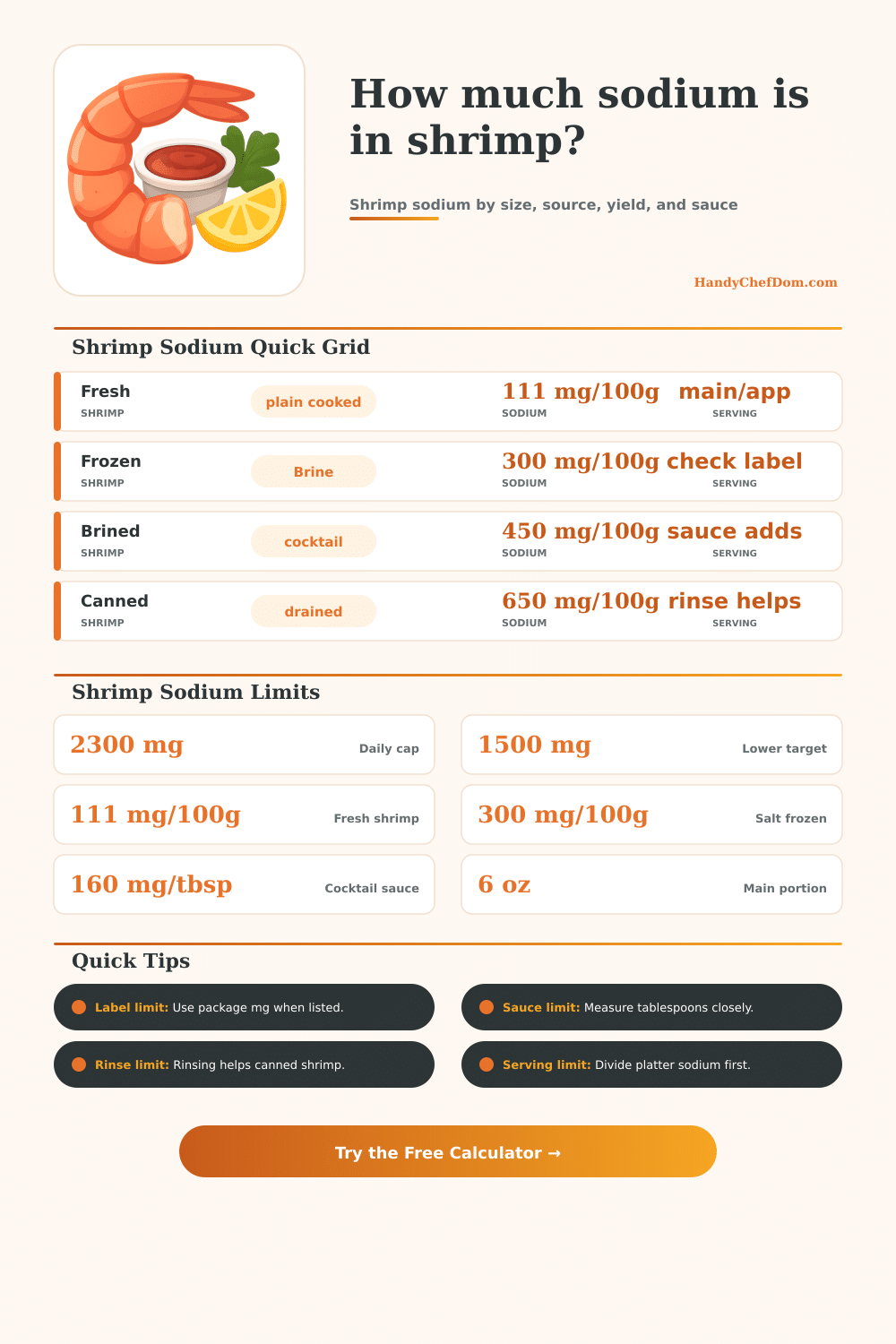
| Fresh/plain raw shrimp | Cooked peeled shrimp | 111 mg per 100 g | Default for plain saute, grill, boil | Natural sodium only, before salt or sauce. |
| Frozen, no salt listed | Cooked peeled shrimp | 140 mg per 100 g | Plain frozen bags without sodium solution | Still check the nutrition label. |
| Frozen with salt solution | Cooked peeled shrimp | 300 mg per 100 g | Common thaw-and-cook frozen shrimp | Added salt or phosphate solutions raise sodium. |
| Cooked plain shrimp | Ready-to-eat cooked weight | 190 mg per 100 g | Chilled shrimp, salad, meal prep | Often salted during processing. |
| Brined cocktail shrimp | Ready-to-eat cooked weight | 450 mg per 100 g | Party trays and seafood counters | Brine plus cocktail sauce can add up quickly. |
| Canned drained shrimp | Drained edible weight | 650 mg per 100 g | Salad, dips, casseroles | One of the highest common shrimp choices. |
| Canned rinsed shrimp | Rinsed drained weight | 450 mg per 100 g | Lower-sodium canned estimate | Rinsing can reduce surface brine but not all sodium. |
| Dried salted shrimp | Dry weight | 1500 mg per 100 g | Small flavoring amounts | Use tiny weights; sodium is concentrated. |
5Shrimp Count Size and Serving Table
| Count size | Approx pieces per lb | Approx cooked weight each | 3 oz appetizer | 6 oz main |
|---|---|---|---|---|
| U-10 colossal | 9 | About 38 g | 2 to 3 pieces | 4 to 5 pieces |
| U-15 jumbo | 13 | About 26 g | 3 to 4 pieces | 6 to 7 pieces |
| 16/20 extra jumbo | 18 | About 19 g | 4 to 5 pieces | 8 to 9 pieces |
| 21/25 jumbo | 23 | About 15 g | 5 to 6 pieces | 11 to 12 pieces |
| 26/30 extra large | 28 | About 12 g | 7 pieces | 14 pieces |
| 31/40 large | 36 | About 9.5 g | 9 pieces | 18 pieces |
| 41/50 medium-large | 46 | About 7.4 g | 12 pieces | 23 pieces |
| 51/60 medium | 56 | About 6.1 g | 14 pieces | 28 pieces |
| 61/70 small | 66 | About 5.2 g | 17 pieces | 33 pieces |
| Salad shrimp | 100 | About 3.4 g | 25 pieces | 50 pieces |
6Sauce and Seasoning Sodium Table
| Add-in | Calculator amount | Sodium used | Where it shows up | Lower-sodium move |
|---|---|---|---|---|
| No sauce | 0 | 0 mg | Plain grilled or steamed shrimp | Use citrus, herbs, pepper, or garlic. |
| Cocktail sauce | Tablespoon | 160 mg each | Shrimp cocktail, party platters | Serve sauce on the side and measure. |
| Soy sauce or ponzu | Tablespoon | 920 mg each | Poke bowls, stir-fry, dipping sauce | Choose reduced-sodium soy and dilute with lime. |
| Seafood seasoning | Teaspoon | 460 mg each | Boils, sheet pans, skillet shrimp | Mix with paprika and lemon zest to stretch it. |
| Salted garlic butter | Tablespoon | 95 mg each | Scampi-style shrimp | Use unsalted butter and add herbs. |
| Teriyaki glaze | Tablespoon | 610 mg each | Skewers, bowls, sticky shrimp | Brush lightly after cooking. |
| Taco seasoning blend | Teaspoon | 320 mg each | Tacos, fajitas, rice bowls | Use chili, cumin, lime, and no-salt spice. |
7Common Shrimp Sodium Scenarios
| Scenario | Shrimp setup | Add-in | Approx total | Per serving |
|---|---|---|---|---|
| Plain fresh main | 1 lb raw peeled, 75% cooked yield | None | About 378 mg | About 95 mg across four servings |
| Cocktail platter | 2 lb brined cooked shrimp | 8 tbsp cocktail sauce | About 5362 mg | About 447 mg across twelve servings |
| Frozen skillet dinner | 1 lb frozen salt-solution shrimp | 2 tsp seafood seasoning | About 1941 mg | About 485 mg across four servings |
| Canned shrimp salad | 12 oz canned drained shrimp | None | About 2211 mg | About 553 mg across four servings |
| Soy shrimp bowl | 6 oz cooked plain shrimp | 1 tbsp soy sauce | About 1243 mg | About 1243 mg for one bowl |
| Garlic butter appetizer | 12 oz raw fresh shrimp | 3 tbsp salted garlic butter | About 569 mg | About 95 mg across six servings |
8Shrimp Sodium Mode Comparison
Applies peeled yield and cooked yield so shell-on and raw bags can be converted into edible cooked sodium.
Uses ready-to-eat edible weight directly, especially useful for cocktail shrimp, salads, and leftovers.
Translates count size into cooked weight so appetizer trays and skewers can be portioned by pieces.
Starts from known sodium total, then adds sauce and divides by servings for daily-limit planning.
9Two Practical Shrimp Sodium Tips
Take shrimp. You pick up a seemingly innocent bag of seafood. It is pink and curled, encased in a plastic wrapper, and has nutritional label on one side. Your evening meal is secure. Next, however, you check out the back of the package. Some shocking numbers jump off the label: sodium.
How much of that salt originates from the brine surrounding the shrimp. What makes them so firm? From the water they’re packed in? Or is it from the minerals found naturaly within the crustaceans themselves? These steps in production aren’t easy to peel apart. If you want to track how salty your shrimp are, a simple chart won’t be enough. You will need to account for how they change when you cook them the way you plan to eat them.
Why Shrimp Sodium Is Tricky
Shrimp isn’t only about texture; it’s also about chemistry. After inputting your shrimp source and prep style into the calculator above, the rest of the math is done for you. No more guesswork on whether that bag of frozen meat has been soaking in a salt solution since Tuesday.
Sodium content isn’t something most folks give much thought to when it comes to shrimp. They make the mistake of assuming they’re all the same, but this couldn’t be further from the truth. Fresh plain shrimp is pretty average at roughly 111 milligrams per 100 grams. So yeah, there’s plenty of salt there, but you don’t need to bust out the shaker because it’s already salty enough to enjoy as is.
On the flip side, you’ve got your frozen shrimp which may have had some sort of phosphate/salt addition and can shoots up to 300 milligrams per 100 grams. That’s almost three times the payload for the exact same amount of meat, and that’s without any seasoning whatsoever. So how does it work?
Well, it’s all about knowing what you’re measuring. That’s why it’s important to weigh things as they’ll be eaten. How much do those uncooked shrimp really weigh when they come from the store? They include their heads (and other bits and bobs), shells, and lots of water that won’t find its way onto your plate. To make up for this, the tool allows for an adjustment based off a peeled yield.
For example, if you purchased head-on shell-on shrimp, roughly 62 percent of that weight will become edible meat. By not accounting for the shell weight, you’re going to underestimate your sodium per serving by a huge amount. In other words, you’ll be calculating the salt for imaginary shrimp that went down the drain. The calculator makes this density adjustment so you’re left with a number that represents what you’ll actualy eat. Not what you’ve purchased.
The devil is in the sauce. Cocktail sauce has 160 milligrams of sodium per tablespoon. Soy sauce: 920. Those don’t sound like much on their own, and then you eat more than one shrimp so those amounts are multiplied. And that’s before accounting for the fact that sometimes the amount of sodium in the cocktail sauce will even exceed the sodium in the shrimp itself. If you’re hosting a shrimp cocktail party, there may be twice as much salt coming from the red stuff on the side dish as there is in the shrimp itself.
This is great for flavor balance, but it is bad if you’re trying to keep track of your diet. Make sure to count the condiment in addition to protein. One question you may have is how much food this amount of ingredients will yield.
Cooking changes things. For instance, moisture leaves shrimp during cooking, making them shrink. That means their sodium is concentrated in the smaller volume after cooking. So if you start with 10 ounces of raw peeled shrimp and end up with 7.5 ounces cooked, all that sodium is now more dense (more sodium for less volume). The calculator accounts for this, so the per-serving results reflect the final serving, not what you started with.
Why does it matter? Underestimating sodium density can happen if you overestimate portion size. If you’re keeping a close eye on your consumption, each bite adds up to your 1500-milligram maximum per day. Eating brined shrimp in garlic butter will use up almost a quarter of that quota in one go.
If you look at the before-and-after comparison from the other kinds of shrimp in the reference tables on the page, it’s easy to get a sense for the tradeoffs involved. Swap out canned for fresh, and take matters into your own hands when it comes to seasoning. Rinse canned shrimp to reduce excess salt on its surface. Control the variables you have some influence over.
At the end of the day, however, what it boils (pun intended) down to is taking a peek beyond the packaging and knowing exactly how salty that shrimp really is. Just because something says ‘fresh’ doesn’t mean it’s low-sodium if you smother it in sauce, nor does ‘frozen’ necessarily imply high-sodium if it’s simply rinsed and is served plain. It’s all about awareness. When you know where to find the hidden salt, you can shop smarter without sacrificing the meal you’re craving in the first place. Keeping your numbers honest makes it easier to keep dinner tasty.