Dashi Powder Per Cup Calculator
Estimate instant dashi powder by broth cups or milliliters, brand strength, soup intensity, servings, teaspoon weight, and sodium label data
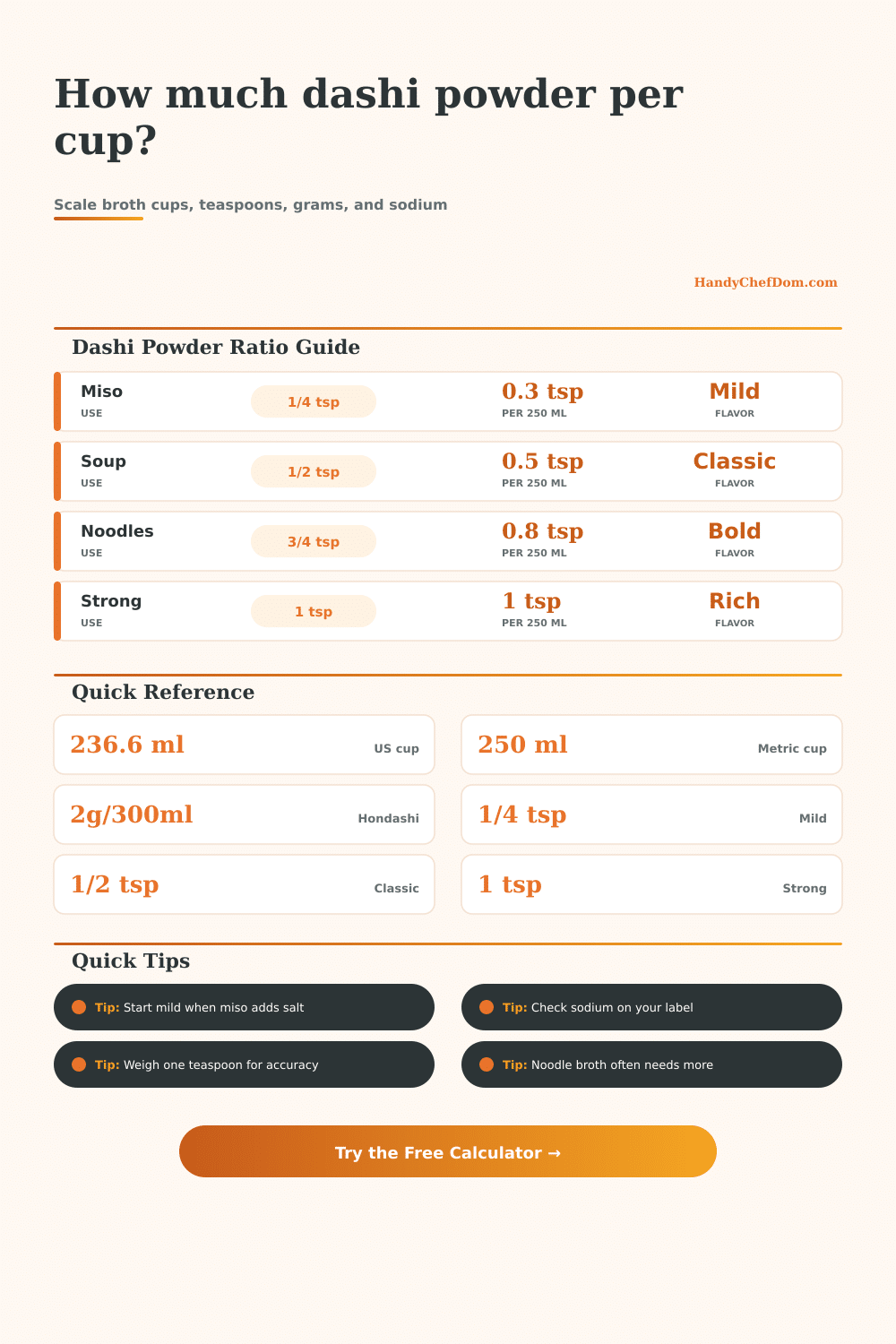
| Use Case | Starting Ratio | Approx g / Cup | Notes |
|---|---|---|---|
| Miso Soup, Light | 1/4 tsp per cup | 0.75 g | Miso and soy add salt, so start mild. |
| General Soup Stock | 1/2 tsp per cup | 1.50 g | Common home-cooking starting point. |
| Label-Style Hondashi | 2 g per 300 ml | 1.58 g | About 0.53 tsp per US cup at 3 g per tsp. |
| Noodle Broth | 3/4 to 1 tsp per cup | 2.25 to 3.00 g | Useful when broth is the main flavor. |
| Profile | Base Ratio | Default tsp Weight | Sodium Estimate |
|---|---|---|---|
| Label Style | 2 g per 300 ml | 3.0 g / tsp | 180 mg / g |
| Classic Start | 1/2 tsp per cup | 3.0 g / tsp | 180 mg / g |
| Strong Kitchen | 1 tsp per cup | 3.0 g / tsp | 180 mg / g |
| Low Sodium | 1/2 tsp per cup | 3.0 g / tsp | 95 mg / g |
| Measure | Milliliters | At 0.5 tsp / cup | At 1 tsp / cup |
|---|---|---|---|
| 1 US cup | 236.6 ml | 0.5 tsp | 1.0 tsp |
| 1 metric cup | 250 ml | 0.53 tsp | 1.06 tsp |
| 2 cups | 473.2 ml | 1.0 tsp | 2.0 tsp |
| 1 liter | 1000 ml | 2.11 tsp | 4.23 tsp |
| Batch | Broth Volume | Classic 1/2 tsp | Label Style |
|---|---|---|---|
| 2 miso bowls | 2 cups / 473 ml | 1 tsp | 1.06 tsp |
| 4 soup bowls | 4 cups / 946 ml | 2 tsp | 2.13 tsp |
| 4 noodle bowls | 6 cups / 1420 ml | 3 tsp | 3.20 tsp |
| 6 hot pot bowls | 12 cups / 2839 ml | 6 tsp | 6.39 tsp |
Ever make miso soup at home only to have it taste like warm water? Or maybe its too salty to eat, requiring you to drink some water first? If you’ve ever made dashi from instant powder packets (whether it was for miso soup or something else), you know this can be a challenge. Usualy, the directions are vague. They does not give enough information because they is written for different pot size than yours. Plus, who wants to guess about how much salt and how much umami should of go in their food? That never ends well.
By setting the parameters, the calculator will run the numbers for you. This makes for a consistent good bowl of whatever you’re cooking up, but knowing why those inputs is important makes a decent dish turn good every time.
Why You Need This Dashi Calculator
What does it do? Why the problem is that there’s no such thing as “dash.” Dashi is what’s made when you dissolve dashi powder in water. But dashi powder isn’t just one ingredient. It’s salt plus dehydrated kelp and bonito flake (with optional MSG or some kind of flavor booster). And because different brands are different densities, they weigh very differently. Fine white powdered dashi will have a different weight-per-teaspoon than grainy Hondashi. Measure by volume, but don’t know how much that mean in grams? You’re guessing with every dish you make.
With this, you can enter the gram weight per teaspoon listed on the label of whatever package or jar of powder you bought. That tiny tweak account for density changes that might otherwise ruin your whole recipe ratio. It’s nothing big, just enough to ensure final product doesn’t taste awful.
Another variable that most people overlook is intensity. Not all broths are created equal. A ramen broth isn’t the same thing as some miso soup. If you’re working with a heavier base of miso paste, it already brings a lot of salt into the pot. You’ll want something less intense, like a lighter dashi broth that lets bean paste stand out. In noodle soups, where the broth is often the dominant source of flavor (particularly when using fresh noodles without much seasoning of their own), you’d go heavier on the powder then if you were making miso soup (even if it’s the same amount of liquid). That’s what the intensity selector in the calculator does. It recognize that concentration requirements change depending on context.
For healthy home chefs, the most helpful function may be the sodium monitor. Dashi powder, which give dishes their essential fishy flavor, is really just salt in disguise. Depending on who’s making it, a gram can have almost 200 milligrams of sodium. Then multiply that by multiple cups of broth, plus some miso or soy sauce, and all of a sudden you’ve eaten more sodium than your body can handle in an entire day. All within one meal. Use the dashi tool: plug in your label numbers and the calculator will estimate your dish’s total sodium content to give you a reality check before you even turn on the stove. It makes you face the fact that you’re adding so much salt to what goes in the pot.
The problem is that human math doesn’t scale. It’s simple to double a recipe. But scaling up from serving four to serving 12 make things complicated, and it’s hard not to make mistakes. For those cooking big dinners (like a hot pot) or meal prepping broth for the week, consistancy is more important than exactness. That’s what the page’s reference table spells out with some standard ratios, but then the custom inputs let you play around for your own brand strength. Want something bolder? Add a bit of a buffer percentage. Worried about taking in too much? Taper it down.
As a rule, I like to begin with what the package says, but then adjust from there. Weigh your tsp, get to know it. Look at the sodium content on the package’s back. And then leave it up to the tool to scale to match whatever amount you need. Soups will be better. Soups will be consistant.
Control is key when cooking. Having control over how much dashi powder goes into each spoonful is a little victory that shows in every bite.