Soy Sauce in Ramen Calculator
Estimate soy sauce for ramen by broth cups, tare style, soy sauce sodium, noodle portions, topping salt, soup concentration, servings, and target sodium per bowl.
This calculator treats soy sauce as the salty core of ramen tare. It subtracts sodium already coming from broth and toppings, then checks the result against style-based soy ranges so the bowl still tastes like ramen instead of plain salty soup.
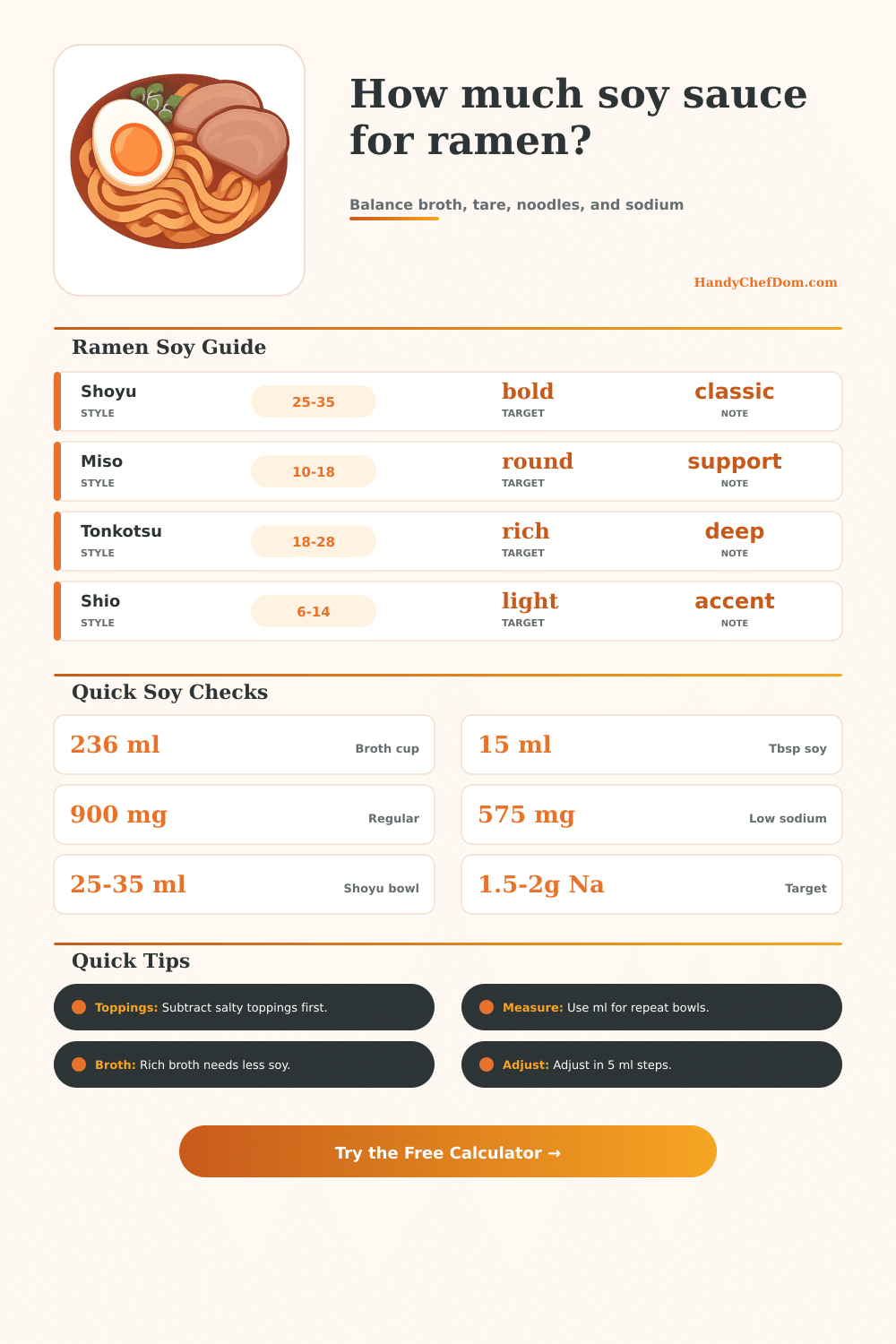
| Ramen style | Typical soy ml per bowl | Broth cup cue | Calculator role |
|---|---|---|---|
| Shoyu clear broth | 25 to 35 ml | 1.25 to 1.5 cups | Main tare flavor |
| Tonkotsu shoyu | 18 to 28 ml | 1.1 to 1.4 cups | Cuts pork richness |
| Miso ramen support | 10 to 18 ml | 1.25 to 1.5 cups | Backs up miso salt |
| Shio with soy accent | 6 to 14 ml | 1.2 to 1.4 cups | Adds umami, not color |
| Vegan konbu shoyu | 16 to 26 ml | 1.25 to 1.5 cups | Builds savory depth |
| Tsukemen dipping broth | 34 to 50 ml | 0.6 to 0.9 cups | Stronger for dipping |
| Soy sauce type | Approx sodium per tbsp | Ml for 500 mg sodium | Flavor use |
|---|---|---|---|
| Regular soy sauce | 900 mg | 8.3 ml | Classic shoyu tare |
| Low sodium soy sauce | 575 mg | 13.0 ml | More soy flavor, less salt |
| Usukuchi light soy | 960 mg | 7.8 ml | Bright salt and aroma |
| Tamari | 1000 mg | 7.5 ml | Deep body and darker taste |
| Dark soy sauce | 650 mg | 11.5 ml | Color and rounded sweetness |
| Coconut aminos | 300 mg | 25.0 ml | Mild, sweet, low sodium |
| Input | Estimate | Effect on soy | Best adjustment |
|---|---|---|---|
| Unsalted homemade broth | 60 mg per cup | Needs full tare | Use style range |
| Light dashi broth | 120 mg per cup | Slightly less soy | Check after tare |
| Seasoned stock base | 320 mg per cup | Less soy needed | Target sodium first |
| Miso-heavy base | 500 mg per cup | Soy becomes accent | Use miso preset |
| Chashu or menma | 300 to 450 mg | Subtract topping salt | Add soy in small steps |
| Loaded ramen bowl | 650 mg or more | Can overshoot fast | Hold soy back |
| Bowls | Broth cups | Shoyu soy estimate | Low sodium soy estimate |
|---|---|---|---|
| 1 bowl | 1.35 cups | 2 tbsp | 2.7 tbsp |
| 2 bowls | 2.75 cups | 4 tbsp | 5.4 tbsp |
| 4 bowls | 5.5 cups | 8 tbsp | 10.8 tbsp |
| 6 bowls | 8.25 cups | 12 tbsp | 16.2 tbsp |
| 8 bowls | 11 cups | 16 tbsp | 21.6 tbsp |
| 10 bowls | 13.75 cups | 20 tbsp | 27 tbsp |
In ramen, where do you put soy sauce? Don’t just add salt until it tastes right. There is already salt in the soup and toppings, and the noodles soak up liquid and affect flavor. If one of those things are thrown off, the whole dish will be either to strong or flat.
So that’s why I made this: the calculator lets you know how to balance them, after you tell it what kind of broth you’re making, what style you’ll use for taring (i.e., what gets weighed), how much sodium you want, and your broth volume. Then you get a picture of how the puzzle fits together. No more eyeballing with a teaspoon!
How to Use the Ramen Soy Sauce Calculator
Soy sauce’s role depends on your chosen style. If it’s clear shoyu ramen, then the soy should be primary seasoning and thus must hit a narrow window where it provides flavor but doesn’t overpower dish with pure saltiness. But if it’s tonkotsu or miso, soy can plays more of a supporting role as an accent note to cut richness or add depth without dominating the dish. Since you are multiplying that amount by number of bowls, how much soy goes into a quart makes all the difference. What feels right for four shoyu bowl will taste heavy once the miso base adds extra saltiness.
There’s another variable that people tend to overlook: toppings. Before any soy even comes into play, there might be a spoonful of menma or a few slices of chashu with several hundred milligrams of sodium. Ignore that and follow the same recipe as everyone else pouring accordingly and you’ll overshoot. So the calculator assumes that you’ve subtracted the topping sodium first, so the result may look lower than what you were expecting. That doesn’t mean to use less soy, it means part of your salt budget is already spoken for.
Subtler variables like noodle count and concentration will also impact the result. More noodles mean more liquid are soaked up, potentially diluting seasonings and pushing sodium below your target level on a per-bite basis. You’ll need fewer spoonfuls of soy per milliliter to reach desired strength with a denser broth. Use this adjustment to keep things consistent while changing portion size and making the soup richer then usual.
But it’s not a set of fixed rules. Instead, the chart offers some guidance through the reference tables at bottom of the page, which lay out common ranges for each style and sodium content of popular types of soy sauce.
After running a few batches through the calculator, you begin to see trends. You’ll need to use more volume to get the right amount of salt with low-sodium soy. You should of also go heavier on the mix if you’re dipping broths, since the noodles will absorbs less liquid per bite.
What I find most useful isn’t just finding the right answer. It’s that it teaches you how to make sense of output. For example, a light on the balance signal means there’s room for an additional small pour without any worry. A salty reading tells you why to go easy (or even hold back) when topping off next time. That feedback loop across multiple batches takes the previously scary variable and makes it predictable, exactly what allow experimentation with different styles while avoiding a ruined dinner.