Steak Resting Time Calculator
Estimate steak rest time, carryover rise, serving temperature, and USDA-safe timing from cut, thickness, cooked temperature, foil tenting, room temperature, and doneness.
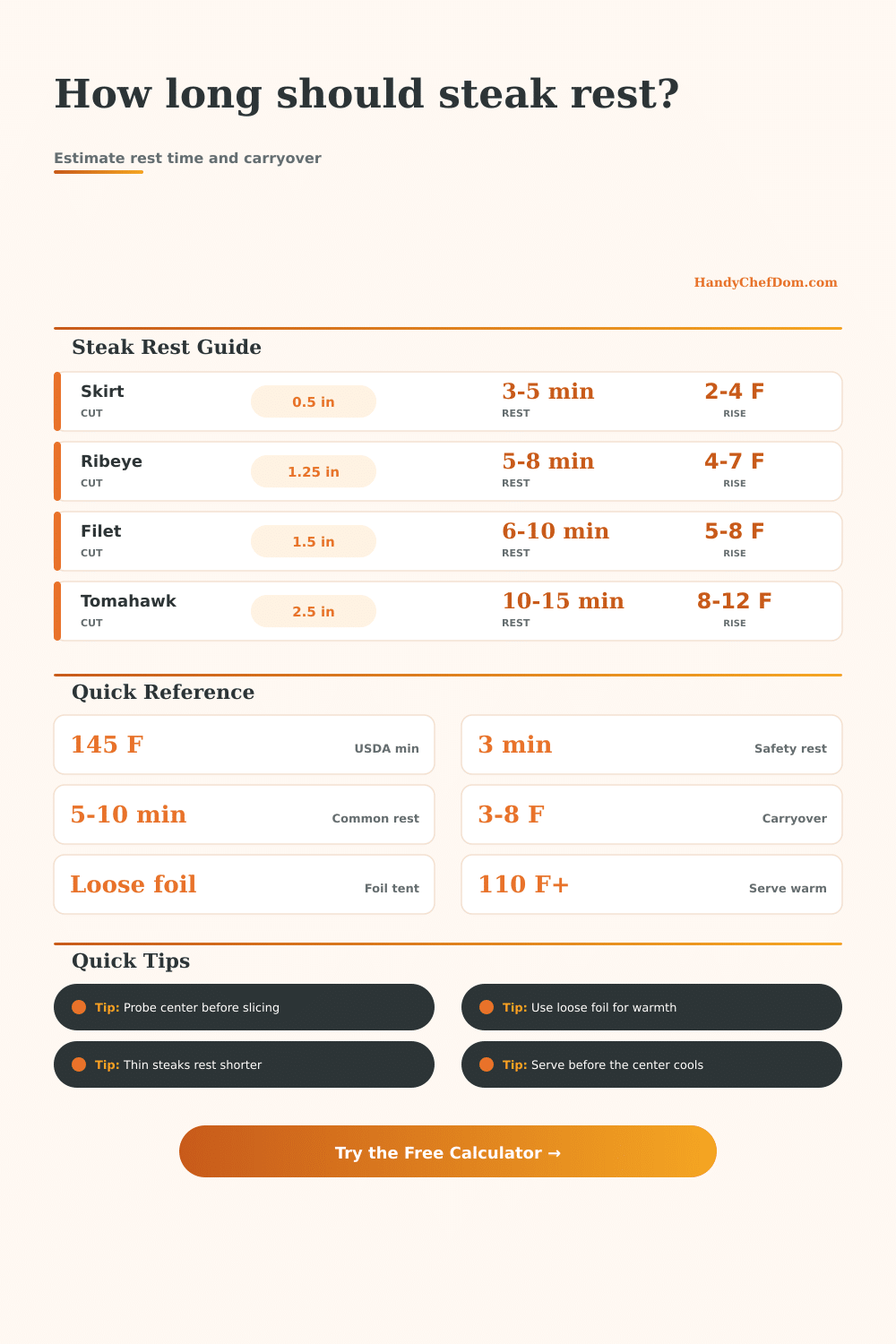
| Cut | Typical Thickness | Common Rest Time | Carryover Pattern |
|---|---|---|---|
| Skirt or flank steak | 0.5 to 1.0 in | 3 to 6 minutes | Low to moderate rise |
| Ribeye or strip | 1.0 to 1.5 in | 5 to 9 minutes | Moderate rise |
| Filet mignon | 1.25 to 2.0 in | 6 to 11 minutes | Moderate to high rise |
| Porterhouse or T-bone | 1.25 to 2.0 in | 7 to 12 minutes | High near the bone |
| Tomahawk ribeye | 1.75 to 3.0 in | 10 to 15 minutes | High carryover |
| Doneness | Final Target | Rest Context | Safety Context |
|---|---|---|---|
| Rare preference | 120 to 130 F | Short rest, low carryover | Below USDA whole-cut minimum |
| Medium rare preference | 130 to 135 F | Common 5 to 8 minute rest | Below USDA whole-cut minimum |
| Medium preference | 135 to 145 F | Moderate carryover | Upper end reaches USDA minimum |
| USDA whole-cut minimum | 145 F | At least 3 minutes | USDA listed minimum |
| Medium well to well done | 150 to 160 F | Rest for warmth and slicing | Above USDA whole-cut minimum |
| Rest Setup | Heat Retention | Carryover Effect | Serving Note |
|---|---|---|---|
| No foil, open plate | Fastest cooling | Lowest extra rise | Good for thin steaks served soon |
| Loose foil tent | Moderate warmth | Small extra rise | Common steak resting setup |
| Tight foil cover | Highest warmth | More carryover | Can soften crust if held too long |
| Warm rack, uncovered | Moderate cooling | Even surface release | Helps preserve crust texture |
| Minutes Until Serving | Rest Result | Temperature Trend | Calculator Meaning |
|---|---|---|---|
| 0 to 3 minutes | Quick slice | Peak may still be rising | Best only for very thin cuts |
| 5 to 10 minutes | Common steak rest | Carryover then gentle cooling | Good range for most steaks |
| 10 to 15 minutes | Thick steak window | Center stabilizes | Useful for large cuts |
| 15 minutes or more | Hold for service | Cooling becomes noticeable | Use foil or warm plates carefully |
There you are, pulling a thick ribeye off the grill with the kind of confidence borne by reading food blogs. It’s just right, perfectly seared, hitting precisely one-hundred and thirty degrees in the middle. Reaching for the knife, about to cut into the rare pink interior, a voice from your past scream out: STOP! Let it rest.
We’ve all heard it before, but not many people know how long to let it rest, or why we’re even doing so. Waiting five minutes after slicing could be the difference between juicy dinner and a pool of wasted juices on your plate. It’s not magic, it’s physics.
Why You Should Let Your Steak Rest
As muscle fibers encounter high-heat, they contracts with violent force. The hotter they get, the harder they squeeze, just like squeezing a wet sponge. Their contraction pushes the juices inward. This creates a low-pressure area toward the center of the meat, which is where the juices go during the cooking process. Once you slice into that hot steak, those fibers will be tense and spring right back to life, ejecting all of that delicious juice out onto the cutting board rather than keeping it in the steak. If you let it rest, the muscles relaxes and absorb some of the moisture again.
The calculator above does the math for you based off the thickness and cut of what you’re making. It eliminates the guessing game from one of the most critical parts of the process. Thickness matter less than this: when it’s a half inch-thick skirt steak, it cooks through so quickly it doesn’t have time to release its juices until it’s all cooked. So I give it just a little bit of rest.
But when you’re dealing with a two-inch-thick tomahawk ribeye, that thing takes forever for the heat to go through it, so there’s this sharp gradient from cold to hot from the middle to outside. And then, once you get off the fire, there’s still all this thermal energy being held within that piece of meat. That’s what carryover cooking is for.” Because your steak keeps getting hotter as it sits, the outer parts will pass some of the heat they’ve retained to the interior. You remove it at one-hundred twenty-eight degrees, but by the time you plop down on your couch, it’s risen up to one-hundred thirty-five.
This is why most home cooks underestimate the rise: They cook it till the thermometer reads the desired doneness. When that happens, the steak’s at the table, well done. But if you use the tool here, it calculates based on how thick your steak is, even if you cover it with foil. If you do tent it, though, use only a loose tent or you’ll ruin the texture of the steak. A tight foil wrap will trap steam and soften the crust, which is likely not what you want when grilling a steak.
Room temperature matters, too. Resting a steak on a warm summer porch instead of in a cool kitchen changes how fast it cools down. Because some people believe only in rare, some want it well done, and everyone has an opinion on doneness, target temperatures varies wildly among chefs and eaters. The USDA says that whole cuts of beef should reaches a minimum internal temperature of one hundred forty-five degrees and then sit for three minutes. That’s a target that is safe but not always flavorful. Many cooks will shoot for something less because they prefer it, knowing they are taking a small risk with the balance of flavor, taste, and texture.
Knowing that allows you to make up your mind whether you want to build some extra resting into your plan (to account for a longer hold period for the sake of safety). Or maybe all you really need is a little time for the juice to settle down. But you don’t have to set up a complicated system; now comes the part where the rubber meets the road: Get that steak off the fire, leave it alone, and don’t peek at it every half minute. The time estimates given on the reference charts are guidelines only; stick with your meat thermometer over the kitchen clock.
When feeding guests, timing is essential, the goal is for the initial forkful to be juicy and hot, not dry and lukewarm. In the end, rest is simply about patience; it’s the last thing you do to a piece of meat, and it comes after everything else you’ve done. It lets the meat itself come back into balance, ensuring that the effort you expended in searing or grilling gets translated into what ends up on your fork. Everything calms down, the juices stay inside the meat and the protein’s fibers relax, letting the meat even out in temperature. And then: You cut, and the steak thanks you, because you waited just a minute at the cutting board and that one second of delay pays off on the plate.