Tomato Carb Calculator
Estimate total carbs, fiber, net carbs, tomato count, grams, cups, sauce concentration, trim yield, and servings for fresh tomatoes or tomato sauce.
🍅Tomato Scenarios
⚖Tomato Inputs
Full Tomato Carb Breakdown
📊Quick Tomato Output Grid
🫙Tomato Type and Prep Comparison Grid
📘Tomato Nutrition Reference
| Tomato type | Average piece | Total carbs per 100 g | Fiber per 100 g | Net carbs per 100 g |
|---|---|---|---|---|
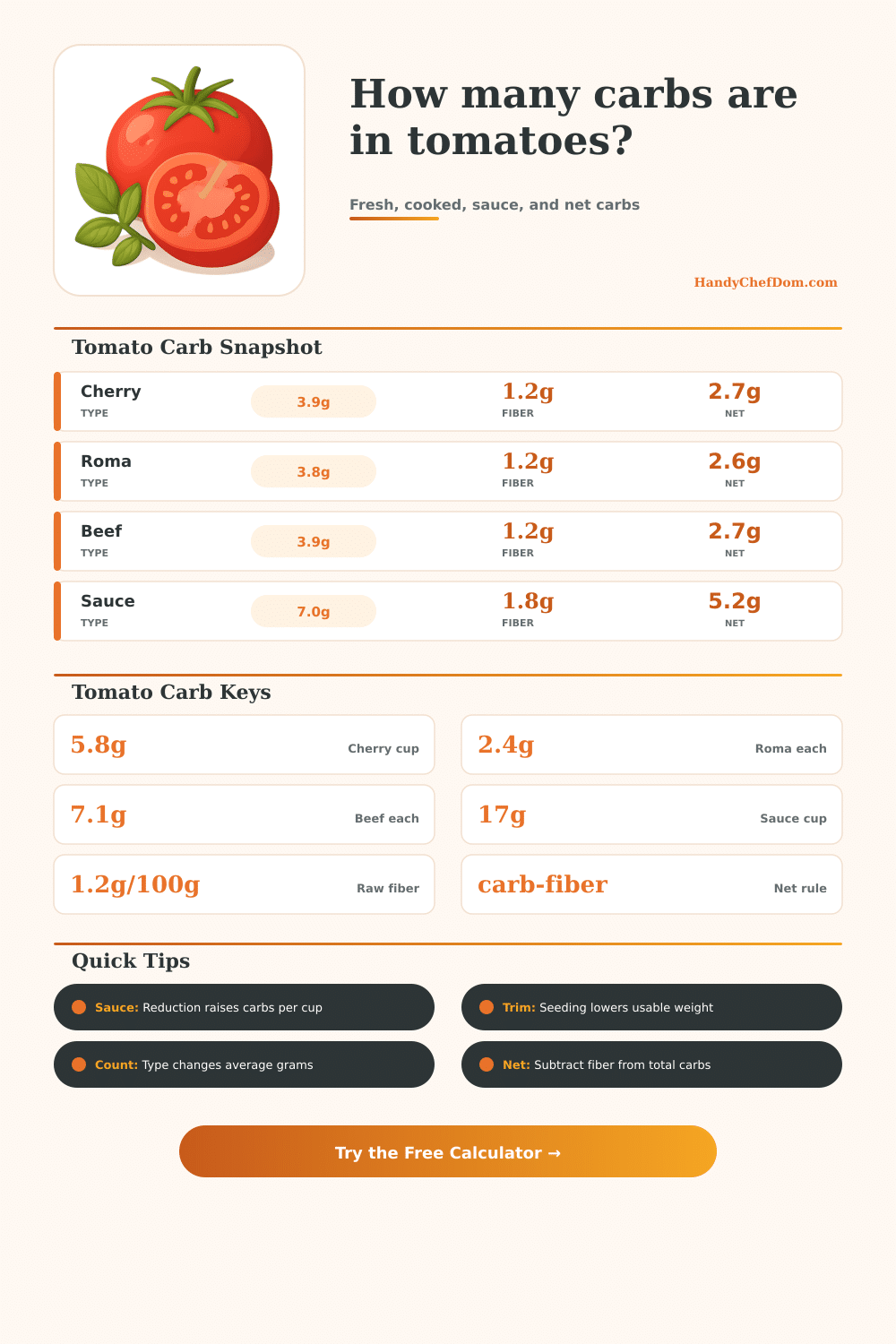
| Cherry tomato | 17 g each | 3.9 g | 1.2 g | 2.7 g |
| Grape tomato | 10 g each | 4.0 g | 1.3 g | 2.7 g |
| Roma tomato | 62 g each | 3.8 g | 1.2 g | 2.6 g |
| Beefsteak tomato | 182 g each | 3.9 g | 1.2 g | 2.7 g |
| Heirloom tomato | 150 g each | 4.1 g | 1.3 g | 2.8 g |
| Plum tomato | 58 g each | 3.8 g | 1.2 g | 2.6 g |
| Green tomato | 123 g each | 5.1 g | 1.1 g | 4.0 g |
| Canned crushed tomato | 240 g per cup | 4.4 g | 1.5 g | 2.9 g |
🥣Raw, Cooked, and Sauce Conversion Table
| Prep style | Finished yield from 100 g usable raw | Typical grams per cup | Carb effect | Best calculator use |
|---|---|---|---|---|
| Raw chopped | 100 g | 180 g | Baseline carbs | Salads, bowls, snacks |
| Lightly cooked | 82 g | 220 g | More carbs per cup | Warm sides and fillings |
| Cooked down sauce base | 62 g | 245 g | Concentrated by water loss | Skillet sauce planning |
| Smooth tomato sauce | 55 g | 250 g | High cup concentration | Recipe sauce adjustment |
| Tomato paste style | 22 g | 260 g | Very concentrated | Small intense additions |
🍲Common Tomato Amounts by Serving Count
| Scenario | Servings | Fresh tomato amount | Approx. raw net carbs | Sauce planning note |
|---|---|---|---|---|
| Snack plate | 2 | 1 cup cherry tomatoes | 4.0 g net | No reduction needed |
| Dinner salad | 4 | 2 medium tomatoes | 6.5 g net | Use raw yield |
| Salsa bowl | 6 | 6 Roma tomatoes | 9.7 g net | Seeded yield matters |
| Pasta sauce | 8 | 2 kg raw tomatoes | 52 g net | Reduction concentrates cups |
| Potluck platter | 16 | 6 cups sliced tomatoes | 29 g net | Keep as finished cups |
🔢Seed, Trim, and Sauce Adjustment Table
| Adjustment | Yield factor | What changes | Carb interpretation | When to choose it |
|---|---|---|---|---|
| Cored only | 94% | Small raw weight loss | Carbs drop with trimmed weight | Fresh sliced tomatoes |
| Seeded lightly | 88% | Gel and seeds removed | Net carbs use edible portion | Salsa and salad prep |
| Seeded and peeled | 80% | Skins and seeds removed | Less usable raw tomato | Smooth sauces |
| Thick reduction | 75% | Finished sauce volume drops | Total carbs stay, per cup rises | Rich sauce recipes |
When you ask yourself how much carbs are in your meal, it always starts with salad, then moves to confusion regarding what’s on top of it: sauces. Tomatoes aren’t zero carb food, even though they’re rich in carotenoids (like lycopene) and low on the glycemic index.
Depending on what you do with tomatoes; blend them into a paste, cook them down into a reduction, eat them raw, the food can have a wildly diffrent amount of carbohydrates. It’s why using an average value from a generic nutrition label almost never translates when put in practice. You’ve got to subtract the fiber left behind in seeds and skin, as well as the water weight lost throughout cooking.
How Cooking Changes Tomato Carbs
The reduction in volume caused by heating up fruits is something most home cooks don’t expect. When you simmer tomatoes, only the water leaves while the sugars and acids stay behind; that’s why they become more intense. That’s what we call “concentration,” which is the hidden carb-multiplier in Italian cuisine. One cup of raw diced tomatoes has far fewer carbs than one cup of reduced sauce made from those same tomatoes.
That’s why yield factor changes density per-serving (check the chart on the page for a clear explanation). This is the concentration impact. Failing to account for it is the biggest mistake people make if they’re counting net carbs for dietary reasons or better metabolic health. Select your tomato and your method of preparation, and the calculator does the rest (above).
That’s because a cherry tomato doesn’t weigh as much as beefsteak, but they’re close in carb percentage per pound. The secret is knowing exactly what you’re measuring. Are you measuring the entire veggie. Stem, skin, core, all? Or just the flesh inside, the part we eat? Because that matters, since the more you trim, the less edible food you’ll end up with.
Peel it to make a smooth sauce or seed it to create chunky salsa. Now you have lost the fibrous skin or gel, which is mostly water. Adjust to match, and the tool will deduct that waste, too. This way, the number on the other side of the equation reflect how many carbs you actualy put in your mouth.
Fiber does not raise your blood glucose levels like simple sugars do, so net carbs = Total Carbs, Fiber. The fiber in tomatoes, both insoluble and soluble, help slow down absorption. That said, there are slight variations depending on the variety. While a plum-type (like Romas) or an heirloom may be slightly different than another, it’s usually not significant enough to matter for casual monitoring.
For example, you don’t need to weigh every single cherry tomato to the gram if you are using reasonable estimates for count and size. With a little bit of estimation regarding size and quantity, you don’t have to weigh each cherry tomato to the gram. The calculator averages this out and gives you a reliable benchmark for comparison.
Take this example: I am meal prepping some pasta sauce for a week. Out comes a few pounds of fresh tomatoes. In goes the pot, where they’re peeled, seeded, and simmered into a concentrated sauce that takes three hours to make. The final product is a thick, flavourful sauce. But it doesn’t contain more carbs than it did before. It simply contains much more carbs per cup.
Knowing this keeps you from accidentally overeating, particularly when eating with pasta/bread (if you’re trying to balance out the carbohydrates). Starches tend to be the focus of low-carb diets, so it’s easy to forget how sneaky sugary sauces can become! There’s also some subtler ingredient: ripeness. Greenish-tomatoes aren’t as sweet as riper ones; they’re just firmer. And perhaps a bit lower in natural tomato sugar.
The calculator uses an average based off USDA nutritional database averages across the usual grocery-store range of fruits. So maybe your own tart or super-sugary organic heirloom from the farmers market isn’t represented. If you do know exactly what you’re working with, maybe you did a lab test, you could adjust the input accordingly, but the defaults rely on solid nutrition databases. That means it will get you pretty far without having to weigh every single cherry tomato to the gram.
Not only does cooking method matter, but so do types of cooking (besides boiling). For example, roasting tomatoes will concentrate their naturally sweet sugars into a more condensed form, adding flavor but reducing their water content (and therefore total volume). The calculator has options for different levels of reduction; from a light simmer to thick sauces, to cover that range. This way it helps you see when you’ve increased flavor at the expense of carbs/cup.
For example, if you want to be really low-carb, then sticking to near-raw or gently sauteed tomato preps will give you fewer carbs/cup. So all this talk of carbs in tomatoes boils down to: Intentionality. It is not a fear of any vegetable (tomatoes are vegetables!), but knowledge of what happens to their nutritional content during preparation.
Knowledge of who they are, how they’re trimmed and of which type and how much you reduce them, gives you control over the composition of the meal. Recognizing that water weight skews volume measurements makes the math easy. Focus on the net carbs once fiber is subtracted, and use the tool to connect what the recipe says to do with what you want to eat. You’ll be making a tastier batch of sauce because you would of had crystal-clear expectations.