Tomato Paste in Pot Roast Calculator
Estimate the right tomato paste amount for pot roast by roast pounds, braising liquid cups, wine cups, vegetable volume, gravy thickness, braising time, servings, paste style, and tomato-to-wine balance.
Tomato paste gives pot roast gravy color, body, acidity, and savory depth, but too much can make the braising liquid taste sharp or tomato-sauce-like. This calculator weighs paste against roast pounds, braising liquid, vegetables, gravy thickness, vessel evaporation, and richness so the pot roast stays balanced.
Tomato Paste Plan for This Pot Roast
Your tomato paste result will appear here after calculation.
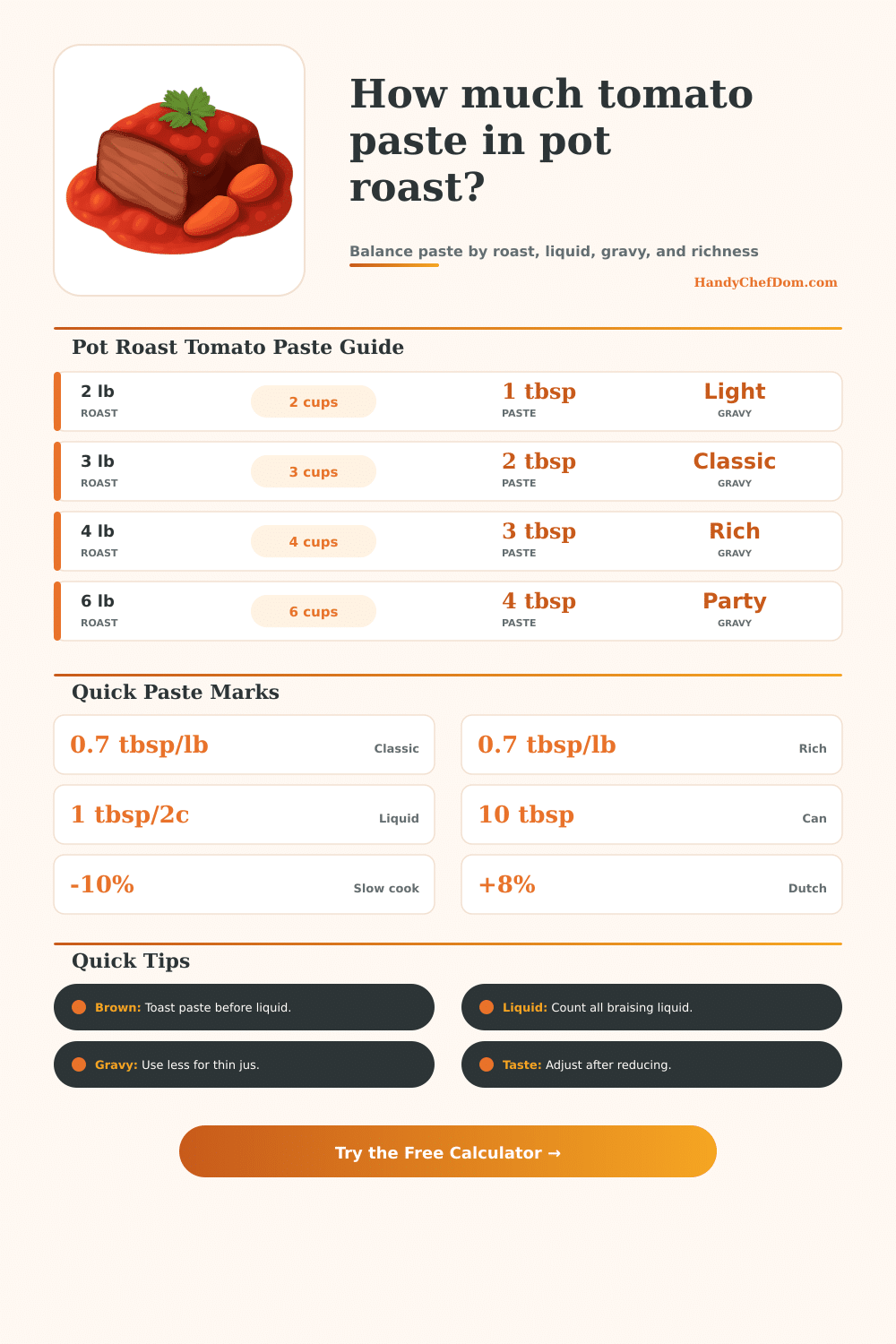
Roast Weight and Tomato Paste Table
| Roast weight | Mellow background | Classic balance | Rich gravy | Typical servings |
|---|---|---|---|---|
| 1 pound roast | 1 to 2 tsp | 1 tbsp | 1 1/2 tbsp | 3 to 4 bowls |
| 2 pounds roast | 1 1/2 tbsp | 2 tbsp | 2 1/2 to 3 tbsp | 5 to 6 bowls |
| 3 pounds roast | 2 tbsp | 3 tbsp | 4 tbsp | 7 to 9 bowls |
| 4 pounds roast | 3 tbsp | 4 tbsp | 5 to 6 tbsp | 10 to 12 bowls |
| 6 pounds roast | 4 tbsp | 6 tbsp | 8 tbsp | 16 to 18 bowls |
Braising Liquid and Gravy Thickness Table
| Pot roast build | Paste cue | Acid balance | Gravy cue | Flavor result |
|---|---|---|---|---|
| Thin au jus roast | 0.35 to 0.45 tbsp per cup | Low wine | Keep paste moderate | Clean roast flavor |
| Classic pot roast | 0.45 to 0.6 tbsp per cup | 10 to 20 percent wine | Spoon-coating | Rounded tomato body |
| Red wine braise | 0.55 to 0.7 tbsp per cup | 20 to 35 percent wine | Needs savory base | Bright but balanced |
| Dutch oven roast | 0.4 to 0.55 tbsp per cup | Any wine level | Concentrates fast | Rich, not pasty |
| Leftover roast | 0.35 to 0.5 tbsp per cup | Moderate wine | Thickens overnight | Milder next day |
Paste Type Conversion Table
| Tomato product | Strength factor | Grams per tbsp | Use in calculator | Balance note |
|---|---|---|---|---|
| Standard canned paste | 1.00x | 16 g | Baseline | Classic pot roast choice |
| Double-concentrated tube | 1.35x | 18 g | Use less | Strong color and acidity |
| Sweet Italian-style paste | 0.95x | 16 g | Slightly more | Mellower tomato flavor |
| Roasted tomato paste | 1.08x | 17 g | Use a touch less | Deeper browned flavor |
| Paste plus canned tomatoes | 0.82x | 15 g | Use less paste | Tomato already present |
| Rehydrated tomato powder | 1.20x | 12 g | Use carefully | Concentrated and sharp |
Serving Size and Roast Scale Table
| Roast scale | Roast per serving | Paste per serving | Vegetable load | Best balance |
|---|---|---|---|---|
| Weeknight pot | 4 to 5 oz | 1 to 1 1/2 tsp | 1/2 cup each | Mellow |
| Family dinner | 5 to 6 oz | 1 1/2 tsp | 2/3 cup each | Classic |
| Hearty bowls | 6 to 7 oz | 2 tsp | 3/4 cup each | Rich |
| Party kettle | 4 to 5 oz | 1 to 1 1/2 tsp | 1/2 to 2/3 cup | Moderate |
| Leftover pot roast | 5 oz | 1 tsp | 2/3 cup each | Looser |
Pot roast is also one where ratio of tomato paste is crucial: Too little, and you’ll have thin, pale gravy; too much, and it’s all about the pasta sauce, not the meat at all. It’s somewhere in between where there’s enough depth without overpowering with tomato taste. Most cooks adjusts by feel, getting it just so, or encountering a roast that doesn’t quite hit the mark.
How concentrated do you want your finished product to be? What’s your target volume of whatever it is you’re making (i.e., how much of X are you planning to make)? How big is your pan? A recipe for three pounds of chuck roast cooked in six cups of wine and stock in a wide braiser that reduces everything down is one thing; that same roast cooked in an oven-proof saute pan, then covered and reduced until falling-apart-tender, is something else entirely. The variables are the veggies and the vessel. And then there’s the matter of cooking time. Once you know these things, just plug them into the calculator, and let numbers do the rest.
How to Use Tomato Paste in Pot Roast
No more guesswork about whether or not the end result will have enough juice. Tomato paste’s role is not static; it vary depending on what else you’re adding. With wine, for instance, the braising liquid becomes brighter, meaning that you generally add just a little more paste then normal to prevent gravy from being sharp-tasting. Moisture and sugars released from vegetables may also mellow the acidity, allowing you to get away with using a little less paste. Concentrating the liquid through longer cooking cause even the same spoonful of paste to taste stronger when meat is finally tender. That’s why there isn’t really such a thing as a simple ratio in the real world of a recipe.
But also consider thickness goal. If your au jus is thin, you don’t want as much paste since it won’t build body through reducing. You can get away with thicker gravy on spaghetti than you could just spooning into pasta; a spoonful of gravy will coat without filling out pot and becoming tomato stew. The next day the flavor of tomato gets stronger and the sauce thickens up in refrigerator, so use a bit of a lighter hand if you’re thinking leftovers.
But many cooks forget that different pastes has different potency, as well. Standard paste cans aren’t as strong by volume as double-concentrated tubes. Roasted varieties have deeper color and a slightly blander brightness. The calculator allows you to note down what type you’re working with, so the recommendation will take into account that discrepancy right off the bat. No need to fiddle around later on.
Toward the end of cooking, that’s when real test happens. Is the gravy flat? Adding a tiny blob to a hot corner of the pot will bloom and fix it, so there is no need to ruin the whole balance. Does it have a sharp flavor? A knob of butter or a splash of stock softens its edge more kindly than adding more salt to try to cover up. The closer you start, the easier those last adjustments would of been.
You’re not trying to taste the tomato for itself. You just want it to add some backbone to your gravy so you can pour it over a piece of meat and have it stay there rather than slide around. When you get that dialed in, then you’ve got same thing whether you’re serving 20 people on a weekend day or four person on a Tuesday.