🥜 Protein in Peanut Butter Calculator
Calculate peanut butter protein from tablespoons or grams, compare jar styles, add peanut powder, split servings, and check a protein target.
Use label data when available. This calculator uses practical nutrition averages per 100 g, then scales by spoon weight, powder choice, servings, and your target.
| Peanut Butter Style | Protein per 2 Tbsp | Fat per 2 Tbsp | Sugar per 2 Tbsp |
|---|---|---|---|
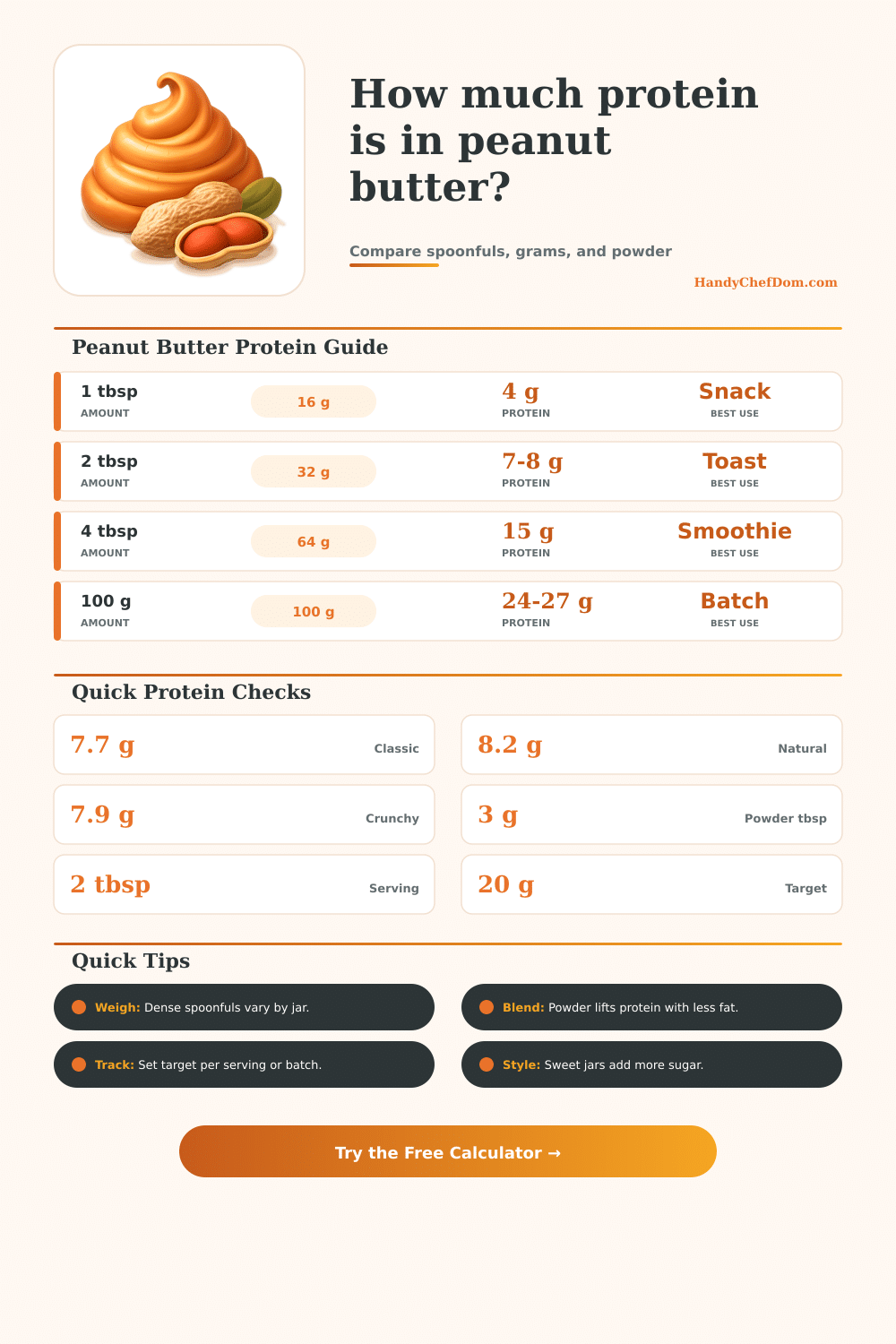
| Creamy classic jar | 7.7 g | 16.0 g | 2.9 g |
| Natural stirred peanut butter | 8.2 g | 16.3 g | 1.9 g |
| Crunchy roasted peanut butter | 7.9 g | 15.8 g | 2.4 g |
| Unsweetened salted peanut butter | 8.5 g | 16.6 g | 1.3 g |
| Reduced-fat peanut spread | 7.5 g | 12.5 g | 3.8 g |
| Honey roasted peanut butter | 7.2 g | 15.2 g | 5.1 g |
| High-oleic peanut butter | 8.0 g | 16.1 g | 2.1 g |
| Dark roast peanut butter | 8.1 g | 16.4 g | 2.0 g |
| Serving Pattern | Peanut Butter | Approx Weight | Protein Range |
|---|---|---|---|
| Light toast smear | 1 tbsp | 16 g | 3.6-4.2 g |
| Standard sandwich layer | 2 tbsp | 32 g | 7.2-8.5 g |
| Smoothie boost | 3 tbsp | 48 g | 10.8-12.8 g |
| Protein snack bowl | 4 tbsp | 64 g | 14.4-17.0 g |
| No-bake bite batch | 8 tbsp | 128 g | 28.8-34.0 g |
| Sauce prep base | 10 tbsp | 160 g | 36.0-42.5 g |
| Powder Option | Weight per Tbsp | Protein per Tbsp | Typical Fit |
|---|---|---|---|
| Plain powdered peanut butter | 6 g | 3.0 g | Shakes and oats |
| Defatted peanut flour | 6 g | 3.1 g | Baking and bites |
| Chocolate peanut powder | 7 g | 3.2 g | Yogurt bowls |
| Vanilla protein peanut powder | 7 g | 3.4 g | Smoothies |
| No powder boost | 0 g | 0 g | Jar-only math |
| Powder plus creamy jar | Varies | Higher | Target chasing |
| Protein Target | Classic PB Needed | Metric Weight | Target Note |
|---|---|---|---|
| 5 g protein | 1.3 tbsp | 21 g | Small snack |
| 10 g protein | 2.6 tbsp | 42 g | Breakfast add-in |
| 15 g protein | 3.9 tbsp | 62 g | Large bowl |
| 20 g protein | 5.2 tbsp | 83 g | Dense serving |
| 25 g protein | 6.5 tbsp | 104 g | Batch level |
| 30 g protein | 7.8 tbsp | 124 g | Use powder too |
Peanut butter are a food that contains protein. Furthermore, peanut butter is also a food that many individuals consume in various amount. For instance, some individuals may consume peanut butter on toast, while others may consume large spoonful of peanut butter.
In each of these instances, however, the amount of protein that the individual consumes is dependent upon the specific serving of peanut butter that is consumed. One tool that individuals that consume peanut butter can utilize is a practical calculator. Such a calculator is useful in that it can remove the guesswork of calculating how much protein may be contained in the peanut butter that an individual consumes, and it can allow for the individual to quick and efficient check the protein content of the peanut butter product that they use.
How Much Protein Is in Peanut Butter
The type of peanut butter that is consumed may also impact the amount of protein that is consumed by the individual. For instance, classic no-stir creamy peanut butter may contain less protein than natural peanut butter that a person must stir prior to use (since the natural peanut butter may contain fewer added sugars). Crunchy peanut butter may be somewhere in the middle of these two product, while types of peanut butter that contain honey (or that are dessert-style peanut butter) may contain less protein than the other types of peanut butter described (since the products that contain honey have more sugar than other types of peanut butter).
Additionally, reduced fat peanut butter spreads may contain less protein per gram of peanut butter than other types of peanut butter (since they often contain more carbohydrates). Each of these different type of peanut butter may contain different amount of protein, which can impact the amount of protein that the individual consumes. Powdered peanut butter may also contain protein in a different manner than the peanut butter that is contained in jars.
Specifically, most of the fat has had to be removed from the peanut butter. As a result, a tablespoon of powdered peanut butter may weigh less than a tablespoon of peanut butter that is contained in a jar. Despite these difference in weight, the powdered peanut butter may still contain a significant amount of protein.
As a result, individuals that desire the flavor of peanut butter but who also desire the protein content of peanut butter but who dont desire the calories that come with peanut butter that is contained in jars can utilize powdered peanut butter. A calculator may help to individuals to combine jar and powdered peanut butter to view the effect that each type of peanut butter may have upon the protein target of the individual. In understanding peanut butter servings, it is important to ensure that an individual is careful when using the calculator to determine how many servings of peanut butter are to be consumed.
For instance, one sandwich may contain one serving of peanut butter, but a sauce or a batch of oat bites may contain many serving of peanut butter. The serving count can be adjusted within the calculator to ensure that the individual is able to view how much additional peanut butter (or powdered peanut butter) will be needed for the individual to meet their goal in relation to the amount of protein that should be consumed. Reference tables can be used to display the amount of tablespoons of peanut butter that may be contained in a smoothie, a snack, or in another food item.
While these tables may not contain rules as to the amount of peanut butter that an individual should consume, they can help to provide an individual with an understanding of the amount of peanut butter that may be typically contained in an item that is consumed by an individual. Thus, once an individual understands the amount of peanut butter that is contained in these items, the calculator can assist in ensuring that the individual does not have to remember the protein content of each item. An individual’s actual amount of peanut butter consumed may differ from the information that is published on the nutrition label of the peanut butter.
For example, an individual may use heaping tablespoons of peanut butter, which may weigh more than sixteen gram. Additionally, if the peanut butter contains oil, it is possible that the oil may sit on top of the peanut butter. Therefore, if the individual measures the amount of peanut butter by volume instead of by weight, these small difference may accumulate over time.
However, it is possible to weigh the amount of peanut butter that is used to ensure that the numbers appear accurate to the individual, although it isnt necessary to weigh the peanut butter for every single meal that is prepared. Overall, these different tools and calculators can be used to determine if the peanut butter that is consumed by an individual contains the amount of protein that the individual may need to function normal during the day. For instance, if an individual is aware of the protein content of the peanut butter that they consume, they may be able to decide whether they would like to add more powdered peanut butter to their diet, or they can make another decision regarding the type of peanut butter that they use in their meal.
In each of these instances, the information can help to an individual to adjust the portion size of the peanut butter that they use without having to guess about the protein content of that peanut butter.