🌰 Protein in Walnuts Calculator
Estimate walnut protein from halves, pieces, chopped walnuts, ounces, grams, cups, servings, raw or toasted style, baking use, snack portions, and protein targets.
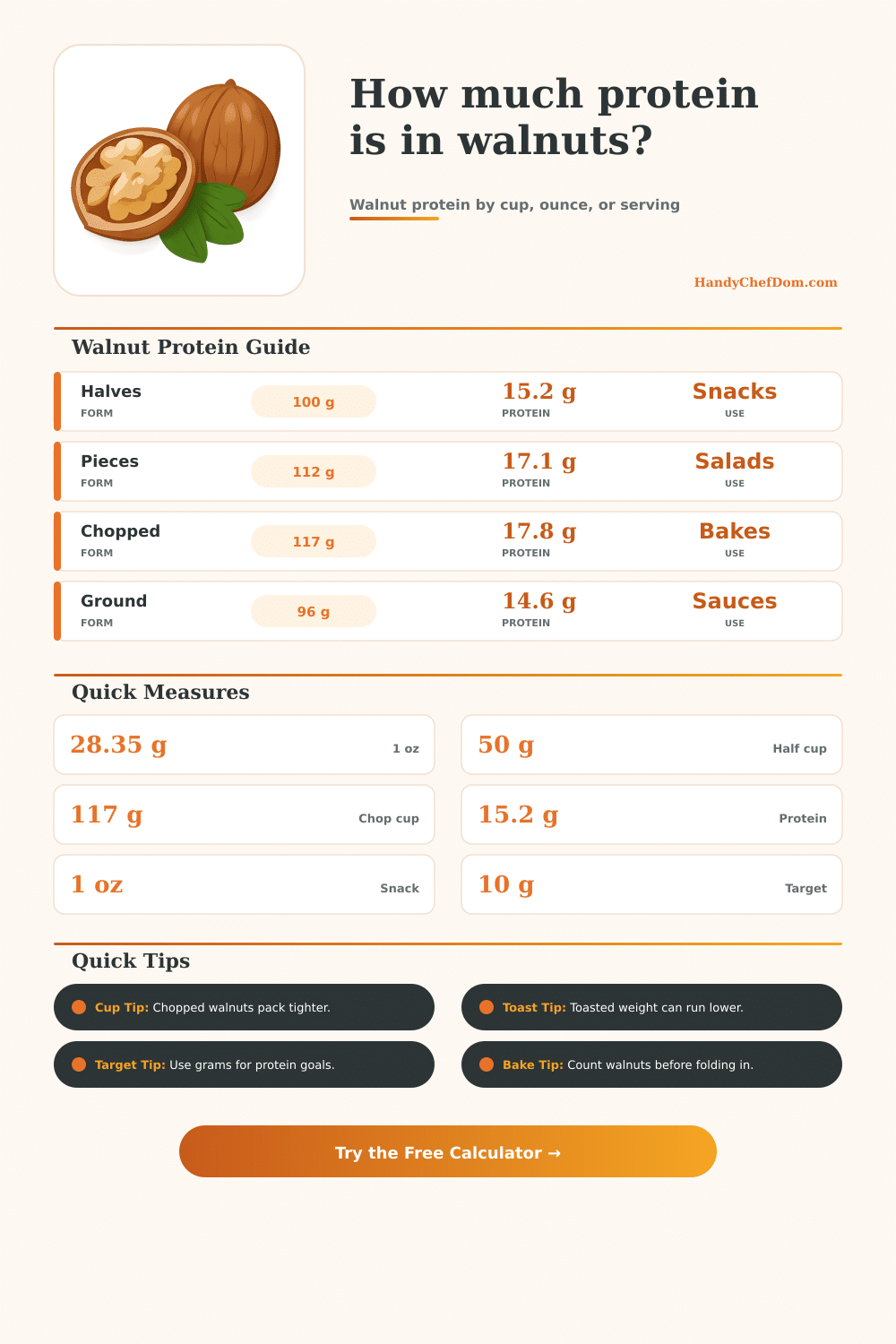
Choose the walnut form first because a cup of airy halves weighs less than a cup of chopped walnuts. Use the density override when your measuring cup is packed differently.
| Walnut form | Protein per 28 g | Calories per 28 g | Typical kitchen use |
|---|---|---|---|
| Walnut halves | 4.3 g | 185 kcal | Snack bowls, cheese boards, lunchbox portions |
| Large walnut pieces | 4.3 g | 185 kcal | Salads, grain bowls, yogurt toppings |
| Chopped walnuts | 4.3 g | 185 kcal | Banana bread, brownies, muffins, quick breads |
| Finely chopped walnuts | 4.3 g | 185 kcal | Cookie dough, crusts, dessert toppings |
| Ground walnut meal | 4.3 g | 185 kcal | Sauces, fillings, coatings, pesto texture |
| Black walnut pieces | 6.8 g | 175 kcal | Stronger flavor in desserts and savory sides |
| Kitchen measure | Walnut halves | Walnut pieces | Chopped walnuts |
|---|---|---|---|
| 1 cup | 100 g / 3.5 oz | 112 g / 4.0 oz | 117 g / 4.1 oz |
| 1/2 cup | 50 g / 1.8 oz | 56 g / 2.0 oz | 59 g / 2.1 oz |
| 1/3 cup | 33 g / 1.2 oz | 37 g / 1.3 oz | 39 g / 1.4 oz |
| 1/4 cup | 25 g / 0.9 oz | 28 g / 1.0 oz | 29 g / 1.0 oz |
| 1 tablespoon | 6 g / 0.2 oz | 7 g / 0.2 oz | 7 g / 0.3 oz |
| 1 ounce | 0.28 cup | 0.25 cup | 0.24 cup |
| Protein target | Walnut halves | Chopped walnuts | Snack planning note |
|---|---|---|---|
| 5 g protein | 33 g / 1.2 oz | 0.28 cup | A little more than a one ounce snack |
| 8 g protein | 53 g / 1.9 oz | 0.45 cup | Useful for larger trail mix portions |
| 10 g protein | 66 g / 2.3 oz | 0.56 cup | Better as part of a mixed meal |
| 12 g protein | 79 g / 2.8 oz | 0.67 cup | Large walnut-only protein target |
| 15 g protein | 99 g / 3.5 oz | 0.84 cup | Close to a full cup of halves |
| 20 g protein | 131 g / 4.6 oz | 1.12 cups | Usually split across servings |
| Baking or snack use | Common walnut amount | Estimated protein | Portion note |
|---|---|---|---|
| Oatmeal topper | 2 tbsp chopped | 2.1 g | Adds crunch without a large nut portion |
| Green salad topping | 1/4 cup pieces | 4.3 g | Enough for two lighter salad servings |
| Snack handful | 1 oz halves | 4.3 g | Classic walnut snack reference |
| Banana bread fold-in | 1/2 cup chopped | 8.9 g | Divide by slices for per-piece protein |
| Brownie batch | 3/4 cup chopped | 13.4 g | Protein spreads across the pan yield |
| Walnut pesto | 1 cup pieces | 17.1 g | Divide by sauce servings or portions |
| Raw or toasted style | Protein per 100 g | Calories per 100 g | Conversion note |
|---|---|---|---|
| Raw English walnuts | 15.2 g | 654 kcal | Baseline for most labels and snack math |
| Light toasted walnuts | 15.6 g | 665 kcal | Small moisture loss raises per-gram density |
| Dry toasted walnuts | 15.8 g | 671 kcal | Use when toasted before measuring by weight |
| Baked-in walnut estimate | 15.3 g | 657 kcal | Useful for batters after folding walnuts in |
| Raw black walnuts | 24.1 g | 619 kcal | Different species with higher protein |
| Custom density cup | Varies | Varies | Override cup grams for packed or loose cups |
Walnuts contains protein, as well as healthy fat and fiber. Additionally, you can add walnuts to oatmeal or baking recipe to increase the protein count of those food. The amount of protein contained within walnuts depend upon the type of walnuts that is used and the way in which the cook handles the walnuts.
For instance, walnuts contains different amount of protein when the walnuts are used in their whole half form as opposed to when they are chopped into piece. The calculator allow for you to calculate the protein content of walnuts by selecting the form of the walnuts to be used. For example, using walnut halves instead of chopped walnuts change the weight of the walnuts that can be contained within a measuring cup.
How to Find Protein in Walnuts
The weight of the walnuts will have an impact on the amount of protein that can be consumed from those walnuts. Additionally, the protein content change if the walnuts are toasted. Toasting the walnuts will cause the moisture within the walnuts to leave the nut, which will increase the protein density of the walnuts per gram.
Think about the total portion of walnuts that you would like to use within your recipe. For instance, using one tablespoon of ground walnuts will provide less protein then using one ounce of walnut halves, yet both of these portions can be beneficial to incorporate into your recipes. The calculator will allow you to avoid guessing at the weight of the walnuts that you use in your recipe.
Additionally, using the calculator to determine the amount of protein that your recipe will contain will ensure that the math behind those calculation remain accurate. Walnuts are a versatile ingredient in the kitchen, as they contains protein, healthy fats, and fiber. Because of these beneficial nutrients, walnuts dont need to be the only source of nutrition in the food in which they are used.
Additionally, more walnuts can always be added to recipe to increase the protein content of that recipe. Walnuts can be used in savory recipes as well as sweet recipe, and the calculator will help you to determine how adding these ingredient will impact the protein content of your dish. Many people makes mistakes when measuring the walnuts that are used in recipes.
For instance, people may believe that any cup of walnuts will weigh the same amount. However, using walnut halves will weigh less than using chopped walnuts. The calculator help to correct for these type of mistakes.
Black walnuts contains more protein than English walnuts. Because black walnuts contains more protein, this must be accounted for when calculating the protein content of foods that contain black walnuts. An option for black walnuts is featured in the calculator to ensure that the protein estimate is accurate for the type of walnuts that are to be used in recipes.
This calculator can help you to plan meal for many people, as well as adjust the protein content of a single recipe. Once you understand the different way that the type and preparation of walnuts can change the protein density, youll understand how to use this ingredient in your recipes. First, decide in what way you would like to use the walnuts in your recipe.
Then, use the physical feature of the walnut (such as the necessity of chopping them) to determine how many walnuts you will need for your recipe. Pay attention to the physical features of walnuts, and you can use them to efficienty add protein to your diet.