🌰 Zinc in Pumpkin Seeds Calculator
Estimate zinc from pumpkin seeds, pepitas, salted snack mixes, and trail mix portions using grams, ounces, tablespoons, or cups.
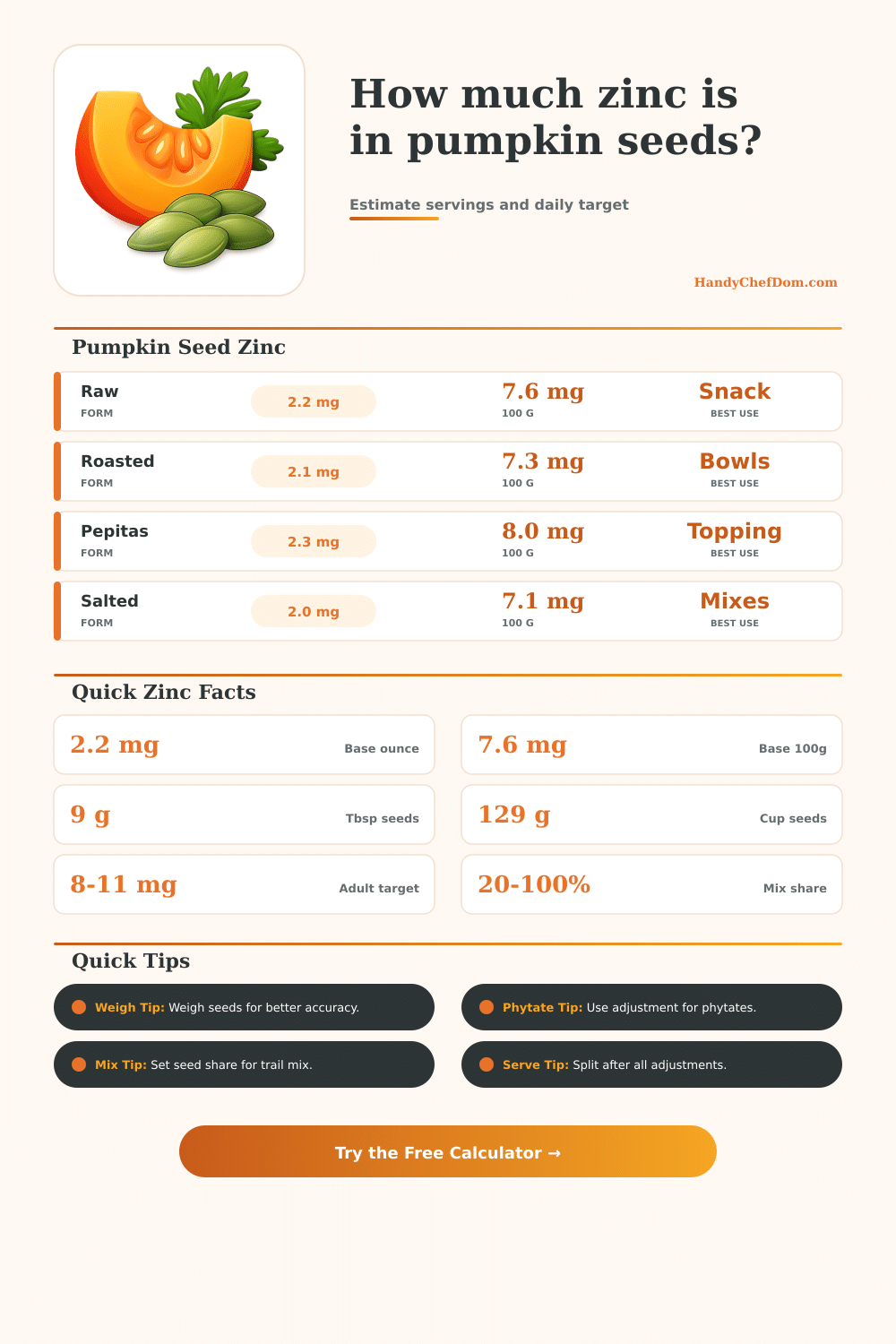
The baseline is about 2.2 mg zinc per ounce of pumpkin seeds, or 7.6 mg per 100 g. Use the adjustment fields for seed form, roasting, salting, trail mix share, and phytate or bioavailability assumptions.
| Seed Form | Zinc Per Oz | Zinc Per 100 g | Calculator Note |
|---|---|---|---|
| Raw pumpkin seeds | 2.2 mg | 7.6 mg | Baseline reference for most pantry estimates |
| Roasted pumpkin seeds | 2.1 mg | 7.3 mg | Slightly lower calculator density |
| Shelled pepitas | 2.3 mg | 8.0 mg | Dense kernels for toppings and bowls |
| Salted roasted seeds | 2.0 mg | 7.1 mg | Snack blend style with lower seed density |
| In-shell snack seeds | 1.2 mg | 4.3 mg | Shell weight reduces edible zinc estimate |
| Sprouted pumpkin seeds | 2.2 mg | 7.7 mg | Similar zinc with better absorption setting |
| Target Group | Daily Zinc Target | 1 oz Raw Covers | Calculator Use |
|---|---|---|---|
| Adult women | 8 mg | 28% | Use 8 mg target field |
| Adult men | 11 mg | 20% | Use 11 mg target field |
| Pregnancy | 11 mg | 20% | Use clinician target if different |
| Lactation | 12 mg | 18% | Use 12 mg target field |
| Custom target | Your entry | Calculated | Match your nutrition label goal |
| Seed or Nut | Zinc Per Oz | Zinc Per 100 g | Comparison Note |
|---|---|---|---|
| Pumpkin seeds | 2.2 mg | 7.6 mg | Strong plant zinc source |
| Sesame seeds | 2.0 mg | 7.0 mg | Similar high-zinc seed |
| Hemp seeds | 2.8 mg | 9.9 mg | Higher zinc per ounce |
| Cashews | 1.6 mg | 5.6 mg | Moderate zinc nut |
| Almonds | 0.9 mg | 3.1 mg | Lower zinc than pumpkin seeds |
| Sunflower seeds | 1.4 mg | 5.0 mg | Useful in seed blends |
| Serving Measure | Approx Weight | Raw Seed Zinc | Best Calculator Use |
|---|---|---|---|
| 1 tablespoon | 9 g | 0.7 mg | Yogurt or oatmeal topping |
| 2 tablespoons | 18 g | 1.4 mg | Salad or soup garnish |
| 1 ounce | 28 g | 2.2 mg | Snack serving baseline |
| 1/4 cup | 32 g | 2.5 mg | Bowl topper or small snack |
| 1/2 cup | 65 g | 4.9 mg | Shared snack bowl |
| 1 cup | 129 g | 9.8 mg | Batch prep or trail mix |
Pumpkin seeds contains zinc, and they are often added to various meal to increase the zinc content of those meals. Pumpkin seeds can often be found in trail mixes or are even sprinkled on roasted vegetables. However, the amount of zinc that enter the body from these meals depends on various factors.
These factor include the type of pumpkin seeds that are used, how they are prepared, and the other types of food that is eaten with those pumpkin seeds. Each of these factors will change the amount of zinc that enter the body. To make it more easier for individuals to understand how much zinc their body will recieve from pumpkin seeds, an individual can use a calculator.
How to Calculate Zinc from Pumpkin Seeds
By entering the measurements of the pumpkin seeds and the percentage of pumpkin seeds in the mixture, the calculator will calculate and display for the individual the amount of zinc from the pumpkin seeds and the percentage of that amount relative to they’re daily needs for zinc. Each of the different factors that an individual can control in the kitchen will have an effect on the outcome of the calculator. For instance, the individual can choose to use raw pumpkin seeds rather than roasted pumpkin seeds.
Because pumpkin seeds will contain different amount of zinc depending on whether they are raw or roasted, choosing one versus the other will affect the outcome of the calculator. Additionally, trail mixes often contain ingredients other than pumpkin seeds. Therefore, the weight of the trail mix will not necessarily be the same than the weight of the pumpkin seeds alone.
In these cases, the individual will need to enter percentages and weights of these other ingredients into the calculator. Another factor that may be required when calculating the amount of zinc in the pumpkin seeds is the adjustment for the amount of phytates that are contained in pumpkin seeds. Because phytates will bind to zinc, the amount of zinc that is calculated for pumpkin seeds may be different from that which enters the body.
Thus, the calculator will calculate both the total amount of zinc from the pumpkin seeds and the adjusted amount of that zinc to allow the individual to understand these two different value. Many individuals will not weigh the ingredients that they cook in their kitchens. Therefore, it will be helpful to the calculator to be able to use tablespoons or cups of pumpkin seeds as the unit of measurement for the amount of pumpkin seeds that are to be consider.
While using tablespoons and cups is convenient, such a method will be less precise than calculating the weight of the pumpkin seeds in gram. Using grams rather than tablespoons or cups will provide the most precision in measuring the amount of pumpkin seeds. The calculator will display both the total amount of zinc that will enter the body from the batch of pumpkin seeds that are evaluate, as well as the amount of zinc that will be provided per serving of the batch.
Additionally, the amount of zinc that enters the body will be represented as a percentage of the individuals daily target for zinc content in their body. Seeing the percentage of zinc that will enter the body will allow the individual to understand whether the pumpkin seeds contained a large amount of zinc or a small amount of zinc. Because not all individuals require the same amount of zinc in their bodies, it is necessary for each individual to consider their own specific need for zinc prior to utilizing this calculator.
Most adults require between 8 and 11 milligrams of zinc per day. However, individuals who is pregnant, breastfeeding, or that are engaged in strenuous activities will require more zinc than those who are not. Therefore, the calculator will allow for individuals to enter their own target amount for zinc in their bodies to ensure that the percentage that is displayed is accurate to their specific body and needs.
Additionally, the calculator will also convert the result of the amount of zinc that will enter the body to the amount of ounces or tablespoons of raw pumpkin seeds that would provide that amount of zinc to the body. This conversion will allow individuals to compare the amount of zinc that will be obtained from their recipes to that which would be obtained from eating a snack of raw pumpkin seeds. The effect of phytates on the amount of zinc that enters the body from pumpkin seeds is another factor that is important to understand.
If an individual is eating a meal that contains grains and legumes, those foods will contain phytates that will bind to the zinc from the pumpkin seeds. Therefore, the individual will absorb less zinc from those meals. However, if the individual soak the pumpkin seeds in water, the body will absorb more zinc from the soaked pumpkin seeds.
These different method of preparing pumpkin seeds can be accounted for in the calculator. Additionally, another method of increasing the zinc that enters the body from pumpkin seeds is to eat vegetables that are high in vitamin C alongside those pumpkin seeds. Thus, the body will not need to absorb the zinc from the pumpkin seeds to perform other essential functions.
Therefore, the body will absorb more zinc from the pumpkin seeds if they are also eating vegetables that are high in vitamin C. Such a dietary change will not impact the amount of pumpkin seeds that are eaten. The portion size of ingredients that are often calculated by this calculator can be understood by the individual through the calculator. For instance, if an individual chooses to use a quarter-cup of pumpkin seeds, the portion size of pumpkin seeds is approximately one ounce.
This amount of pumpkin seeds can easily be added to a batch of trail mix that is to be prepare for a large number of individuals. In this case, the ounce of pumpkin seeds will be divided into these various servings of trail mix. The calculator allows for individuals to understand these relationships and to decide whether to add more pumpkin seeds to the trail mix to provide more zinc to those who eat the trail mix, or to reduce the amount of pumpkin seeds that are to be included in the trail mix due to the zinc content of other ingredients.
Another way that the individual can improve the results of the calculator is if the individual continues to use the same unit of measurement for the amount of pumpkin seeds that are to be measured. For instance, if an individual decides to use tablespoons to measure the amount of pumpkin seeds, the individual should continue to use tablespoons of pumpkin seeds so that they can understand how the amount of pumpkin seeds changes if they use a kitchen scale to weigh the pumpkin seeds in grams. Over time, the individual will understand the difference between using tablespoons to measure pumpkin seeds versus measuring the weight of the pumpkin seeds in grams.
The calculator is also able to account for the type of pumpkin seeds that are to be used. For instance, the calculator can account for pumpkin seeds that may be salted, sprouted, or that may be part of a trail mix blend that is heavy with pumpkin seeds. Pumpkin seeds are a food item that is versatile in the amount of meals to which they can be added.
Additionally, by using the calculator to determine how much zinc will enter the body from various meals that contain pumpkin seeds, the individual can focus on the flavor of the meals that they prepare. If the individual understands the amount of zinc that is contained in a typical serving of pumpkin seeds, they can prepare the pumpkin seeds in any way that they wish (seasoning or roasting) and still understand the amount of zinc that will enter their body.