Carrot Carb Calculator
Estimate total carbs, net carbs, fiber, edible yield, cooked yield, grated cup conversions, and sweet glaze add-ins for whole carrots, baby carrots, and shredded carrots.
Carrot Carb Results
These cards anchor the calculator conversions. Actual carrots vary by length, diameter, moisture, and how tightly grated carrots are packed.
Whole carrots
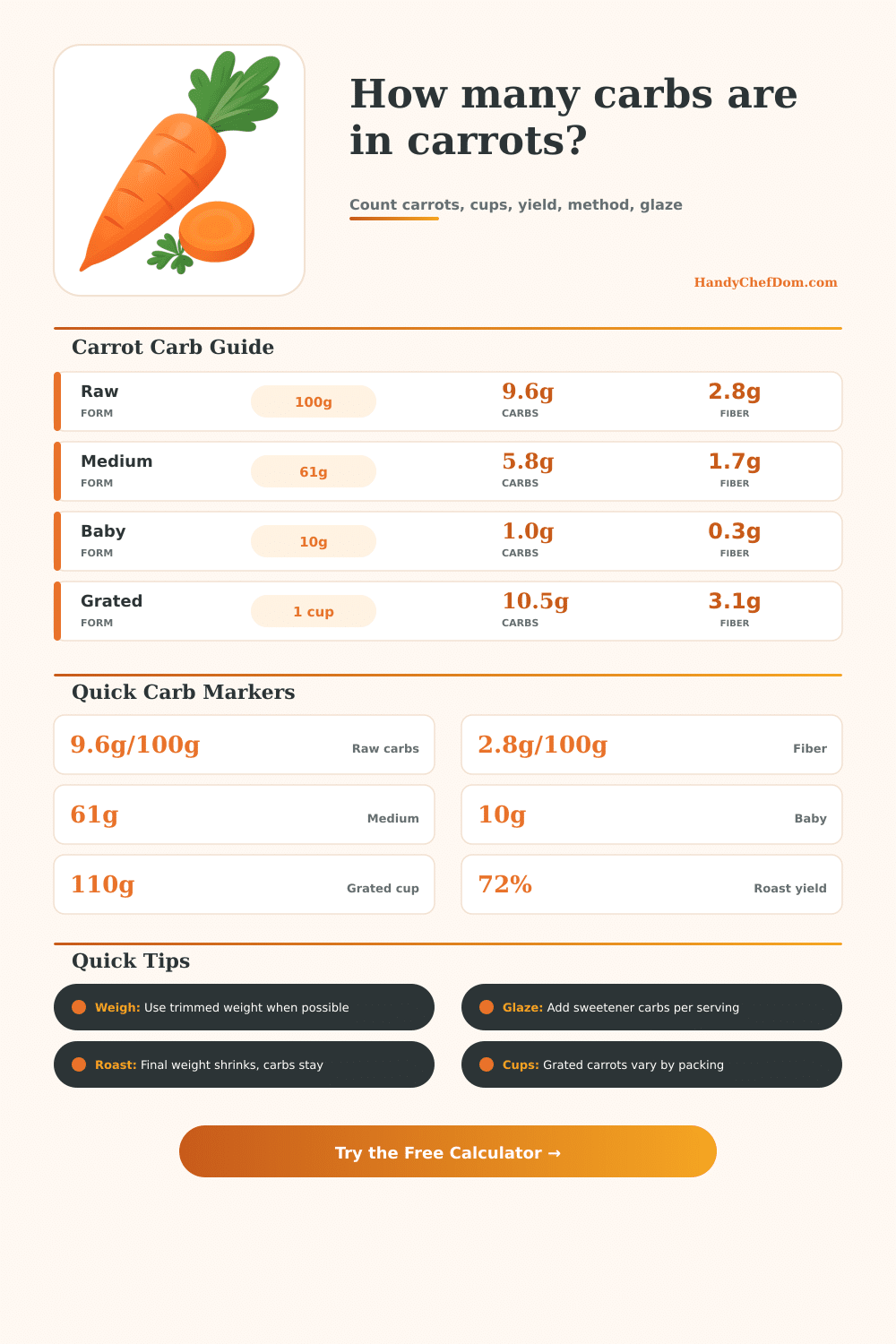
Best when counting individual carrots. A medium raw carrot is about 61 g before trim.
Baby carrots
Best for snack trays. Most are already peeled, so trim loss is usually minimal.
Grated cups
Best for salads and slaws. Packing changes cup weight more than slicing does.
Roasted carrots
Water loss lowers final weight, so carbs per finished ounce look more concentrated.
| Carrot form | Typical weight | Total carbs | Fiber | Net carbs |
|---|---|---|---|---|
| Baby carrot | 10 g each | 1.0 g | 0.3 g | 0.7 g |
| Small whole carrot | 50 g each | 4.8 g | 1.4 g | 3.4 g |
| Medium whole carrot | 61 g each | 5.8 g | 1.7 g | 4.1 g |
| Large whole carrot | 72 g each | 6.9 g | 2.0 g | 4.9 g |
| 100 g raw edible carrot | 3.53 oz | 9.6 g | 2.8 g | 6.8 g |
| Cup measure | Approx weight | Carbs | Fiber | Best use |
|---|---|---|---|---|
| 1 cup grated carrot | 110 g | 10.5 g | 3.1 g | Salads |
| 1 cup sliced coins | 122 g | 11.7 g | 3.4 g | Sides |
| 1 cup diced carrot | 128 g | 12.3 g | 3.6 g | Bowls |
| 1 cup cooked sliced | 156 g | 14.9 g | 4.4 g | Meal prep |
| Method | Finished yield | Carb retention | Fiber retention | Calculator note |
|---|---|---|---|---|
| Raw or fresh | 100% | 100% | 100% | No water loss |
| Steamed | 96% | 99% | 100% | Light shrink |
| Boiled and drained | 93% | 96% | 98% | Some leaching |
| Roasted | 72% | 98% | 100% | Water loss |
| Serving plan | Carrot amount | Raw net carbs | Glaze add-in | Use case |
|---|---|---|---|---|
| Snack nibble | 50 g | 3.4 g | 0 g | Lunchbox |
| Side serving | 80 g | 5.4 g | 0 to 4 g | Dinner |
| Generous side | 120 g | 8.1 g | 3 to 6 g | Roast tray |
| Glazed holiday scoop | 100 g | 6.8 g | 6 to 8 g | Sweet pan |
Numbers become fuzzy when we track carbs in carrots that do not come on a scale. From a bag you grab some baby carrot. The bag says forty grams. You have sixty grams on your plate. There’s no way to match what you track to what you weigh. Most tracking doesn’t last because there’s always a discrepancy between what’s on the package and what ends up in your plate.
Is it a root vegetable? It is a root problem. It sounds like carrots would be easy; they’re just a root vegetable! They are nutritionally consistent, but this consistency breeds complacency. “I’m eating carrots!” you think. Yes, one carrot… which weighs how much? Put in your specific form and technique, and the calculator does the math.
Why Counting Carrot Carbs Is Hard
What’s that mean? It means knowing the carrot, the vegetable, in a way different than before. A raw carrot holds water that is lost through cooking. When you roast things, moisture come out, shrinking the item. All those carbohydrates don’t go away along with the water. They remain in the reduced final version, making roasted carrots higher in carbs by ounce than raw. That’s something most people overlook as they switches up the prep without changing the numbers.
The second problem with tracking is trimming waste. When you weigh your carrot (top and all), including the skin, it tells you how many carbs are present, but most of it aren’t edible. When you cut off 20% by trimming, your carb load decreases; your actual consumption is less than the raw weight indicates. You can choose a yield percentage so the tool adjust for the amount you peeled off. This avoids adding an imaginary carb count for food that wasn’t eaten. Most home-cooks underestimate their carb intake because they fail to remove waste from total. Tracking honestly means being exact about which part was eaten.
But there’s more: Glazes make things complicated. A steamed carrot will fall roughly within every carb budget. But one glazed with maple syrup or honey change the game; both add sugar without any fiber to offset it. Those are all sugars, no fiber to balance them out. That’s where the calculator breaks thing down for you: How many calories come from the vegetable, and how many from the sauce? Simple sugars go straight up (no thanks!), whereas fiber make absorption slower. Knowing which is which helps you decide smartly where to use those sweeteners.
Then there are grated carrots. They have variables too. The weight of each cup varies based off packing. If you tightly fill a cup with carrot shreds, it will weigh more than if they’re loose in the cup. That can change your carb count by a couple of grams. This is where the reference table comes into play. As you can see from the table, the form makes all the difference.
It is a little thing but it matters if you want to be precise. Not perfect, just aware of where inaccuracies lie. There’s no hard-and-fast rule with tracking; it’s all about being more aware of what you’re eating. Carbs aren’t bad so long as you know what they’re worth on your plate. They add color, beta-carotene, and versatility to the mix, including some delicious carrot goodness!
But how do you translate that amount of food into the right number? Account for the extra sugar you add. Account for the shrinkage from cooking. Account for the trim waste. Go beyond guesstimating. Take charge of information (not let it run amok). You should of gone beyond just guessing.
And when you pick up those carrots next time, you’ll have an idea how much fuel; and flavor, they provide. It’s this knowledge that changes a confusing ingredient into one that becomes a staple of your daily diet.