🫑 Bell Pepper Carb Calculator
Estimate bell pepper total carbs, net carbs, fiber, seeded yield, sliced cup weight, roasted shrink, stuffed pepper add-ins, and per-serving recipe carbs.
Choose whether you are counting whole peppers, weighing seeded pepper flesh, measuring sliced cups, or building stuffed peppers. The calculator keeps pepper carbs separate from stuffing and recipe add-ins.
Bell Pepper Carb Results
Green Raw
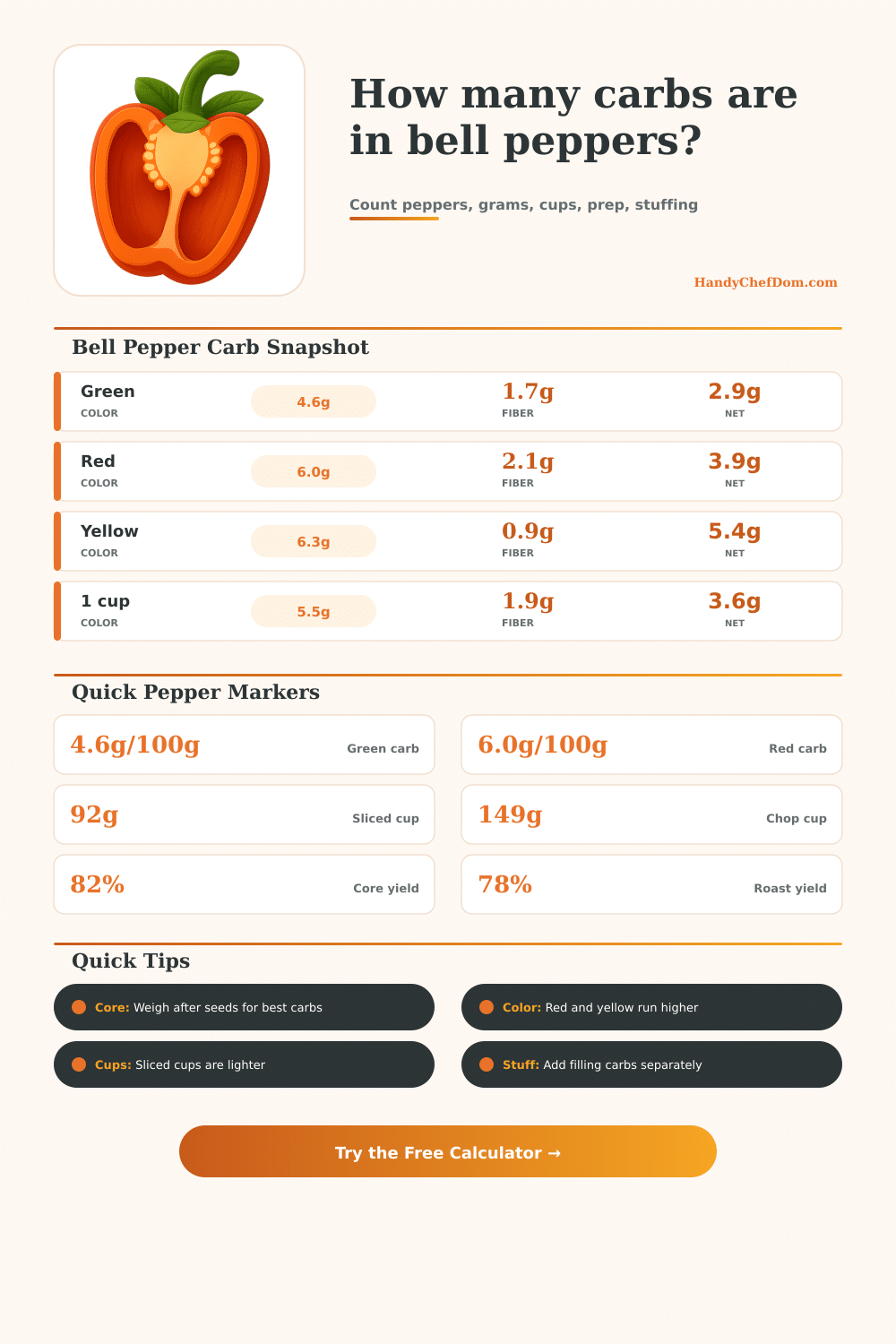
4.6 g carbs per 100 g with a leaner net-carb profile and firm fajita-style texture.
Red Raw
6.0 g carbs per 100 g with more natural sweetness and useful snack-strip weight.
Yellow Raw
6.3 g carbs per 100 g, usually similar to orange peppers for recipe tracking.
Mini Sweet
25 g each before trimming, handy for lunchbox counts and party trays.
Roasted
78% yield after broiling or roasting; carbs concentrate per final ounce.
Grilled
82% yield for slabs or skewers, with a small final-weight reduction.
Sauteed
88% yield for skillet strips, useful when peppers are mixed with onions.
Stuffed Shell
Add filling separately so pepper carbs and stuffing carbs stay visible.
| Color or Type | Carbs per 100 g | Fiber per 100 g | Net Carbs | Best Calculator Use |
|---|---|---|---|---|
| Green bell pepper | 4.64 g | 1.70 g | 2.94 g | Lower-carb strips, fajitas, omelets |
| Red bell pepper | 6.03 g | 2.10 g | 3.93 g | Snack strips, roasting, stuffed shells |
| Yellow bell pepper | 6.32 g | 0.90 g | 5.42 g | Salads, bright raw cups, sauteed mixes |
| Orange bell pepper | 6.70 g | 1.80 g | 4.90 g | Mixed-color recipes and sweet raw portions |
| Mini sweet pepper | 6.00 g | 2.00 g | 4.00 g | Lunchbox counts and appetizer trays |
| Measure | Gram Weight | Approx Ounces | Carb Notes | When to Use |
|---|---|---|---|---|
| 1 cup raw sliced strips | 92 g | 3.25 oz | Lighter loose fill | Snack strips, salads, fajitas |
| 1 cup raw chopped dice | 149 g | 5.26 oz | Higher carbs per cup | Omelets, soups, recipe prep |
| 1 cup raw rings | 100 g | 3.53 oz | Middle cup density | Sandwich rings and trays |
| 1 cup roasted strips | 140 g | 4.94 oz | Cooked and drained weight | Antipasto, roasted sides |
| 1 medium whole pepper | 119 g | 4.20 oz | Before coring | Count mode and stuffed mode |
| Prep Style | Final Yield | Carb Handling | Fiber Handling | Calculator Detail |
|---|---|---|---|---|
| Raw strips or dice | 100% | Uses edible seeded weight | Full fiber retained | Best for salads and snack plates |
| Roasted or broiled | 78% | Total carbs stay with peppers | Uses 97% fiber retention | Final weight shrinks after water loss |
| Grilled slabs | 82% | Total carbs stay with peppers | Uses 98% fiber retention | Good for skewers and grilled sides |
| Sauteed strips | 88% | Total carbs stay with peppers | Uses 98% fiber retention | Track onions or sauce as add-ins |
| Stuffed pepper shells | 86% | Peppers plus filling carbs | Peppers plus filling fiber | Separates pepper shell from stuffing |
| Stuffing Profile | Carbs Per Pepper | Fiber Per Pepper | Typical Use | Adjustment Reminder |
|---|---|---|---|---|
| Plain peppers only | 0 g | 0 g | Raw or cooked pepper portion | No recipe add-in carbs |
| Tomato sauce spooned over | 3 g | 1 g | Light sauced pepper shells | Add batch sauce if using more |
| Rice stuffed pepper filling | 28 g | 2 g | Classic stuffed pepper dinner | Use actual recipe values when known |
| Cauliflower rice filling | 6 g | 2 g | Lower-carb stuffed peppers | Add cheese or sauce separately |
| Bean and corn filling | 34 g | 7 g | Higher-fiber vegetarian filling | Divide shared filling by pepper count |
Reference values are standard raw sweet pepper estimates. Actual peppers vary with size, ripeness, trimming, packing density, and the nutrition labels on any stuffing ingredients.
A beautiful red bell pepper sits on your counter. It’s delicious, right? And it’s also healthy, when roasted or paired with hummus. But then there’s the whole carbohydrate thing. If you’re keeping track of carbs (for any reason, whether low carb or just managing your blood sugar), this vegetable throws you off. How many carbs are in a red bell pepper?! They look so harmless! It is just one little veggie, unless you start thinking about how much weight it have, depending on how it’s cut up or cooked. It might also depend on what color it is. And now you’ve got questions about its carbohydrate content. Here’s the answer, without having to remember to do math.
The distinction between edible flesh and whole pepper is one that most folks don’t get. When you purchase a pepper, you are paying for the seeds and stem as well as those tough white ribs. They has no nutritional value, and they certainly add weight. You’ll over-estimate how many carbs you’ve eaten if you log a raw pepper as being all edible, just by weighing a whole, untrimmed one. The yield percentage defaults to about eighty-two percent, which is the amount of real vegetable you get after it has been cored. It is a tiny tweak, but it should of be important if you are tracking grams.
How Many Carbs Are in Red Bell Peppers?
Secondly, it’s all about color. The earlier (green) the pepper is picked, the less time it has been on the vine to ripen, and thus the fewer sugars it contains. Naturaly, that means fewer carbohydrates different than its red or yellow versions. Those tend to be sweeter, meaning, again, they contains more carbs per hundred grams. So, go green if you’re aiming to limit your intake; go red if you like the sweet flavor and want something for a salad, but factor in the carb content. Yellow and orange varieties fall somewhere in between (or even higher, depending on how ripe they are). Check out their chart on the same page.
It’s difficult to measure by volume. For example, a cup of chopped diced peppers weighs almost one-hundred-fifty grams while a cup of sliced peppers (strips) only weigh around ninety-two grams. That’s a huge weight difference between equal amounts of food occupying identical physical space. When following a recipe that calls for a “cup” of peppers, it is important to know if they want a cup of them diced or sliced. The calculator eliminates this confusion by converting cups to exact weights before calculating the carb totals. This ensures you gets accurate information for your meal preparation.
Carbs also vary by the type and how much is used. For example, stuffing a pepper with rice, beans, or even cauliflower rice changes how many carbs are in your meal, that’s a big difference! When a recipe calls for one-half cup of rice and then fills the remainder of the meal with black beans, you’re looking at something like 42g of carbs for that serving. Now add some extra veggies to stretch the meal more and maybe double the serving size so it looks more like 3 cups instead of 1/2. You might think you’re doing well since there are now 5x as many veggie and 4x the volume, right? But wait, there’s the bell pepper, the rest of the meal fills the pepper shell with carbs, even though the pepper itself has almost no carbs!
It’s concentrated through roasting as well. Part of how cooking shrinks food is that it removes some or all of its water. When that happens, it doesn’t remove the carbs; they stay behind and concentrate. For instance, you’ll find that a roasted pepper contains a higher concentration of carbs per ounce then the same amount of raw pepper. That’s because water has evaporated, removing some weight and leaving behind carbs (and other sugars). The calculator takes into account the shrinkage so you get a realistic view of what actualy winds up on your plate, not just what went into the pot.
Knowing all this makes a seemingly-confusing vegetable less so, and therefore easier to use as part of your diet. Don’t be afraid of the bell pepper. Just be aware of how it is prepared, chopped, sliced, or whatever, and whether it is green or red. After that, leave the math to the math. You can get back to enjoying the meal at hand. It’s not about restriction, it’s about clarity. And when you know exactly what lies within those vibrant shells, eating gets a little easier with intent.