Bone Broth Calcium Calculator
Estimate calcium from broth style, serving volume, label calcium, reduction level, and weekly servings
Reference values are conservative estimates based on USDA FoodData Central branded broth entries and nutrition-database entries derived from USDA data. Product labels may round small calcium amounts to zero.
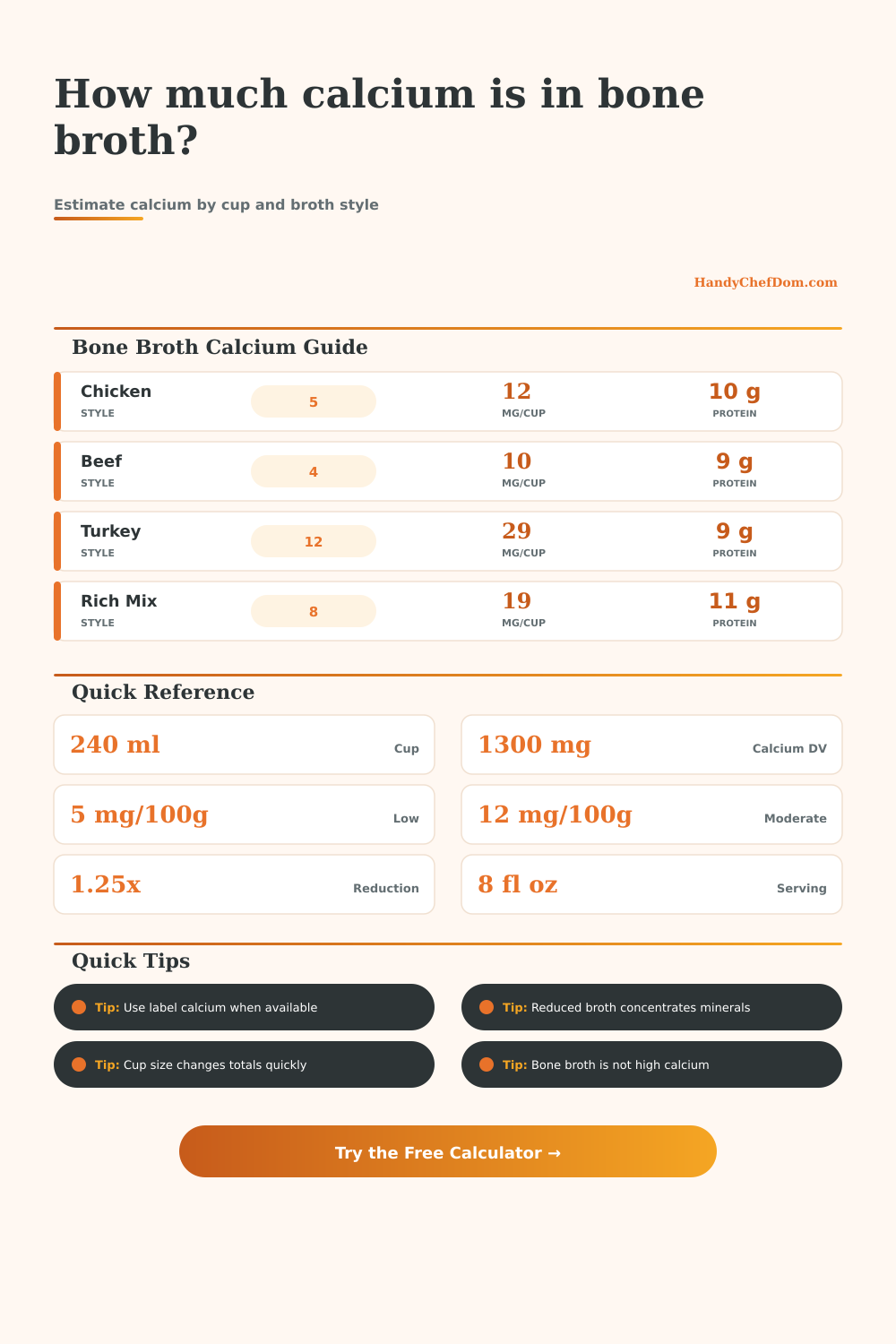
| Broth Style | Calcium Basis | mg Per Cup | Use Case |
|---|---|---|---|
| Chicken Bone Broth | 5 mg per 100 g | 12 | Standard carton or homemade cup |
| Beef Bone Broth | 4 mg per 100 g | 10 | Beef sipping broth with modest minerals |
| Turkey Bone Broth | 12 mg per 100 g | 29 | Higher label-style calcium example |
| Mixed Bone Broth | 8 mg per 100 g | 19 | Mixed poultry and beef bones |
| Fish Bone Broth | 10 mg per 100 g | 24 | Small fish-bone style estimate |
| Low Sodium Carton | 3 mg per 100 g | 7 | Light carton broth comparison |
| Target | Calcium | 1 Cup at 12 mg | 1 Cup at 30 mg |
|---|---|---|---|
| FDA Daily Value | 1300 mg | 0.9% | 2.3% |
| Adult RDA | 1000 mg | 1.2% | 3.0% |
| Older Adult RDA | 1200 mg | 1.0% | 2.5% |
| Meal Target | 500 mg | 2.4% | 6.0% |
| Serving | fl oz | mL | Cups |
|---|---|---|---|
| Small mug | 6 | 177 | 0.75 |
| Standard cup | 8 | 237 | 1.00 |
| Large mug | 12 | 355 | 1.50 |
| Thermos | 16 | 473 | 2.00 |
| Quart batch | 32 | 946 | 4.00 |
| Scenario | Broth Style | Serving | Ca/Serving | Weekly Use | Weekly Ca |
|---|---|---|---|---|---|
| Morning Mug | Chicken | 8 fl oz | 12 mg | 5 cups | 60 mg |
| Large Sipper | Beef | 12 fl oz | 15 mg | 4 mugs | 60 mg |
| Turkey Thermos | Turkey | 16 fl oz | 58 mg | 3 thermos | 174 mg |
| Reduced Batch | Chicken | 8 fl oz | 18 mg | 7 cups | 126 mg |
| Mixed Bones | Mixed | 10 fl oz | 24 mg | 5 cups | 120 mg |
| Fish Broth | Fish | 6 fl oz | 18 mg | 4 cups | 72 mg |
| Label 30 mg | Custom | 8 fl oz | 30 mg | 5 cups | 150 mg |
| Diluted Cup | Concentrate | 8 fl oz | 10 mg | 6 cups | 60 mg |
We think of bone broth as a superfood, a drink that strengthens our bones in each cupful. Here’s what you need to know: That’s partly true. While bone broth does offer gelatin, collagen, and other types of amino acids, it isn’t a particularly high-calcium food (dairy and leafy greens is). Most broths made at home have just moderate levels of the mineral. If you’re hoping to get your daily dose from bone broth, you’ll have to do some math; this calculator fills the gap between nutrition science and cooking culture.
But there’s another variable: which kind of bones are in the pot? Turkey frames will yield more calcium per ounce than poultry bones (which has different structure and density), and fish bones contains even more calcium. A typical cup of chicken broth contain about 12 milligrams of calcium; a turkey variety contains almost three times that. That doesn’t seem like much when you see it written down, but add up all those serving if you’re drinking a lot during the day. By letting you choose which kind of broth you used, the tool takes all this into account. So it estimates how much is in your bowl… Not some industry average.
Why Bone Broth Is Not Just Calcium
And finally: Broth doesn’t just get saltier and richer with a longer simmer; it gets more concentrated in general. That’s why most home cooks don’t know that volume matter as well. Simmering a pint of broth until it’s a cup will concentrate all its nutrients. This includes not only sodium, but also minerals such as calcium. As a result, it will have far more calcium per serving when you’re done. Lots of us think richer = more mineral-rich, but there’s no substitute for knowing what ratio something was reduced at. To help you figure that out, the calculator includes a reduction factor (how much did you reduce it by?) in calculation. That way you’ll know if it’s worth the extra work to let it simmer longer for your nutrition goals. You’ll also know just how much more calcium your reduced broth has compared than regular strength.
Broths in boxes are also tricky because their labels round small amounts down to zero. The box says it has no calcium, for example, but maybe it does have some, but so little it doesn’t matter compared with the daily value. That’s just because the amount fall below reporting thresholds. So if you’re working with an off-the-shelf broth, switch the calculator to label-mode to enter the exact number from the nutrition facts panel (that will override the generic figures). You’ll get your answer exactly as it appears on the can or carton, which will help you avoid assuming different broths are the same just because they look alike.
The average adult requires approximately 1,000-1,300 mg/day of calcium. Drinking a big bowlful of high-calcium turkey broth each day will perhaps meet a small percentage of this need. The reason isn’t that the broth is flawed, but because that’s just how our bodies work: bone broth can complement your diet, but should never be considered an all-in-one fix for calcium deficiency. If you expect to meet your needs with broth alone, you’re setting yourself up for disappointment. Consider bone broth as part of a bigger picture, one including fortified foods, greens, and (in most cases) dairy.
Depending on our particular state of health (and other foods consumed with the meal), some estimate that no more than twenty to thirty percent of the available calcium in some broths are absorbed. (The tool acknowledges this fact of biology by offering an absorption slider.) And it nudges us that “available” isn’t the same thing as “present.” So even if you get fifty milligrams in, perhaps your body will use just fifteen. This makes all the difference when considering the long-term health of bones.
Yes, drinking bone broth will add nutrition and flavor to your diet. It’s comforting, rich in protein, and contains some minerals too. But don’t count on it to do all of the work when it comes to skeletal health. The numbers here will help you set reasonable expectations. Enjoy it for its taste and its benefits to gut health… Not as a substitute for taking calcium supplements.
Bone broth makes math easy so you could of eat and drink broth with confidence that you’re getting the nutrients you need; and no more.