🥜 Protein in Almonds Calculator
Estimate almond protein from whole almonds, sliced almonds, almond flour, almond meal, or almond butter using ounces, grams, cups, servings, and protein targets.
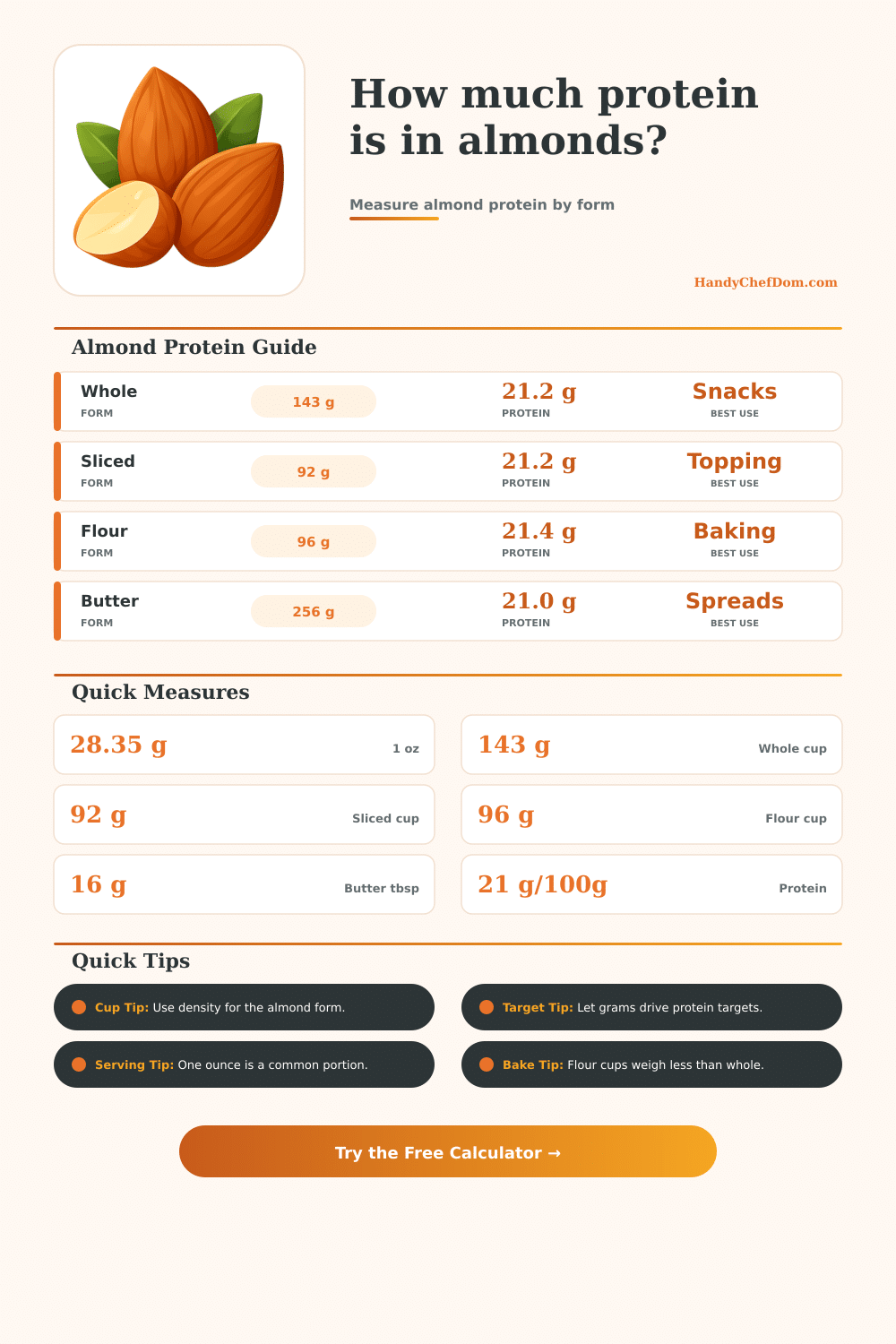
Pick the almond form first because cup weight changes a lot: whole almonds are much denser in a cup than sliced almonds, while almond butter is denser again.
| Almond form | Protein per 28 g | Calories per 28 g | Typical kitchen use |
|---|---|---|---|
| Whole almonds | 6.0 g | 164 kcal | Snack bowls, trail mix, packed portions |
| Sliced almonds | 5.9 g | 163 kcal | Oatmeal, yogurt, salads, green beans |
| Slivered almonds | 6.0 g | 164 kcal | Rice dishes, pilaf, desserts, toppings |
| Almond flour | 6.0 g | 160 kcal | Muffins, pancakes, gluten-free baking |
| Almond meal | 5.9 g | 163 kcal | Rustic cakes, coatings, crumb toppings |
| Almond butter | 5.9 g | 172 kcal | Toast, smoothies, dips, apple slices |
| Kitchen measure | Whole almonds | Sliced almonds | Almond flour |
|---|---|---|---|
| 1 cup | 143 g / 5.0 oz | 92 g / 3.2 oz | 96 g / 3.4 oz |
| 1/2 cup | 72 g / 2.5 oz | 46 g / 1.6 oz | 48 g / 1.7 oz |
| 1/4 cup | 36 g / 1.3 oz | 23 g / 0.8 oz | 24 g / 0.8 oz |
| 1 tablespoon | 9 g / 0.3 oz | 6 g / 0.2 oz | 6 g / 0.2 oz |
| 1 ounce | 0.20 cup | 0.31 cup | 0.30 cup |
| Common serving | 28 g | 14-28 g | 14-30 g |
| Protein target | Whole almonds | Sliced almonds | Almond butter |
|---|---|---|---|
| 5 g protein | 24 g / 0.8 oz | 0.26 cup | 1.5 tbsp |
| 8 g protein | 38 g / 1.3 oz | 0.41 cup | 2.4 tbsp |
| 10 g protein | 47 g / 1.7 oz | 0.51 cup | 3.0 tbsp |
| 12 g protein | 57 g / 2.0 oz | 0.62 cup | 3.6 tbsp |
| 15 g protein | 71 g / 2.5 oz | 0.77 cup | 4.5 tbsp |
| 20 g protein | 95 g / 3.3 oz | 1.03 cups | 6.0 tbsp |
| Meal use | Common almond amount | Estimated protein | Portion note |
|---|---|---|---|
| Oatmeal topper | 2 tbsp sliced | 2.4 g | Light crunch without a heavy portion |
| Yogurt bowl | 1/4 cup sliced | 4.9 g | Good balance for breakfast bowls |
| Snack pack | 1 oz whole | 6.0 g | Classic single almond portion |
| Smoothie | 2 tbsp butter | 6.7 g | Blends protein and fat smoothly |
| Almond flour bake | 1/4 cup flour | 5.1 g | Per portion depends on batch yield |
| Family topping bar | 1 cup sliced | 19.5 g | Divide by bowls or dessert plates |
Almonds are an convenient source of protein for those looking to add protein to there diet. Almonds contains a steady amount of protein, regardless of the form of the almonds that you eat. Whether you consume whole almonds, sliced almonds, or almond butter, almonds contains a relatively consistent amount of protein.
However, the weights of the almonds changes based on the shape of the almonds. This is why the calculator is an important measuring tool for individuals who consume almonds by volume rather than by weight. Individuals uses measuring cups to measure the amount of almonds that they would like to include in their meals.
How Much Protein Is in Different Forms of Almonds
However, a cup of whole almonds will weigh more than a cup of sliced almonds. As a result, the amount of protein that a person consume from a cup of whole almonds will be higher than the amount of protein that they consume from a cup of sliced almonds. The protein content of almonds remain the same per gram of almonds.
However, the total amount of protein that an individual consume changes based on the total volume of almonds that they consume. This rule apply to raw and roasted almonds as well since roasting almonds changes the water content of the almonds. Although roasting may increase the amount of calories in the almonds, the protein content of almonds does not change significant.
Additionally, the way that individuals use the almonds in a meal can change the amount of protein that an individual consume from almonds. For example, one tablespoon of almond butter may contain a different amount of protein than a tablespoon of almond flour. Many individuals makes the mistake of replacing one type of almond product for another without changing the amount of that product.
For instance, if a recipe call for almond flour, it is possible that individuals will use whole almonds in the same volume. The use of this type of substitution will drastically reduce the amount of protein that the individual consume from almonds. However, the almond calculator allow individuals to test these alterations before they begin to cook the meal.
The calculator allows individuals to avoid the mistake of thinking that all forms of almonds contains the same amount of protein when they are using measuring cups to measure those ingredient. Another factor that can impact the amount of protein that an individual consume from almonds is the portion of almonds that an individual consumes. A standard one ounce pack of almonds contain six grams of protein.
The amount of protein that an individual receive from a one ounce pack of almonds does not change whether the almonds are in their whole form or they have been chopped up. Many recipes, however, ask for larger portions of almonds then a one ounce pack. For instance, two tablespoons of almonds contains a different amount of protein than a quarter cup of almonds.
However, the protein calculator will allow an individual to understand the protein contribution of each of these choices when incorporating almonds into their meals. Finally, almonds can be compared to other nuts in terms of there protein content. Almonds contain more protein than walnuts or pecans but contain fewer protein than peanuts.
Almonds’ mild flavor allow them to be included in both sweet and savory recipes. Because almonds contains protein, fiber, and healthy fats, they are a convenient source of both protein and fats for individuals who incorporate almonds into their diet. These healthy fats will make an individual feel full after consume almonds.
The almond protein calculator can help an individual understand the protein content of almonds as compared to other nuts. The storage of almonds can impact the quality of the almonds. However, the storage of almonds do not impact the protein content of the almonds.
If stored proper, almonds will retain their protein content for several month. After this time frame, if the almonds begin to smell bad, the almonds may taste bad to the individual. However, the protein content of the almonds will still remain the same.
In order to preserve the flavor of the almonds, individuals can purchase small quantity of almonds and store them in airtight container. Although the calculator will not impact the calculations that are performed, the storage of almonds will impact the individual’s enjoyment of the almonds. The best way to use the almond protein calculator is to use it as a quick check when meal planning.
Most meals will have some room for error in the amount of almonds that an individual add to their meals. The protein content calculator can be used to assist an individual in understanding how the form of the almonds impact the total protein content. Once an individual understands how the form of the almonds can impact the total protein content, they can begin to plan their meal without second guessing the protein content of the almonds.