🥯 Bagel Calorie Calculator
Total calories, carbs, protein, and fat by bagel size, bagel type, halves eaten, cream cheese, toppings, and servings.
Choose the bagel label and size, set how many halves are eaten per serving, then add spreads and toppings for a macro total.
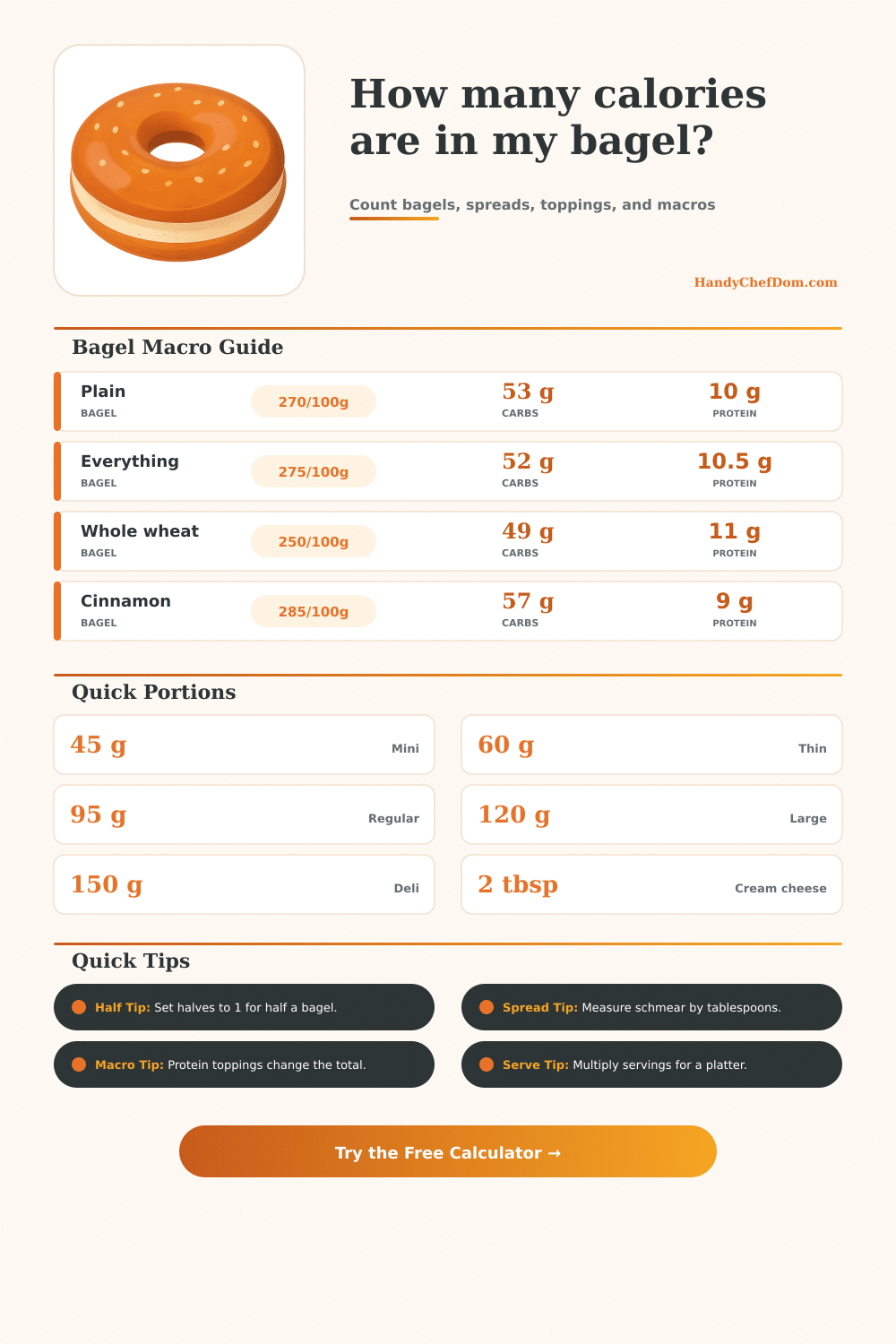
| Bagel Type | Calories / 100 g | Carbs | Protein | Fat |
|---|---|---|---|---|
| Plain | 270 | 53 g | 10 g | 1.5 g |
| Everything | 275 | 52 g | 10.5 g | 2.1 g |
| Sesame | 285 | 51 g | 10.3 g | 3.8 g |
| Cinnamon raisin | 285 | 57 g | 9 g | 1.6 g |
| Whole wheat | 250 | 49 g | 11 g | 2.2 g |
| Egg | 278 | 50 g | 11.5 g | 3.1 g |
| Pumpernickel | 255 | 50 g | 9.5 g | 1.2 g |
| Multigrain | 260 | 48 g | 11.2 g | 3.2 g |
| Size Label | Whole Bagel Weight | Half Weight | Plain Calories | Best Use |
|---|---|---|---|---|
| Mini | 45 g | 22.5 g | 122 | Snack |
| Thin | 60 g | 30 g | 162 | Light meal |
| Regular | 95 g | 47.5 g | 257 | Breakfast |
| Large | 120 g | 60 g | 324 | Brunch |
| Deli | 150 g | 75 g | 405 | Big sandwich |
| Scooped | 75 g | 37.5 g | 203 | Lunch |
| Flat bagel | 80 g | 40 g | 216 | Toast plate |
| Spread or Topping | Serving Unit | Calories | Protein | Fat |
|---|---|---|---|---|
| Plain cream cheese | 1 tbsp | 50 | 1 g | 5 g |
| Light cream cheese | 1 tbsp | 35 | 1.5 g | 3 g |
| Peanut butter | 1 tbsp | 94 | 3.6 g | 8 g |
| Smoked salmon | 1 oz | 33 | 5.2 g | 1.2 g |
| Egg | 1 large | 72 | 6.3 g | 4.8 g |
| Cheddar | 1 slice | 113 | 7 g | 9.3 g |
| Common Plate | Bagel Setup | Calories | Carbs | Protein |
|---|---|---|---|---|
| Plain breakfast | Regular plain | 257 | 50 g | 9.5 g |
| Classic schmear | Plain + 2 tbsp cream cheese | 357 | 52 g | 11.5 g |
| Lox bagel | Everything + cream cheese + salmon | 394 | 51 g | 17 g |
| Half with spread | Half plain + 1 tbsp cream cheese | 179 | 26.5 g | 6 g |
| Peanut butter bagel | Whole wheat + 2 tbsp PB | 426 | 52.4 g | 17.7 g |
| Mini with jam | Mini + 1 tbsp jam | 172 | 36.9 g | 4.5 g |
A bagel looks like a harmless decision. You pick one up at a corner store and maybe cut it in half, which is a responsible portion. You spread on some cream cheese or tomato slices and head out the door to start your day. This lasts until 11 AM, when you’re crashing or your tracker alert you to all those carbs.
Why? Because a single bagel isn’t the problem. It’s the combination of ingredients that makes it what it is. Add toppings and spreads, and what started as a single dense bun become a meal equal to a hearty sandwich. To know what you’ve consumed, you need to look beyond label. Weight and density add up. The calculator does that math for you. Estimates become exact. And you get to see exactly where your calories are going.
Why a Bagel Has More Calories Than You Think
The problem with thinking about bagel calories is that most of us think about calories from the bread and don’t factor in all the other stuff we add. Most regular-sized plain bagels weighs about 95 grams, which is about two hundred sixty calories. Not bad for some fuel, though things get dicey if your local bagel shop sell jumbo varieties. Deli style bagels can weigh one hundred fifty grams or more, doubling our starting caloric intake without any additional topping!
With the tool, you can pick your bagel size, regular, large, minis, or even scooped. Then, let the tool calculate the new overall weight based off your choice. Going for a scoop decreases the starchy middle section but retains the crust, decreasing carbs while maintaining texture. It is a small tweak but it shows up as an actual change to the grand total.
Then there are the spreads, which typically contain the largest surprise. Fat- and calorie-dense cream cheese is heavy on both. Just two tablespoons of regular cream cheese add another hundred calories to your morning, this turns a modest two-hundred-fifty-calorie breakfast into a three-hundred-and-fifty-calorie meal very quickly. Lighter options like hummus and light cream cheese allow you to cut down on points while maintaining flavor. You enter the number of tablespoons of spread you’ve used (plus any additions, bacon, egg, smoked salmon). Every tweak alter the macronutrient makeup significantly. It may not feel like much to add that slice of cheddar, but it bumps up saturated fat and increase protein… Which affects how your body digests this meal.
People who grab a bagel think they’re all the same when it comes to nutrition. Plain, whole wheat varieties contains fewer calories per 100g because of the fiber, but they still have plenty of dense carbohydrates. Cinnamon raisin tends to get dinged for more calories overall and sugar (sweetener additions). But as you’ll see from the comparison table on the page, each variety has unique fat/protein/carb breakdowns. And it’s not just calories-in, calories-out. If you top your bagel with some lox or an egg, it’s going to hold you longer, with more protein, and help maintain your blood sugar better than a plain bagel topped with sugary jam.
So how do you use these tools? Well, you have to be honest: How much did you really eat? A half bagel? A quarter bagel? Three quarters? That last one’s important. This tool will enter it into the system for you. It’ll multiply/divide and spit out an exact breakdown of the macros for whatever you ate.
Then, based on this information, you can make smarter decisions the rest of the day. For instance, if you load up on carbs at breakfast, you might want to keep lunches light. This changes things from “I shouldn’t eat X” to “I should save room for Y”. And yes, you still shouldn’t eat bagels (but you should acknowledge their volume, and plan accordingly).
So that brings us back to the final point: it’s not about being perfect, it’s all about awareness. Knowing how fast large portions and cream cheese add up helps you start making better decisions naturaly. Suddenly, you choose the lighter spread or a slimmer crust and feel good about it. It sounds similar to filling up the gas tank before a road trip. You’d like to know exactly how much gas is in there in case you need some extra kick on the open road.
Whatever reason you have for knowing these numbers, whether you’re training for something, trying to lose weight or simply curious about your diet; having those numbers in front of you takes the guesswork out of each morning choice. You should of known that before!