🌿 Water for Basil Calculator
Estimate water per session, weekly water, per-plant water, and when to check soil moisture for kitchen herb pots or garden basil.
Use the pot diameter for one basil container, or the average root-zone width for garden basil. The calculator adjusts for soil, sun, heat, humidity, mulch, drainage, growth stage, and your planned watering interval.
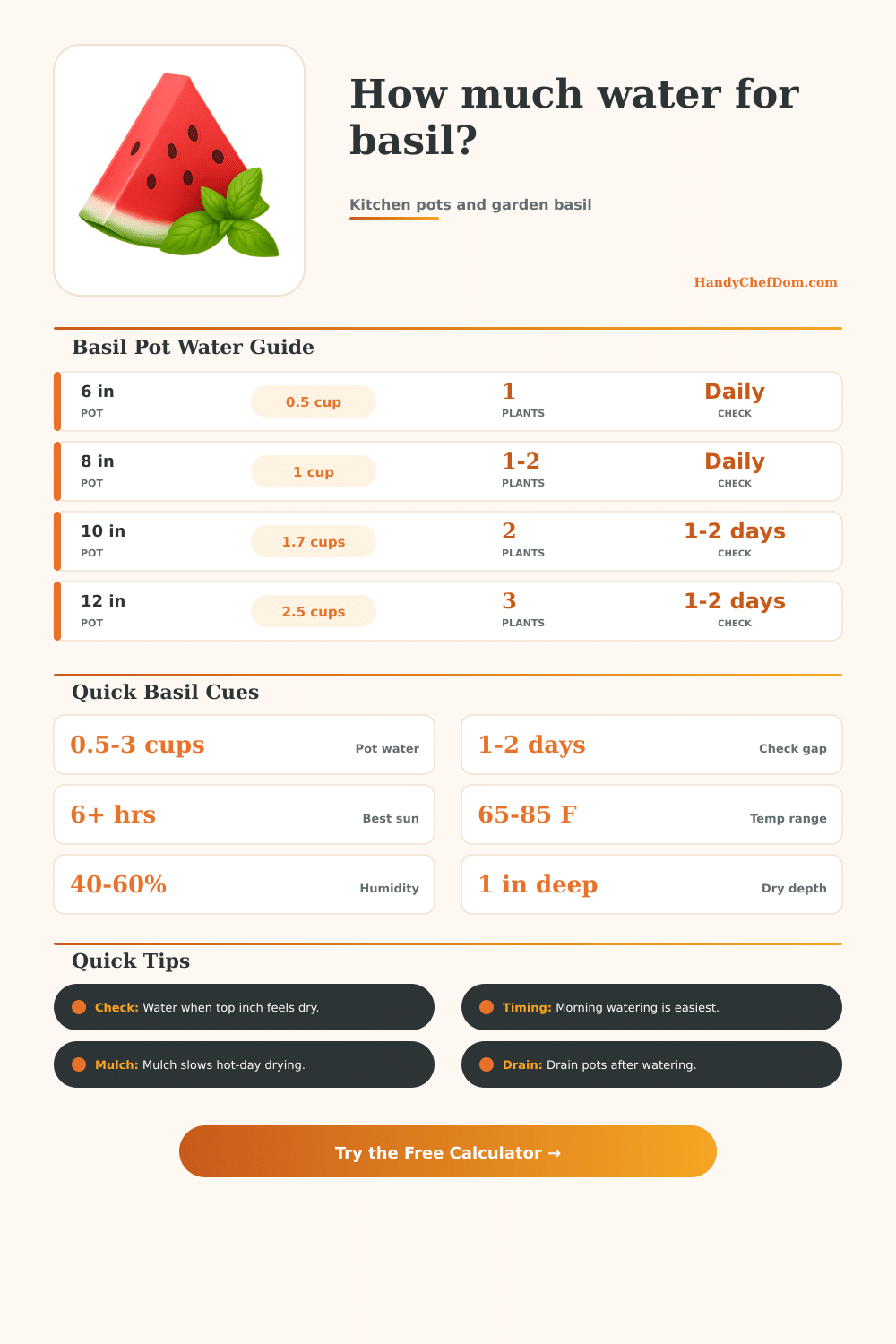
| Pot size | Typical plants | Mild day water | Check timing |
|---|---|---|---|
| 4 in pot | 1 seedling | 0.25 cup | 12-24 hr |
| 6 in pot | 1 plant | 0.5 cup | 24 hr |
| 8 in pot | 1-2 plants | 1 cup | 24-36 hr |
| 10 in pot | 2 plants | 1.7 cups | 36 hr |
| 12 in pot | 2-3 plants | 2.5 cups | 36-48 hr |
| 18 in tub | 4-6 plants | 5.5 cups | 24-36 hr |
| Weather cue | Water change | Check soil | Basil note |
|---|---|---|---|
| Cool, cloudy | Reduce 15% | Later | Slower drying |
| Bright indoor | Base level | Daily | Stable roots |
| 6-8 hr sun | Add 10% | Daily | Leafy growth |
| 85F plus | Add 18% | Morning | Heat demand |
| Windy patio | Add 20% | Twice daily | Fast drying |
| Humid shade | Reduce 12% | 1-2 days | Avoid soggy |
| Soil or pot | Drainage | Water shift | Best cue |
|---|---|---|---|
| Potting mix | Balanced | Base | Top inch |
| Sandy mix | Fast | Add 15% | Dry edges |
| Compost bed | Moist | Cut 8% | Dark surface |
| Clay soil | Slow | Cut 18% | Sticky soil |
| Terracotta | Very fast | Add 18% | Light pot |
| Self-water | Reservoir | Cut 15% | Gauge level |
| Herb | Moisture need | Dry cue | Water style |
|---|---|---|---|
| Basil | Even moist | Top inch dry | Deep drink |
| Parsley | Even moist | Slight dry | Steady |
| Cilantro | Cool moist | Surface dry | Frequent |
| Mint | Moist | Wilting tips | Generous |
| Rosemary | Drier | Half dry | Light |
| Thyme | Drier | Mostly dry | Sparse |
Basil require a specific amount of moisture for its health. Too much moisture or not enough moisture for the basil is detrimental to the plant’s health. Because of the way basil requires moisture, it can be dificult for people to determine when to water their basil plant.
There are several factors that play into the moisture levels of the soil for basil plants. One factor that influence the moisture levels is the size of the pot in which the basil is growing. If the pot is large, it can hold more soil and more of the basil plant’s root system.
How to Tell When Basil Needs Water
Therefore, it will retain more moisture than a smaller pot. Another factor that plays into the moisture levels of the soil is the type of soil used for the basil plant. If the soil are sandy, it will allow the water to drain out of the soil very quick.
Therefore, sandy soil would require more frequent watering. If the soil contains compost, it will hold the moisture for a longer period of time, so soil that contains compost would require less frequent watering. One more factor that plays into the moisture levels is the location where the basil is growing.
Basil plants that are growing indoors will lose water to the air at a slower rate than basil plants that are growing outdoors. This is due to the fact that the wind and sunlight expose basil plants that is outdoors, which both contributes to the evaporation of the basil plant’s moisture. One more factor that plays into the amount of water that a basil plant requires is its growth stage.
Basil plants that are growing as seedlings have a small amount of the root system required to absorb water from the soil. Thus, seedlings requires less water than mature basil plants that have larger leafy stems. The sunlight and heat that falls on the basil plant contribute to the transpiration of the basil plant’s leaves, which causes it to lose water at a faster rate.
High level of humidity in the environment will counteract the effects of sunlight and heat by reducing the rate at which the basil plant’s leaves lose moisture to the air. With high humidity in the air, the soil will remain wet for longer periods of time, thus requiring basil plants to be watered less often. The calculator allow people to account for these different variables in order to determine when to water their basil plants.
The user can enter variables for the size of the pot in which the basil plant is growing, the type of soil in which the basil plant is growing, and the number of sunlight hours that the basil plant recieve each day. Based on these variables, the calculator can determine a mathematical result for the user that represents the length of time that it will take for the soil in which the basil plant is growing to dry out. In addition to suggesting a length of time for the user to determine when to check the moisture in the soil, the calculator also suggest that the user check the top inch of the soil prior to watering the basil plant.
Checking the moisture in the soil prior to watering will help the user to avoid either under or over watering the basil plant. Under and over watering basil plants will result in droopy basil plant leaf. Thus, checking the soil is a necessary step in the care of the basil plant to ensure that the basil receives the correct amount of water.
The materials that people use for the pot or the surface of the soil can also impact the moisture content of the soil of the basil plant. Terracotta pots allow for water to evaporate from the soil faster than other type of pots. Additionally, adding a layer of mulch to the soil will slow the evaporation of water from the soil, allowing the basil plant’s roots to remain moist for longer periods of time.
Self-watering pots will change the way in which the basil plant receives water from the soil to the plant’s roots. Rainfall is one more environmental factor that can impact basil plants that are growing outdoors. If it rains, then people dont have to manually water their basil plants.
The amount of rainfall that the area receive can be entered into the calculator to determine how often the user will need to water the basil plants. The calculator allow people to enter the variables of the specific basil plant and its environment to create a watering schedule for that basil plant. Furthermore, the watering schedule that the calculator creates takes into account the specific conditions of that plant.
Thus, if a person understands each of these variables and there effect on the basil plant, that person will understand why the needs of the plant to receive water change throughout the year.