🌶 Cayenne Pepper in Chili Calculator
Estimate a balanced cayenne amount for chili by pot size, tomato base, chili powder, simmer time, servings, tolerance, sweetness, and dairy garnish.
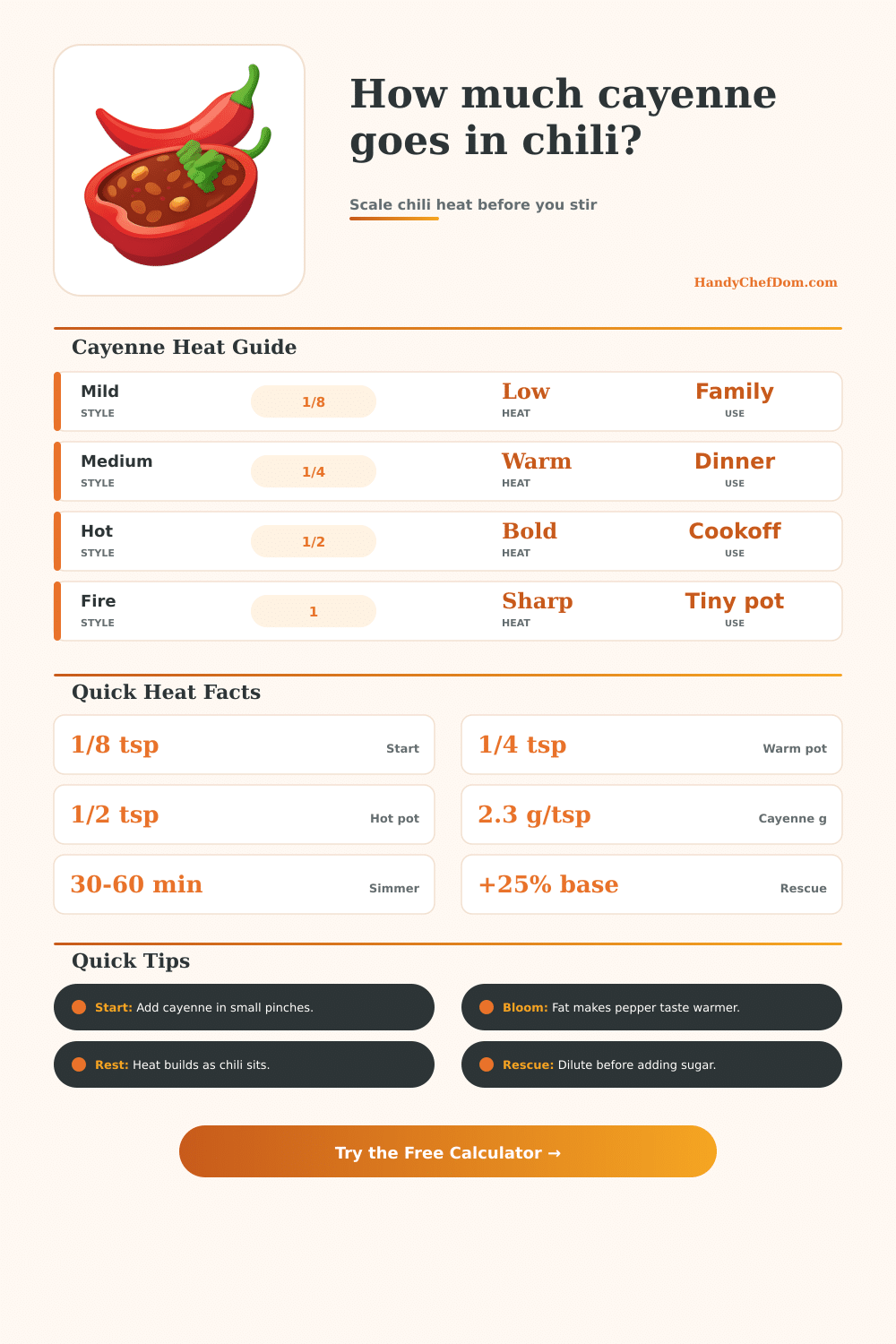
Cayenne is potent. A good starting point is about 1/8 to 1/4 teaspoon for a normal pot, then scale by volume, tolerance, and how much chili powder is already in the recipe.
| Cayenne Type | Typical SHU | 1 tsp Weight | Use in Chili |
|---|---|---|---|
| Mild cayenne blend | 20,000 to 30,000 | 2.2 g | Family pots and gentle warmth |
| Standard ground cayenne | 30,000 to 50,000 | 2.3 g | Most beef, bean, and turkey chili |
| Hot cayenne powder | 50,000 to 70,000 | 2.3 g | Bold pots where heat should lead |
| Extra hot cayenne | 70,000 to 90,000 | 2.4 g | Cookoff chili or tiny additions |
| Crushed cayenne flakes | 25,000 to 45,000 | 1.8 g | Slower blooming, visible pepper bits |
| Fresh cayenne pepper | 30,000 to 50,000 | 5 g each | Brighter heat with fresh pepper flavor |
| Batch Size | Mild Cayenne | Medium Cayenne | Hot Cayenne |
|---|---|---|---|
| 2 quart small pot | 1/16 tsp | 1/8 tsp | 1/4 tsp |
| 4 quart family pot | 1/8 tsp | 1/4 tsp | 1/2 tsp |
| 6 quart Dutch oven | 3/16 tsp | 3/8 tsp | 3/4 tsp |
| 8 quart party pot | 1/4 tsp | 1/2 tsp | 1 tsp |
| 12 quart crowd pot | 3/8 tsp | 3/4 tsp | 1 1/2 tsp |
| 16 quart event pot | 1/2 tsp | 1 tsp | 2 tsp |
| Serving Style | Chili Per Person | Heat Target | Planning Note |
|---|---|---|---|
| Tasting cup | 1/2 cup | Lower heat | Works for samplers or flights |
| Side bowl | 1 cup | Gentle heat | Good with cornbread or toppings |
| Dinner bowl | 1 1/2 cups | Medium heat | Most weeknight chili servings |
| Hearty bowl | 2 cups | Rounded heat | Best for cold-weather meals |
| Chili bar | 1 to 1 1/4 cups | Mild base | Let guests add hot sauce later |
| Cookoff sample | 1/4 cup | Bold but clean | Heat must register quickly |
| If Chili Tastes | Add This | Starting Amount | Why It Helps |
|---|---|---|---|
| Sharp and dry | Tomato sauce | 1/2 cup per quart | Acid and liquid spread heat |
| Too hot | Beans or meat | 25% more base | Dilution is the cleanest rescue |
| Harsh pepper bite | Brown sugar | 1 tsp per quart | Sweetness rounds chili edges |
| Flat but hot | Salt and tomato | Pinch plus 1/4 cup | Balance makes heat taste fuller |
| Lingering burn | Sour cream | 1 tbsp per bowl | Dairy softens capsaicin heat |
| Powdery finish | Longer simmer | 15 to 20 minutes | Spices bloom into the broth |
Adding cayenne pepper alters the flavor of your chili, making it stay on the taste buds. Depending upon when you add it and how much you use, your chili will either warm you up or make you wish for a fire hose full of cold water. This is one kitchen lesson most home cooks only find out the hard way: they add too much all at once and cannot fix it.
Once you’ve told the calculator how much protein you’re simmering, how much tomato is in the pot, how big your batch will be, and how long you plan to simmer, it crunches some numbers behind the scenes for you. Why? Cayenne varies based off the rest of the pot’s contents. Brothier chili has less heat then thick, meaty versions; the pepper also increase its intensity with longer cook times. It’ll even take into account whether you already added sweetness or plan to top things off with something that changes how much heat you feel.
How to Use Cayenne Pepper in Chili
Don’t think of cayenne as a substitute for chili powder. The two aren’t even on the same time frame: Chili powder tends to be mixed with other ingredients and gets lost in the mix, whereas cayenne remains direct and sharp. So, the calculator credits your chili powder use towards the overall total cayenne. Because if you are starting from a mild blend (a couple tablespoons or so), you will need fewer actual tablespoons of cayenne for an equivalent amount of heat.
Most recipes acknowledge that everyone has their own spice tolerance but few adjusts for it as much as they should of. A quarter teaspoon may be just right for one family and overpowering for another. To make the recommendation match those consuming it, we created a tolerance knob on the calculator. This shifts the target heat range up or down based on your preference.
You can also use this if you intend to add dairy products like cheese or sour cream. Dairy mellows the capsaicin and allows you to add a little more cayenne without burning yourself out.
How many rescue moves is there? There are more than you might think. Which one matters most if a pot’s flavor is over-the-top sharp? Diluting it (not with acid or sugar) is typically the cleanest solution. If you have another can of tomatoes or half-pound of beans on hand, they will spread out the heat in a bigger batch. How much milder base do you think you’ll want? The calculator tells you whether you should tweak your recipe ahead of time, or at the end, just as you’re about to start simmering.
Tasting at the right time is really where the art comes in. For instance, a little bit of cayenne added in the first half-hour tastes brighter than the same amount stirred in closer to the finish. However, waiting until the final ten minutes or so keeps the heat more contained. That is what you want when you are serving a mixed crowd.
Either way, chili will continue to develop flavor as it cools, and what tastes balanced straight off the stove may taste hotter once rested. Better to err on the side of small first additions, be patient with your taste, and take only one measured rescue step than to try to correct one big mistake. Without a calculator, these become trial-and-error steps.