🍑 Cornstarch To Thicken Peach Cobbler Calculator
Estimate cornstarch tablespoons and grams for peach cobbler filling from peach cups or pounds, juice level, syrup, sugar, pan size, topping thickness, bake style, and set target.
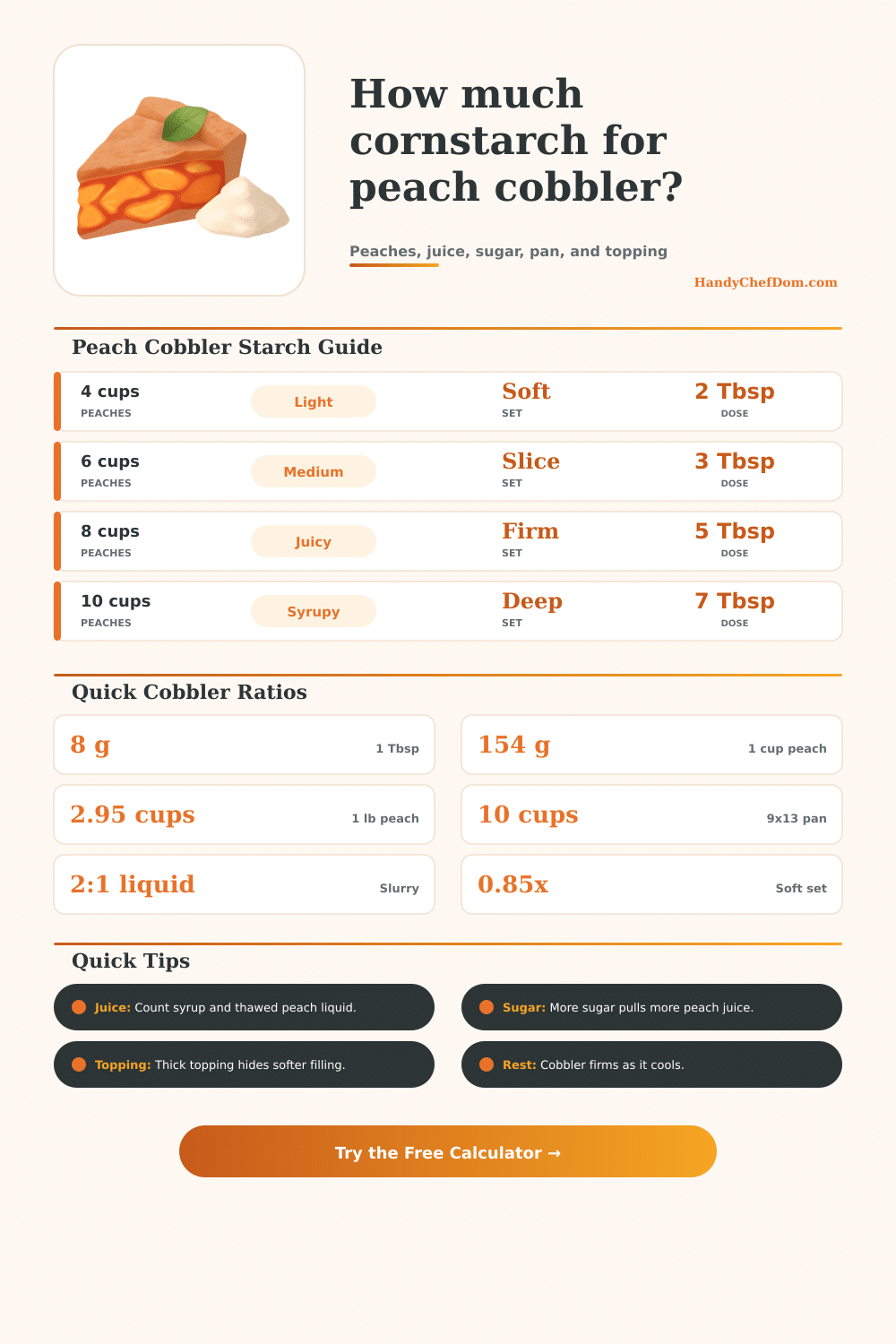
Start with your prepared peaches, then include syrup, thawed liquid, and added sugar. The calculator converts peaches between cups, pounds, and grams, then adjusts the cornstarch dose for pan depth, topping thickness, bake style, and the set you want when scooping.
| Peach Style | Cup Weight | Base Cornstarch | Juice Behavior |
|---|---|---|---|
| Fresh sliced peaches | 154 g per cup | 0.42 Tbsp per cup | Balanced juice with good pieces |
| Very ripe peaches | 158 g per cup | 0.50 Tbsp per cup | Softer fruit and more free juice |
| Frozen thawed peaches | 160 g per cup | 0.56 Tbsp per cup | Thawed liquid raises the starch load |
| Canned peaches, drained | 170 g per cup | 0.44 Tbsp per cup | Stable pieces, lower liquid after draining |
| Canned peaches with syrup | 176 g per cup | 0.60 Tbsp per cup | Syrup acts like added liquid and sugar |
| Peach berry blend | 150 g per cup | 0.68 Tbsp per cup | Berries add color, acidity, and juice |
| Pan Size | Filling Capacity | Typical Peach Range | Calculator Use |
|---|---|---|---|
| 8x8 inch pan | 5 cups filling | 4 to 5 cups peaches | Small family cobbler with moderate depth |
| 9x9 inch pan | 6.5 cups filling | 5.5 to 7 cups peaches | Baseline pan for the calculator defaults |
| Deep 9 inch round | 7.5 cups filling | 6.5 to 8 cups peaches | Needs a little more hold because filling is deeper |
| 2 quart oval dish | 8 cups filling | 7 to 8.5 cups peaches | Good for high fruit cobblers with biscuit topping |
| 9x13 inch pan | 10 cups filling | 8.5 to 11 cups peaches | Common potluck size with wider evaporation |
| Dutch oven | 11 cups filling | 9 to 12 cups peaches | Covered bake keeps more liquid in the filling |
| Set Target | Multiplier | Texture Aim | Best For |
|---|---|---|---|
| Saucy spoonable | 0.78x | Loose glossy peaches | Warm bowls and cream-topped servings |
| Soft thickened scoop | 1.00x | Classic cobbler spoonful | Everyday peach cobbler with some sauce |
| Sliceable square | 1.20x | Cleaner pan portions | Rested cobbler cut into squares |
| Firm potluck set | 1.38x | Strongest hold | Travel pans, deep dishes, and syrupy fruit |
| Cornstarch Amount | Approx Weight | Teaspoons | Cold Slurry Liquid |
|---|---|---|---|
| 1 Tbsp | 8 g | 3 tsp | 2 Tbsp cold liquid |
| 2 Tbsp | 16 g | 6 tsp | 4 Tbsp cold liquid |
| 3 Tbsp | 24 g | 9 tsp | 6 Tbsp cold liquid |
| 4 Tbsp | 32 g | 12 tsp | 8 Tbsp cold liquid |
| 6 Tbsp | 48 g | 18 tsp | 12 Tbsp cold liquid |
| 8 Tbsp | 64 g | 24 tsp | 1 cup cold liquid |
There’s no one-rule-fits-all for getting starch just so in, say, peach cobbler. What matters is knowing what happens with the peaches when they’re cooking. As fresh fruit warms, it give off juice. If you add sugar, that extracts further liquid from the fruit. Which brings us to your choice of topping: Does it contain steam-trapping ingredients (like biscuit) or does it let steam escape? Those factors affects the amount of cornstarch required.
This is why a dedicated calculator is useful. This tool (above) figures out the math for you. You enter what kind of fruit you’re using (in this case: peaches), how much of it, and how much liquid that fruit contain. You specify how thick you’ll make your topping; whether you’ll use a big pan or small one; how thick it will be; and what kind of texture you desire at the end. The tool can translates from weight to volume, and volume to weight, in pounds and grams, and cups. No need to memorize conversion factors.
How to Use the Peach Cobbler Calculator
And yes, even how deep the filling rests on your pan makes a difference to the recipe. What happens during baking… Whether any moisture seeps out or remains trapped, is determined by type of bake style used. What it calculates isn’t just a number of tablespoons; it predicts the behavior of your filling as you slice it up into squares, or scoop it onto plates.
Why does juice matter? It is part of the thickening load. Less is required for light-juiced peaches than super-ripe ones; macerated fruit produce more juice and requires more starch. What about sugar? It has two jobs: one is to make dessert sweeter, and the other is to draw additional water out off cell walls. The more sugar added, the higher the dose go on the calculator.
Why does that matter? Pan size does something similar. Thinner-spread fruit, such as in a shallow 9×13 pan, gives more surface area for evaporation. Fruit cooked in a deeper dish, like a Dutch oven or a deep round pan, hold more moisture in its filling and therefore requires a slightly heavier set.
Thickness of topping: Who knew? It makes a difference. Steam gets trapped if the crust is thick, which softens the inside. So the calculator multiplies this factor slighty. With an open crumble, the steam escapes, reducing the need for starch. Similarly, the baking style matters. High heat for a brief period expel water faster than baking covered in a Dutch oven. Two recipes using same fruit will make opposite suggestions.
On the page, there are some baseline numbers for various pan sizes and types of peaches. But where it really pays off is when you combine your baselines with what’s actualy going to be in it. No need to run multiple batches to see how a sliceable square compares to a soft scoop.
And what goes into the filling? Cooling time is an input variable here too. As the cobbler cools down, the cornstarch firm up. Twenty minutes’ rest can make the difference between a saucy filling and one that will hold its shape.
Here’s the take-away: Take measurements of your prepped peaches, and think about where all the visible liquids is coming from. Determine what your serving plans are for the dessert. Plug these into the calculator. You should of used it sooner. It’ll spit out a base dose based off most variables. Taste it, and tweak the next batch accordingly. Your first hit will feel much closer to the texture you want.