🦀 Crab Protein Calculator
Estimate crab protein, calories, fat, sodium, edible yield, cups, and servings from lump meat, claw meat, leg meat, or shell-on crab.
Choose whether your starting amount is picked crab meat, packed cups, shell-on crab, or a servings target. The calculator converts everything to edible cooked crab meat before estimating nutrition.
| Crab Type | Calories / 3 oz | Protein / 3 oz | Fat / 3 oz | Sodium / 3 oz |
|---|---|---|---|---|
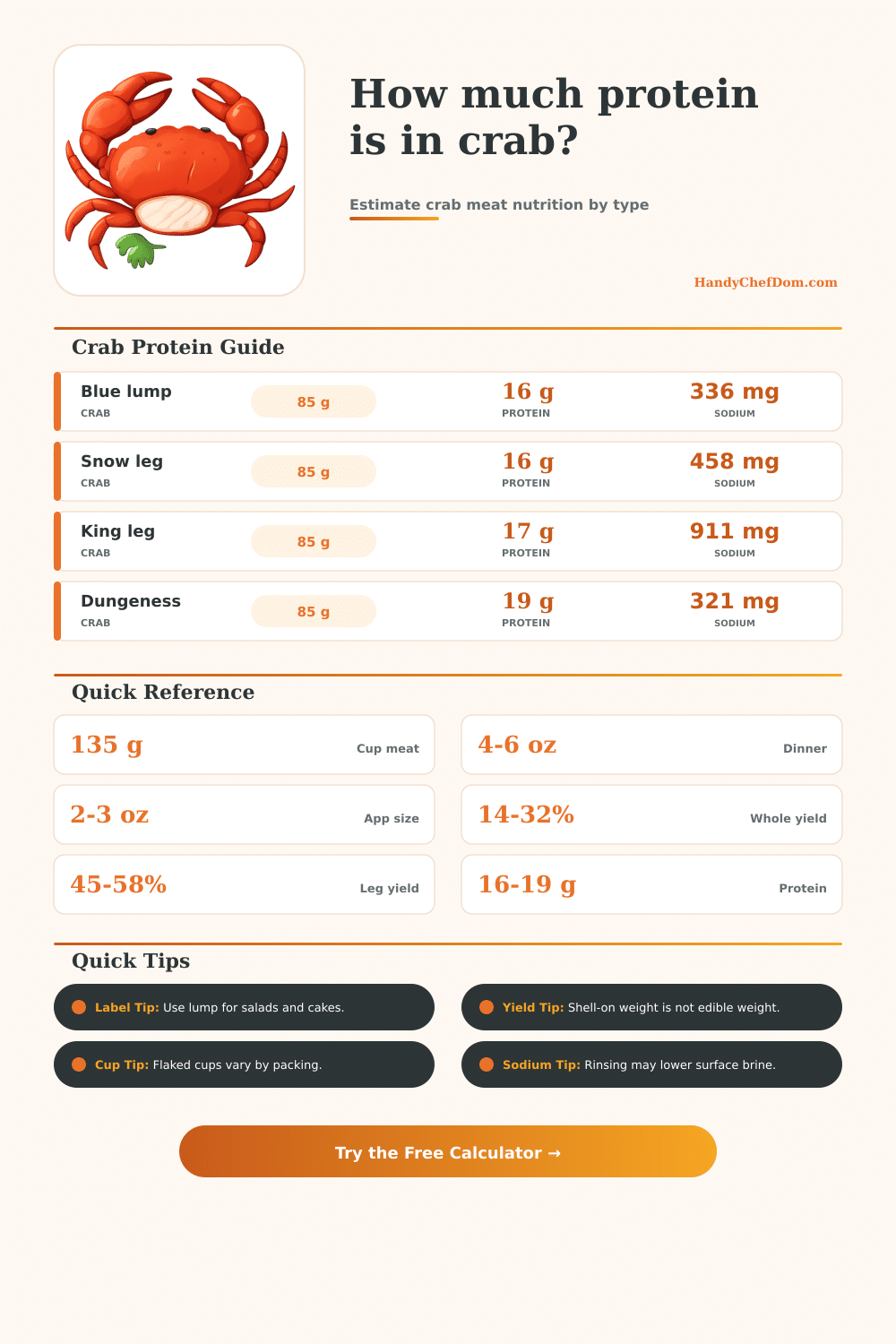
| Blue crab jumbo lump | 74 | 15.8 g | 0.9 g | 336 mg |
| Blue crab backfin | 74 | 15.8 g | 0.9 g | 336 mg |
| Blue crab claw meat | 77 | 15.3 g | 1.2 g | 360 mg |
| Snow crab leg meat | 77 | 15.7 g | 1.0 g | 458 mg |
| King crab leg meat | 82 | 16.5 g | 1.3 g | 911 mg |
| Dungeness crab meat | 94 | 18.9 g | 1.0 g | 321 mg |
| Stone crab claws | 71 | 15.3 g | 0.7 g | 255 mg |
| Jonah crab meat | 82 | 17.0 g | 1.1 g | 330 mg |
| Pasteurized crab meat | 84 | 16.2 g | 1.3 g | 560 mg |
| Crab Format | Edible Yield | Cup Conversion | Best Calculator Mode |
|---|---|---|---|
| Whole blue crab | 12-16% | 1 cup = 135 g | Shell-on weight |
| Blue crab picked meat | 100% | 1 cup = 135 g | Weight or cups |
| Snow crab clusters | 26-32% | 1 cup = 125 g | Shell-on weight |
| King crab legs | 52-58% | 1 cup = 125 g | Shell-on weight |
| Dungeness whole crab | 23-28% | 1 cup = 132 g | Shell-on weight |
| Stone crab claws | 30-35% | 1 cup = 128 g | Shell-on weight |
| Jonah crab claws | 22-28% | 1 cup = 135 g | Shell-on weight |
| Pasteurized tub | 100% | 1 cup = 140 g | Weight or cups |
| Serving Use | Edible Crab Each | Protein Range | Planning Note |
|---|---|---|---|
| Appetizer bites | 2 oz | 10-13 g | Good for trays |
| Salad topping | 3 oz | 15-19 g | Use cups mode |
| Crab cakes | 3.5 oz | 18-22 g | Add buffer |
| Dinner portion | 4 oz | 20-25 g | Standard plate |
| Leg feast | 5 oz | 25-31 g | Use shell yield |
| High protein bowl | 6 oz | 31-38 g | Large serving |
| Group Size | Appetizer Crab | Dinner Crab | Leg Feast Crab |
|---|---|---|---|
| 2 people | 4 oz edible | 8 oz edible | 10 oz edible |
| 4 people | 8 oz edible | 1 lb edible | 1.25 lb edible |
| 6 people | 12 oz edible | 1.5 lb edible | 1.9 lb edible |
| 8 people | 1 lb edible | 2 lb edible | 2.5 lb edible |
| 12 people | 1.5 lb edible | 3 lb edible | 3.75 lb edible |
| 24 people | 3 lb edible | 6 lb edible | 7.5 lb edible |
When you purchase shell-on crab, a lot of what you’re paying for is water and calcium armor. Only edible meat within is nutritious, so why spend on entire creature? Unless you know how much to expect from your haul, many end up buying by the pound and throwing away a large part of their purchase. With this calculator, you’ll know whether the crab will have enough protein to make a meal or mostly scraps suitable as an appetizer.
The other key variable here is yield percentage. This reflects how much edible meat is contained in an average whole crab compared to its overall size. Whole blue crabs only yield about fourteen percent of their original weight, for example. (That’s right; it can take up to 86 percent of the original crab to get just one serving of meat.) Since king crab legs feature a larger shell-to-meat ratio due to their gigantic claws, they’re far more efficient, typically giving somewhere around fifty-two to fifty-eight percent. If you fail to account for this metric, you will greatly underestimate your nutrition intake. What was supposed to be a high-protein dish suddenly turns out to consist of mere grams of protein. When you choose the right crab type, the calculator accounts for this factor automatically. So if you’ve made a low-yield purchase, that means you’ll have to increase your raw weight to reach your protein goals.
How Much Meat Is in Your Crab?
Now knowing the quantity and quality of meat itself, you can determine its impact on your body. First, crab isn’t merely a low-calorie filler. It’s a rich source of high-quality protein, low in fat. On average, there is between 16 and 19 grams of protein in every typical three-ounce portion of most varieties. For such a small caloric investment, that’s a serious amount of muscle-building amino acids. Fat content is insignificant, typically no more than two grams per serving… And crab is therefore a great choice for dieters conscious of their fats but who don’t want to sacrifice fullness.
Protein content varies moderately depending on species: Dungeness tends to run a bit higher, whereas stone claw is towards the bottom end. The sodium content is a bit unpredictable. Crab is caught from the sea, which is salty water, and then it is cooked, though not all of its brine is cooked away. Also, various pasteurization methods adds more salt during preservation, which can result in more sodium in the pasteurized crab meat. If you’re strict about monitoring sodium, rinsing off the meat will remove some of the brine that might be sitting on the surface.
If you’re concerned about sodium, it might be due to blood pressure issues or just because you want to track your intake closely. In these cases, you’ll need to adjust the sodium amount per package or preparation method based off the calculator. This is important to note if you have hypertension or any other diet plan you follow. Knowing where the crab came from will ensure your daily totals aren’t thrown off with an unexpected bump up in sodium.
Another misstep: measuring crab meat by volume (which also can vary by how tightly or loosely it packs into a volume). For instance, a cup of backfin is not the same as a cup of lump. Because the lumps are larger, there will be much bigger spaces between pieces in a cup of lump meat. This means a cup of lump contains less actual meat than a cup of smaller, flakier pieces like backfin that pack together more tightly. That matters when calculating your protein and caloric intake. Always weigh the meat instead, but if you’re using a recipe that specifies cups, the conversion factor will help. Generaly, one cup of picked crab equals about one hundred thirty-five grams, though the exact number depends on the cut and species.
Remember: when planning a meal, consider not just the weight, but servings. Four ounces per person is generally considered a dinner portion of meat, whereas two would be more typical for an appetizer. Therefore, if I’m preparing for a party of six, I’ll need three pounds of clean crab meat, which are six servings of four ounces each. Then working backward from the yield tells me how many pounds of raw product to buy. Allow for some shrinkage due to cooking and/or breakage. Better to have a little extra and not run out, as opposed to running out halfway through the meal.
These is the serving guidelines found in the reference tables, but they must be applied to fit the guest count and menu. When it’s out of its shell, crab protein is simple. Mostly, the variety lies in texture and cost, not some dramatic change on the nutrient side of things. For instance, if you’re looking for something that looks good in a salad, go with blue lump; if you want a rich flavor for taco recipes, try claw meat.
Just remember: Count your calories after accounting for waste. Whether you’re planning a holiday feast or just cooking for the week, knowing your yield will turn what might feel like an expensive gamble into an exact science. You’ll no longer pay for the shell; you’ll begin to appreciate the meat itself.