🌿 Dried To Fresh Basil Converter
Convert dried basil into fresh chopped basil, loose leaves, packed cups, and leaf counts for pesto, tomato sauce, pizza, and basil-forward dishes.
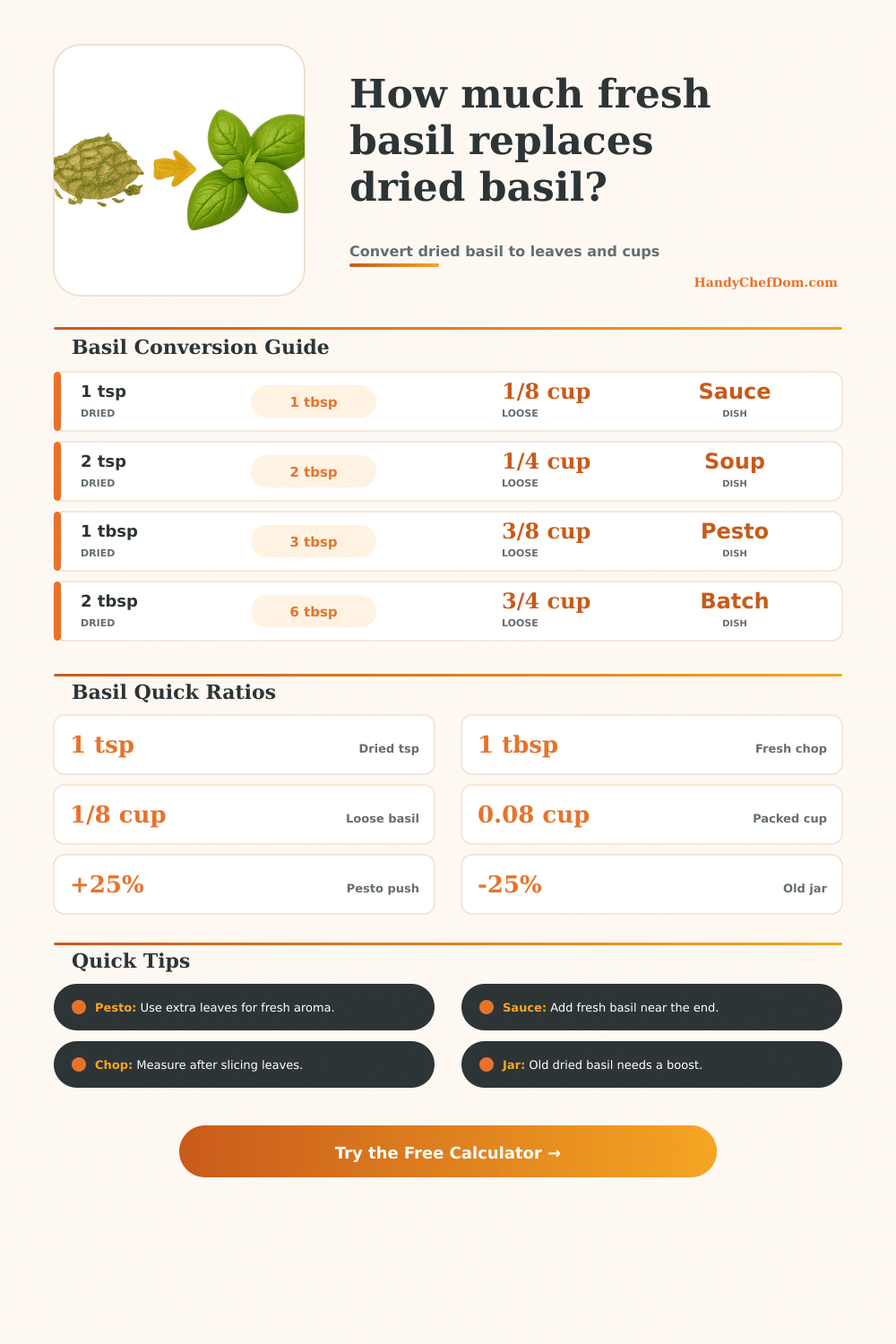
Use the dried amount from a recipe, then tune the basil style, leaf size, chopped versus whole-leaf measurement, and dish intensity. The baseline is the kitchen rule that 1 teaspoon dried basil replaces about 1 tablespoon fresh chopped basil.
| Dried Basil | Fresh Chopped Basil | Loose Whole Leaves | Best Basil Use |
|---|---|---|---|
| 1/4 teaspoon | 3/4 teaspoon chopped | 1 to 2 tablespoons loose | Small tomato pan sauce |
| 1/2 teaspoon | 1 1/2 teaspoons chopped | 3 tablespoons loose | Single pizza or dressing |
| 1 teaspoon | 1 tablespoon chopped | 1/8 cup loose leaves | Standard sauce replacement |
| 2 teaspoons | 2 tablespoons chopped | 1/4 cup loose leaves | Soup pot or pasta bake |
| 1 tablespoon | 3 tablespoons chopped | 3/8 cup loose leaves | Pesto-leaning flavor boost |
| 2 tablespoons | 6 tablespoons chopped | 3/4 cup loose leaves | Large tomato batch |
| Basil Dish | Fresh Adjustment | Why It Changes | Measuring Note |
|---|---|---|---|
| Pesto or basil puree | +25% | Basil is the main flavor | Use packed or chopped cups |
| Marinara or tomato sauce | Standard | Tomato supports the basil | Chop before measuring |
| Pizza finish | +10% | Fresh leaves sit on top | Measure loose leaves |
| Caprese platter | +40% | Whole leaves are visible | Count leaves by serving |
| Long-simmered ragu | -10% | Cooked basil fades into sauce | Add some at the end |
| Basil vinaigrette | +15% | Oil carries the aroma | Use fine chopped basil |
| Fresh Basil Form | Approx. Chopped Yield | Approx. Weight | When To Use |
|---|---|---|---|
| 1 cup loose whole leaves | 1/2 cup chopped | 20 g | Pizza, caprese, finishing |
| 1 cup lightly packed leaves | 3/4 cup chopped | 30 g | Pesto, pasta, tomato bowls |
| 1 cup firmly packed leaves | 1 cup chopped | 40 g | Large pesto batches |
| 1 cup chopped basil | 1 cup chopped | 40 g | Measured recipe cups |
| 1 tablespoon chopped | 1 tablespoon chopped | 2.5 g | Replacing 1 teaspoon dried |
| 10 medium leaves | About 1 tablespoon | 2 to 3 g | Small garnish swaps |
| Dried Basil Style | Potency Factor | Teaspoon Weight | Basil Flavor Note |
|---|---|---|---|
| Crumbled dried flakes | 1.00x | 0.70 g | Typical recipe baseline |
| Rubbed dried basil | 1.15x | 0.80 g | More surface area |
| Fine crushed basil | 1.30x | 0.90 g | Stronger spoon for spoon |
| Older pantry jar | 0.75x | 0.70 g | Faded aroma |
| Home-dried leaves | 0.90x | 0.60 g | Often fluffy and lighter |
| Freeze-dried basil | 1.10x | 0.35 g | Light but aromatic |
Maybe it’s a recipe requiring a tablespoon of dried basil, though you have no other option except fresh. Fresh herbs add texture and aromatic oil, which dissapears during cooking. Dried herbs are more flavorful because they contain much less water. Converting from one form to another isn’t a matter of hard-and-fast chemistry, but knowing how they differ help.
Enter your desired quantity of dried herb into the calculator below, and you’ll know exactly how much fresh basil to grab, such as whether a half-cup should be loose or packed. You won’t need to guess.
How to Change Dried Herbs to Fresh Herbs
Dried flake: One tsp. Per 1 Tbsp. Use one tsp. Of dried flake for every 1 Tbsp. Of chopped fresh. This is a three-to-one ratio, which is why you dry the stuff to get rid of moisture.
That’s the basic guideline, but again: Want consistency? To get it, be aware of how finely you’ve crumbled flakes, or what condition they’re in. Old, spent herbs will yield different results different than a freshly dried batch, just as coarse flakes will differ from extra-fine powder. If your stash is on the weak side, meaning faint and more like dust than anything else, bump up the quantity by a bit to compensate for lack of oomph.
How do you choose to factor that into the mix? The tool handles that variable, allowing you to specify type or age of your supply so the fresh version hits the right note.
Dishes differ. This is why it’s important to consider context as well as conversion factors. Visual impact is key with pesto, for example. Standard ratios don’t apply because you want lots of chopped-up fresh leaves. With something like bolognese that simmers awhile, most of the fresh-basil fragrance will have cooked off by the time it’s done so add a bit along the way but save some for stirring in at the last minute.
Other factors create inconsistencies between cooks at home: How do you measure leaf? Leaf size varies. For example, a cup of chopped herbs has more basil by volume than a cup of whole leaves because large leaves leave more empty space. Packing the cup makes it heavier (gently press down), but scooping up loose leaves may double or halve how much herb are actualy in the vessel.
Because fresh basil serves both as garnish and as seasoning, it contributes a bright note impossible to get from dried herbs. Using fresh instead of dried adds some water to the mix. This helps to balance tomato acidity and thin out thick sauce. It also adds different flavors. Aim not for precise sameness but for harmony; start with converter, then adjust to taste till it tastes correct.